
One Sick Call, One Struggling Ward
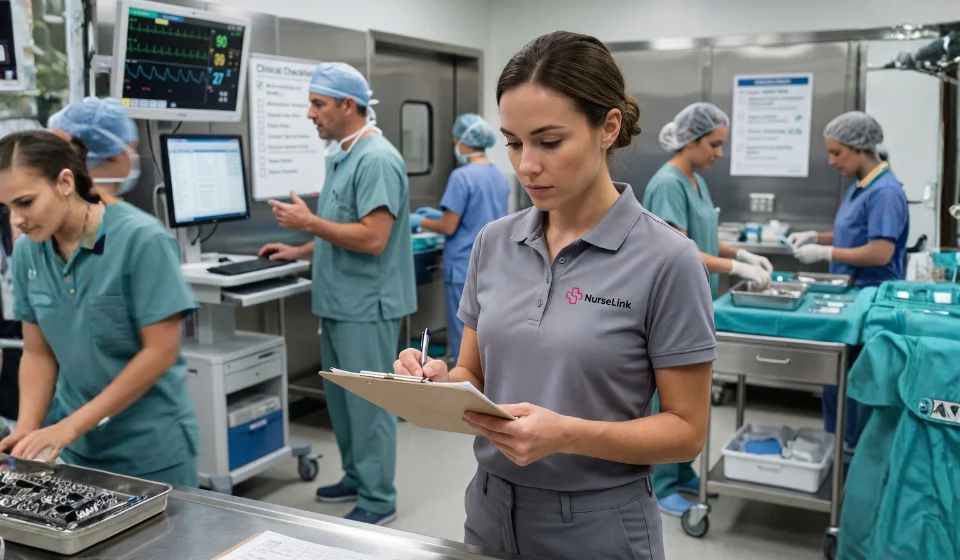
How NurseLink Healthcare Kept A Busy Surgical Unit Running Through A Staffing Crisis
A Real-World Example Of Workforce Solutions Done Right
Introduction
Staffing shortfalls in healthcare settings do not announce themselves in advance. They happen on a Tuesday morning when two nurses call in sick, or on a public holiday weekend when a ward is running at reduced capacity and patient acuity is high. In those moments, the difference between a safe shift and a dangerous one often comes down to how quickly a facility can source qualified, experienced staff who can walk in and contribute from the first hour.
For most healthcare facilities, the answer to that problem is an agency relationship. But not all agency relationships are equal. A phone call that goes unanswered at 5am, a staff member who arrives unfamiliar with the ward environment, or a replacement who lacks the clinical experience the situation demands can create as many problems as they solve.
At NurseLink Healthcare, we built our workforce solutions service around the reality of how staffing crises actually unfold, not how they look on a planning document. This case study looks at how we supported a busy surgical unit in Victoria through a period of significant and sustained staffing pressure, and what made the difference between the unit coping and the unit struggling.
To protect the privacy of the facility and its staff, all identifying details have been kept confidential throughout this case study.
The Facility's Background & Challenges
The facility in this case is a private hospital located in metropolitan Victoria, operating a mid-sized surgical ward that handles a high volume of post-operative patients across a range of specialties. The ward runs across three shifts, seven days a week, and patient dependency levels mean that safe staffing ratios are not optional. They are a clinical and regulatory requirement.
The challenge began during a particularly demanding stretch that coincided with a seasonal spike in elective surgeries, several long-term staff on approved leave and an unexpected cluster of sick leave notifications that hit within the same two-week period. What started as a manageable shortfall quickly became something the facility’s internal rostering team could not absorb.
The ward manager was covering gaps personally. Permanent staff were being asked to extend shifts or take on additional days, which created fatigue and growing resentment within the team. Patient care was not yet compromised, but the margin for error was shrinking daily.
The facility had a relationship with another agency at the time, but the response had been inconsistent. On some occasions, suitable staff arrived promptly. On others, the positions went unfilled until the morning of the shift, leaving the ward manager scrambling. On two occasions, agency staff arrived without the specific post-operative care experience the ward required, creating supervision burdens for already stretched permanent staff.
The nursing unit manager raised the issue with the hospital’s operations team, and a decision was made to contact NurseLink Healthcare to discuss whether a more reliable arrangement could be put in place.
Understanding What The Facility Actually Needed
When NurseLink Healthcare was first engaged, we did not simply ask for a list of vacant shifts and start filling them. Our first step was to spend time properly understanding the ward’s environment, its patient population and the specific clinical expectations that any agency staff would need to meet.
We met with the nursing unit manager and the facility’s workforce coordinator to map out the situation in full. This included understanding the ward’s typical patient profile and dependency levels, the specific clinical skills and experience required for post-operative nursing in that environment, the ward’s orientation and induction expectations for new staff, the shift structure and any preferences around consistency of staff across shifts, and the communication channels that worked best for the team when urgent needs arose.
This conversation revealed something important. The facility’s previous agency had been sending staff who were qualified nurses but who lacked specific experience in surgical and post-operative settings. On a general ward, this might not have been an issue. On a high-acuity surgical unit, it meant that agency nurses needed hand-holding that permanent staff simply did not have the bandwidth to provide during a short-staffed shift.
NurseLink Healthcare made a clear commitment at this stage. Every nurse we placed on this ward would have verifiable post-operative or surgical nursing experience. We would not fill a shift with a technically qualified nurse who lacked the specific background the role demanded, regardless of how urgent the need was. If we could not find the right person, we would say so early enough for the facility to make alternative arrangements, rather than sending someone unsuitable and hoping for the best.
We also agreed on a direct communication line between the ward manager and a dedicated NurseLink Healthcare coordinator, available around the clock. No call centre queues, no emails into a general inbox. A direct number that was answered.
The NurseLink Healthcare Solution Delivered
Rapid Shift Coverage With The Right Experience
Within the first week of the arrangement, NurseLink Healthcare filled eleven vacant shifts across the ward. Each staff member placed had been specifically matched to the ward’s requirements, with post-operative or surgical nursing experience confirmed before deployment. The ward manager reported that the standard of agency staff during this period was noticeably higher than what the facility had previously experienced.
A Consistent Pool Of Familiar Faces
One of the most disruptive aspects of relying on agency staff is the constant rotation of unfamiliar people through a ward. Every new face requires some level of orientation, takes time to understand the ward’s routines and systems, and may not know where things are kept or how the team communicates. We addressed this by building a dedicated pool of nurses who were familiar with this specific facility and rotated them through the available shifts. Within a fortnight, the ward manager noted that several of the NurseLink nurses were being requested by name by permanent staff who had found them easy to work alongside.
After-Hours & Early Morning Response
The staffing shortfalls did not politely confine themselves to business hours. Several of the most urgent gaps arose from sick leave notifications received late at night or in the early hours of the morning. In each case, the ward manager contacted the dedicated NurseLink Healthcare coordinator directly and received a response within minutes. In the majority of cases, a confirmed replacement was in place before the affected shift began. This after-hours reliability was something the ward manager specifically identified as transformative compared to the facility’s previous agency experience.
Transparent Communication When Gaps Could Not Be Filled
On two occasions during the engagement, NurseLink Healthcare was unable to source a suitable nurse for a specific shift on short notice. Rather than sending an unsuitable candidate or going silent, we communicated this to the ward manager as early as possible, giving the facility time to explore other options. This transparency, while not the ideal outcome, was appreciated by the facility’s leadership as a sign that we were managing the relationship honestly rather than simply trying to bill for a placement at any cost.
Ongoing Coordination & Workforce Planning Support
As the immediate crisis stabilised, NurseLink Healthcare worked with the facility’s workforce team to look at the weeks ahead and identify known gaps in the roster before they became urgent. This proactive approach meant the facility was no longer operating entirely in reactive mode. Known leave periods and anticipated demand spikes were mapped out, and NurseLink Healthcare was able to confirm staffing cover in advance rather than fielding calls at short notice.
Outcomes & Impact
The Ward Maintained Safe Staffing Ratios Throughout
Despite the significant pressure the unit was under, patient-to-nurse ratios were maintained throughout the period NurseLink Healthcare was engaged. The ward did not need to close beds or redirect patients, and there were no incidents linked to staffing levels during the engagement period. For the facility’s leadership, this was the most important measure of success.
Permanent Staff Fatigue Was Reduced
Once reliable agency cover was in place, permanent staff were no longer being asked to extend shifts or take on additional days at short notice. The improvement in team morale was noted by both the nursing unit manager and the hospital’s HR team. Several permanent staff members commented that the quality and competence of the NurseLink nurses made a meaningful difference to how supported they felt during a difficult period.
The Ward Manager Got Time Back
Before NurseLink Healthcare was engaged, the ward manager was spending a substantial portion of each day trying to fill gaps, chasing the previous agency and personally covering shifts when no replacement could be found. With a reliable agency relationship in place and a direct point of contact available around the clock, this burden was significantly reduced. The ward manager was able to return focus to clinical leadership and team management rather than logistics.
The Facility Reduced Its Exposure To Compliance Risk
Operating below safe staffing ratios, even temporarily, creates regulatory and legal exposure for a healthcare facility. By maintaining appropriate cover throughout the period, the facility protected itself from the documentation and reporting obligations that would have arisen had ratios been breached. This was a benefit the operations team acknowledged directly in their post-engagement review.
A Foundation For An Ongoing Partnership
What began as a response to an acute staffing crisis evolved into an ongoing workforce partnership. Following the initial engagement, the facility formalised its relationship with NurseLink Healthcare as its primary agency provider, with NurseLink Healthcare supporting regular planned cover as well as urgent backfill across multiple wards.
Nursing Unit Manager Reflection
The nursing unit manager shared their experience following the engagement:
“We had reached a point where I was dreading coming in each morning because I knew there would be gaps I had no good answer for. The difference with NurseLink was immediate. The staff they sent actually knew what they were doing on a surgical ward, and I had someone I could call at any hour who would give me a straight answer. It took an enormous amount of pressure off the whole team.”
This reflects something we hear consistently from facility managers who have worked with multiple agencies before coming to NurseLink Healthcare. The quality of the individual nurses matters, but so does the reliability and honesty of the agency relationship itself. Both have to be right.
Key Takeaways From This Case Study
This case study points to several things that healthcare facilities should consider when evaluating their agency workforce arrangements.
Filling a shift and filling it well are not the same thing. A nurse who is technically qualified but lacks the specific experience a ward requires can add to the burden on permanent staff rather than relieving it. Agencies must be willing to match on experience, not just credentials.
Reliability after hours is non-negotiable. Staffing crises do not respect business hours. An agency that cannot be reached at 3 am or that takes hours to confirm a replacement, is not genuinely solving the problem a facility faces.
Consistency of staff reduces friction on the ward. Rotating entirely new faces through a unit every shift creates ongoing orientation demands and disrupts team cohesion. Building a pool of familiar agency nurses who know the facility’s environment makes a tangible operational difference.
Honest communication when gaps cannot be filled is more valuable than a placement at any cost. Facilities can manage around a confirmed gap. What they cannot manage is discovering at shift changeover that the promised replacement is not coming, or is not suitable.
Proactive workforce planning should be part of the agency relationship. The best agency partnerships are not purely reactive. Working ahead of known pressure points to confirm cover in advance changes the dynamic from crisis management to genuine workforce planning.
Conclusion
Workforce shortfalls in healthcare are not going away. Demand for skilled nurses continues to outpace supply in many specialties, and the pressures of seasonal demand, leave management and unexpected sick leave mean that even well-run facilities will face gaps they cannot fill from within.
The question is not whether a facility will need agency support. It is whether the agency they rely on is genuinely capable of delivering when it matters most.
At NurseLink Healthcare, we are built for exactly these situations. Our 24/7 operations, our commitment to matching on clinical experience rather than just availability, and our approach to honest and direct communication with facility managers are not marketing points. They are the practical foundations of how we work every day.
If your facility is navigating workforce pressure, dealing with inconsistent agency performance or simply looking for a more reliable partnership, we would welcome the conversation. Reach out to the NurseLink Healthcare team to discuss how we can support your ward, your staff and your patients.
Latest Post
When The Roster Falls Apart At Midnight

When The Ambulance Left, The Real Work Started.
One Sick Call, One Struggling Ward
Reliable Nursing Support At Home

Ensuring Continuity Of Care With Nursing Agency Support

Restoring Stability In Aged Care