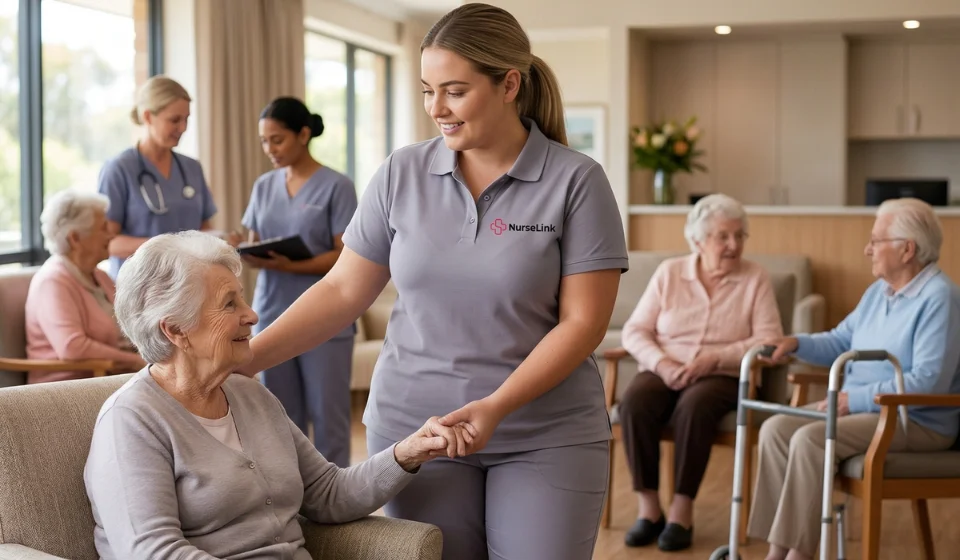
When The Roster Falls Apart At Midnight
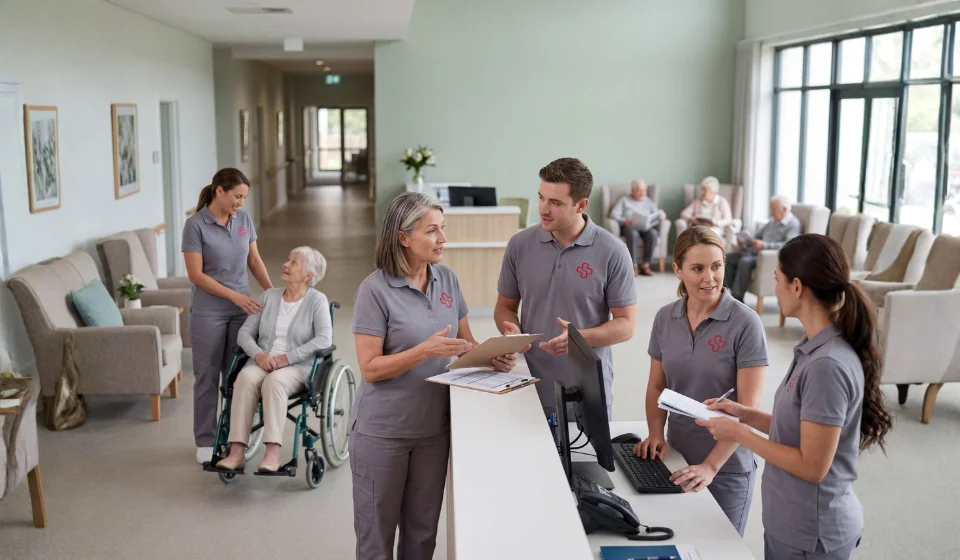
How NurseLink Healthcare Delivered A Full Workforce Solution For A Large Aged Care Facility In Victoria
Introduction
Running a large aged care facility is an exercise in managing the unmanageable. Resident care cannot pause. Clinical standards cannot slip. Rosters must be filled regardless of what the morning brings – a sudden sick call at 11pm, a wave of staff illness across a whole ward, a resignation that leaves a unit short with forty-eight hours’ notice. The operational pressure is relentless, and the consequences of getting it wrong are not administrative. They are clinical.
For facility managers and Directors of Nursing, the staffing question is never truly resolved. It is simply managed, day by day, shift by shift, with the persistent knowledge that the next gap could open at any moment. When the agency a facility relies on to fill those gaps is slow, unreliable or unable to supply nurses with the right clinical competencies, the pressure falls back on permanent staff who are already stretched – driving burnout, increasing risk and ultimately making the staffing problem worse.
What large aged care facilities need from a nursing agency is not a list of available names. It is a genuine workforce partner: one with the depth of clinical staff to cover any shift, the systems to respond at any hour and the judgement to send the right person for the clinical environment they are walking into.
At NurseLink Healthcare, that is precisely what we are built to provide. This case study documents how our team became the primary workforce solution for a large aged care facility in Victoria, transforming a reactive, gap-filling relationship into a stable, proactive staffing partnership that measurably improved the facility’s ability to deliver safe, consistent care. The name and identifying details of the facility have been kept confidential throughout this case study.
To protect the privacy of the client and his family, his name and all identifying details have been kept confidential throughout this case study.
The Facility's Background & Its Challenges
The facility is a large, privately operated aged care provider in metropolitan Victoria, accommodating more than one hundred and fifty residents across several distinct care wings including high care, dementia-specific and palliative units. It operates around the clock, seven days a week, with a permanent clinical workforce supplemented by agency staff across all shifts.
In the twelve months before engaging NurseLink Healthcare as its primary staffing partner, the facility had been managing a compounding workforce crisis. Permanent staff turnover had increased following a difficult period during which two senior nurses had resigned within the same month, creating a leadership vacuum on two units that took considerable time to stabilise. Agency usage had risen sharply as a result, but the provider the facility had been relying on had struggled to keep pace with the volume and, more critically, with the after-hours demand.
The Director of Nursing described the situation plainly during the initial engagement conversation with NurseLink Healthcare. The agency they had been using was adequate during business hours. Outside of those hours – the late-night sick calls, the weekend emergencies, the public holiday gaps that opened with no warning – the response was slow, inconsistent and on several occasions had resulted in shifts that were not filled at all. Permanent staff had been called back on their days off more times than was acceptable, and the goodwill that practice erodes was running visibly low.
Beyond the after-hours problem, the facility had concerns about clinical consistency. Agency nurses arriving for a shift in a dementia-specific unit without adequate orientation to the environment, the residents or the clinical protocols created risk. The facility needed nurses who were not only qualified but genuinely prepared for the setting they were entering.
The facility’s operations manager had identified NurseLink Healthcare through a peer referral from a Director of Nursing at another Victorian facility. An initial meeting was arranged, and what followed was not a sales conversation but a structured assessment of the facility’s specific needs, shift patterns, clinical environments and after-hours exposure.
Understanding What The Facility Actually Needed
NurseLink Healthcare’s approach to a facility partnership of this scale begins with a thorough operational assessment before any staffing is placed. The facility’s shift structure, peak demand periods, units with the most complex clinical needs and historical patterns of gap openings were all reviewed in detail.
Several things became clear from that process. The after-hours exposure was the most urgent and highest-risk element of the challenge. Gaps opening between 10pm and 6am on weekends and public holidays had been the most consistently problematic, and the consequences of unfilled shifts during those periods were the most clinically significant given reduced management presence. Any solution that did not directly and reliably address this window was not a solution.
The dementia and high care units required nurses with specific competencies and, ideally, familiarity with the environment built over repeated placements rather than single visits. The facility had experienced the disruption caused by agency nurses who were clinically competent in general terms but underprepared for the specific demands of a dementia-specific care environment, and they were not willing to continue accepting that.
The facility also needed a communication structure that matched its operational reality. Shift requests sent at midnight needed a response within minutes, not hours. The contact point needed to be a person, not a voicemail system. And when a nurse was confirmed for a shift, that confirmation needed to mean something – not be subject to a last-minute withdrawal that left the facility in a worse position than when the request was made.
These requirements shaped everything about how NurseLink Healthcare structured the partnership that followed.
The NurseLink Healthcare Solution Delivered
A Dedicated After-Hours Response Capability
The centrepiece of the NurseLink Healthcare solution was a dedicated after-hours response function built specifically around this facility’s exposure. A direct escalation line was established with guaranteed response times for shift requests received outside business hours, staffed by NurseLink Healthcare personnel with the authority and the roster depth to confirm placements immediately. The facility’s Director of Nursing and operations manager had a named contact, a direct number and a clear protocol – and that protocol was tested within the first week when a gastroenteritis outbreak across one wing created four simultaneous shift gaps on a Saturday night.
All four shifts were filled within forty minutes of the initial call. That single event, more than any conversation that had preceded it, established the terms of the partnership.
A Dedicated Clinical Pool For The Facility
NurseLink Healthcare established a dedicated pool of nurses specifically allocated to this facility’s roster. Rather than drawing from a general bank of available staff, the facility’s shifts were filled from a group of nurses who had been oriented to the facility, briefed on its clinical protocols and, wherever possible, deployed there on a repeated basis so that familiarity with the environment, the residents and the permanent team could develop over time.
For the dementia and high care units in particular, this approach produced a measurable improvement in the quality of the agency shifts being delivered. Nurses who had worked a unit before knew the residents, knew the routines and required significantly less orientation time at the start of each shift – time that would otherwise come directly out of resident care.
Clinical Vetting Matched To The Facility’s Standards
Every nurse supplied to the facility had been vetted against a clinical competency framework aligned to aged care requirements, with specific attention to the skills required for high care and dementia-specific environments. Documentation – registration, vaccinations, police checks, aged care-specific training – was verified and maintained by NurseLink Healthcare, removing an administrative burden from the facility and ensuring that compliance records were always current.
The facility’s clinical governance team was provided with access to worker documentation on request, and any concern raised about a worker’s performance was addressed directly and without defensiveness.
Proactive Roster Communication
Beyond reactive gap-filling, NurseLink Healthcare introduced a proactive roster review process in which known upcoming exposure – public holidays, periods of historically high permanent staff leave, planned absences – was identified in advance and pre-filled where possible. This reduced the volume of urgent after-hours requests by giving the facility and NurseLink Healthcare a shared forward view of the roster rather than managing entirely in the present tense.
The facility’s operations manager described this shift from reactive to proactive as one of the most practically significant changes the partnership introduced.
Outcomes & Impact
After-Hours Gaps Were Filled Consistently & Quickly
In the six months following the establishment of the NurseLink Healthcare partnership, the facility recorded no instances of an after-hours shift remaining unfilled. Response times for after-hours requests averaged under thirty minutes across the period. The Saturday night outbreak event had set a standard, and NurseLink Healthcare maintained it.
Permanent Staff Pressure Reduced Measurably
With after-hours gaps being filled reliably by agency staff, the practice of calling permanent staff back on days off reduced significantly. The Director of Nursing noted a visible improvement in permanent staff morale within the first two months of the partnership, and two members of the senior nursing team specifically mentioned the reduction in after-hours call-backs as a meaningful change in their working experience.
Clinical Consistency In Complex Units Improved
The dedicated pool model produced exactly the outcome it was designed to achieve in the dementia and high care units. Repeated placements of the same nurses in the same units built familiarity that improved care quality and reduced the orientation burden on permanent staff at the start of each agency shift. Incident reporting related to agency staff in those units declined over the engagement period.
The Facility’s Compliance Posture Strengthened
The transfer of worker documentation management to NurseLink Healthcare removed a persistent administrative pressure from the facility’s clinical governance team and ensured that compliance records were maintained to a standard that withstood scrutiny at the facility’s next accreditation review.
A Reactive Relationship Became A Strategic Partnership
Perhaps the most significant outcome was the shift in the nature of the relationship itself. What had begun as a need to fill urgent gaps had evolved, within six months, into a genuine workforce partnership in which NurseLink Healthcare functioned as an extension of the facility’s own operational capability rather than as an external supplier called upon in emergencies.
Facility Reflection
The Director of Nursing shared her experience of the NurseLink Healthcare partnership at the six-month mark:
“Before NurseLink, after-hours gaps were the thing I dreaded most. You’d get a call at midnight and spend the next two hours not knowing if the shift was going to be covered. That’s gone now. I call, it’s handled, and the person who turns up actually knows our facility. The difference that makes to my team, to our residents and honestly to my own ability to sleep at night is something I didn’t fully appreciate until I experienced what it looked like when it was working properly.”
Key Takeaways From This Case Study
After-hours reliability is the non-negotiable foundation of any aged care staffing partnership. A nursing agency that performs well during business hours but cannot consistently deliver after-hours is not solving the problem that matters most. The gaps that open at midnight carry the highest clinical risk and require the fastest, most dependable response.
Familiarity with the clinical environment is a quality issue, not a preference. In high care and dementia-specific settings, agency nurses who are repeatedly placed in the same environment deliver materially better care than those encountering it for the first time. A dedicated pool model that builds familiarity over time is not a luxury — it is a clinical decision.
Proactive roster management reduces the volume of reactive emergencies. Facilities that manage their agency relationship entirely in the present tense will always be caught short. A staffing partner who takes a forward view of the roster and pre-fills known exposure before it becomes urgent fundamentally changes the operational experience of running a large facility.
Compliance documentation must be owned by the agency, not managed by the facility. Large facilities carry enough administrative burden without maintaining compliance records for agency workers. A staffing partner who owns this responsibility fully, and maintains it to accreditation standard, removes a genuine operational cost from the facility.
The right agency relationship feels like an internal resource, not an external vendor. When a nursing agency understands a facility’s clinical environment, staffing patterns and operational pressure well enough to anticipate needs rather than simply respond to them, the relationship produces outcomes that a transactional arrangement never can.
Conclusion
Large aged care facilities do not have the luxury of staffing problems that wait for business hours. The clinical responsibility is continuous, the roster pressure is unrelenting and the consequences of a gap that cannot be filled fall directly on residents who deserve better.
At NurseLink Healthcare, we are built for this reality. Our after-hours capability, our dedicated pool model and our proactive approach to roster management are designed around the operational truth of what large aged care facilities actually face — not the version of it that is easy to service.
This case study is an example of what a genuine workforce partnership looks like. A facility under real pressure, a staffing challenge with real clinical stakes, and a solution built around reliability, consistency and the understanding that good staffing is not a back-office function. It is a care delivery function.
If your facility is looking for a nursing agency partner who will be there when it matters most, reach out to the NurseLink Healthcare team today. We would welcome the opportunity to help.
Latest Post
When The Roster Falls Apart At Midnight

When The Ambulance Left, The Real Work Started.
One Sick Call, One Struggling Ward
Reliable Nursing Support At Home

Ensuring Continuity Of Care With Nursing Agency Support
Restoring Stability In Aged Care