
When The Only Nurse Leaves
How NurseLink Deployed A Remote Area Nurse To An NT Aboriginal Community In Crisis A Nursing Agency Case Study In Remote Aboriginal Healthcare Continuity Introduction In the remote communities of the Northern Territory, a health clinic is not one of several options. It is the option. The distance to the nearest hospital, measured in hours of unsealed road rather than kilometres, means that the nurse who staffs the community clinic is, for the people who live there, the entirety of the immediately available healthcare response. For routine primary care, for chronic disease management, for the maternal health checks that a community with a young population requires, for the assessment of the child who is unwell and the elder whose diabetes needs monitoring and the young man whose injury needs dressing, the nurse is the resource. There is no other. When that nurse is gone, the gap she leaves is not a staffing gap in the sense that a metropolitan hospital understands the term. It is the removal of the community’s access to primary healthcare. Not a reduction in service. Not a delay in service. The absence of service, for a community that already carries the particular health burden of disadvantage, remoteness and the long history of a system that has not always been adequate for the people it is supposed to serve. Finding a nurse who will go to a remote Northern Territory community is not a simple task. The conditions are demanding. The clinical scope is broad and the clinical responsibility is heavy, because a remote area nurse is a sole practitioner managing without the immediate availability of specialist backup that urban nurses take for granted. The lifestyle is isolating in ways that some nurses find deeply meaningful and others find simply isolating. And the cultural competence required to work effectively in an Aboriginal community, to earn the trust of a community that has learned, through long experience, to be cautious about the intentions of people who arrive from outside, is not something that credentials alone provide. At NurseLink Healthcare, we understand what remote area nursing in an Aboriginal community requires, clinically and humanly. This case study documents how our team supported a remote Aboriginal health clinic in the Northern Territory, several hours from Darwin, through three to four months following the departure of its only nurse, and how the right nurse, deployed with the right preparation, kept the community’s access to healthcare intact until a permanent replacement could be found. To protect the privacy of the community and the individuals involved, all identifying details have been kept confidential throughout this case study. The Community & Its Situation The community at the centre of this case study is a small Aboriginal community in the remote Northern Territory, accessible from Darwin by a combination of sealed and unsealed road that in the wet season becomes, in parts, impassable without a four-wheel drive and local knowledge. The community has a population of several hundred people across an extended family network, a mix of generations from elders whose connection to country goes back beyond living memory to children who are growing up in a community that is navigating the intersection of traditional culture and the demands of contemporary life with the particular resilience and complexity that this intersection always involves. The community health clinic had been operating for several years, staffed by a single remote area nurse who had built, across her time in the community, the kind of clinical relationship and personal trust that effective healthcare in a small Aboriginal community requires. She had learned enough language to communicate with the elders who were most comfortable in their first tongue. She had learned the family structures and the cultural protocols that shaped how health decisions were made and how clinical information was best delivered. She had become, in the way that a nurse who stays long enough in a small community becomes, a known and trusted presence in the daily life of the place. Her departure had been precipitated by a family medical emergency that required her return to her home state and that was not expected to resolve within a timeframe that would allow her to return to the community. She gave as much notice as the circumstances allowed, which was less than the community health authority needed to recruit a replacement and more than the community could manage without. The clinic had been operating for several years with one nurse, and it had no capacity to absorb her absence internally. The community health authority that administered the clinic contacted NurseLink Healthcare within days of her departure being confirmed. Understanding What The Community Actually Needed The conversation NurseLink Healthcare had with the community health authority was one that covered clinical requirements and cultural requirements with equal weight, because both were essential and neither was more negotiable than the other. The clinical requirements were significant and specific. The community’s health profile included a high prevalence of chronic disease, particularly type 2 diabetes, cardiovascular disease and chronic kidney disease, that required consistent monitoring and management. Maternal and child health was a clinical priority, with antenatal care, infant health checks and childhood immunisation representing a significant component of the clinic’s work. Wound care, including the management of chronic wounds associated with diabetes and the acute wound management that a community where physical work and outdoor activity were part of daily life required, was a daily clinical task. And the remote area scope of practice that the role required, the capacity to assess, treat and refer across a range of presentations without immediate specialist backup, required a nurse with genuine remote area experience rather than urban nursing experience applied to a remote context. The cultural requirements were equally specific. The nurse placed needed to arrive with an understanding of, and a genuine respect for, the cultural context she was entering. Not a superficial awareness but a working understanding of the protocols that shaped how she should introduce herself to the community, how she
When The Contract Ended Without Warning
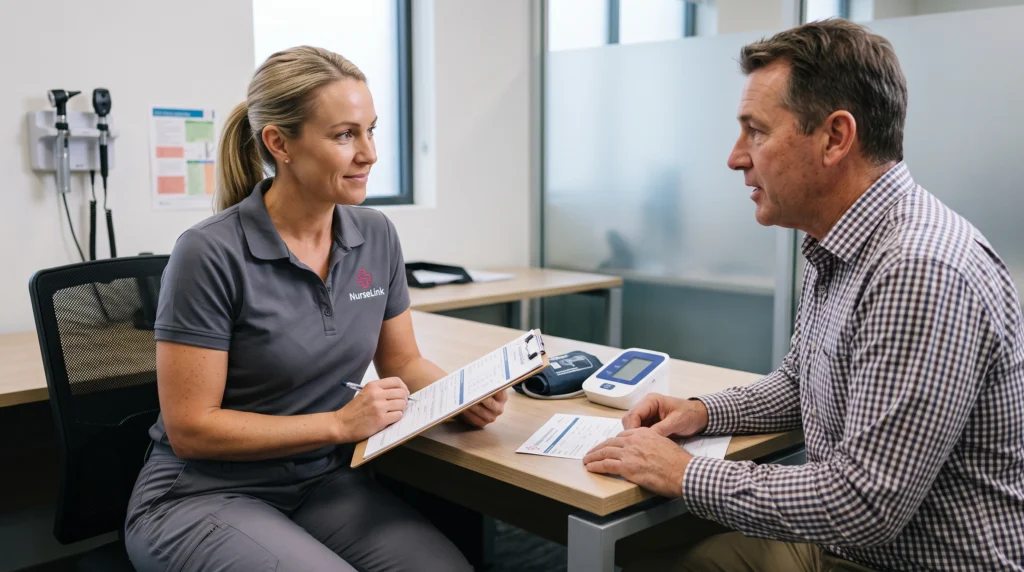
How NurseLink Kept A Sydney Workplace Health Clinic Running A Case Study In Occupational Health Nursing Deployment For A Corporate Clinic Introduction Workplace health is not a discretionary service. For organisations with a serious commitment to the safety and wellbeing of their workforce, the occupational health clinic is not a benefit or a perk. It is the clinical infrastructure through which pre-employment assessments are conducted, workplace injuries are managed, return-to-work programmes are monitored and the regulatory requirements of a large employer’s health and safety obligations are met. When that infrastructure disappears without warning, the consequences are not simply operational. They are legal, clinical and reputational. A corporate workplace health clinic that loses its occupational health nurse overnight is not a clinic that can simply manage without clinical coverage while it works out what to do next. It is a clinic with a workforce that depends on it, with health and safety obligations that continue regardless of the staffing situation, with pre-employment assessments booked for candidates starting next week and with a return-to-work coordinator who needs clinical input for cases that cannot be put on hold because the nurse has gone. Finding a qualified occupational health nurse quickly, in a market where occupational health nursing is a specialist discipline with its own scope of practice and its own credentialling requirements, is not a problem that resolves itself through a general nursing availability search. It requires a provider with the specialist network to identify the right person and the operational capacity to deploy them before the gap produces consequences that are harder to manage than the gap itself. At NurseLink Healthcare, we provide exactly this kind of specialist response. This case study documents how our team supported a corporate workplace health clinic in Sydney, New South Wales, through four to six weeks following the sudden and unannounced withdrawal of its occupational health nursing provider, ensuring that the clinic’s clinical services, its regulatory compliance and its workforce obligations were maintained without interruption. To protect the privacy of the organisation and the individuals involved, all identifying details have been kept confidential throughout this case study. The Organisation & Its Situation The organisation at the centre of this case study is a large corporate entity operating from a significant office and operational complex in Sydney. It employs several hundred people across a range of functions, including both sedentary office roles and more physically demanding operational positions that carry elevated workplace health and safety risk profiles. The organisation’s commitment to workforce health and safety was reflected in its decision, some years earlier, to establish an on-site workplace health clinic staffed by a qualified occupational health nurse whose role covered the full scope of corporate occupational health nursing practice. The clinic had been operating under a contracted provider arrangement, through which the occupational health nurse was supplied and managed by a specialist occupational health services company. The arrangement had been in place for some time and had functioned adequately. The organisation’s workplace health and safety manager, who had oversight of the clinic, had not had particular cause to question it. The withdrawal of the provider was sudden and, from the organisation’s perspective, entirely without adequate notice. A communication received late on a Friday afternoon advised that the provider was unable to continue the arrangement and that clinical coverage would cease at the end of that business day. The occupational health nurse who had been staffing the clinic would not be returning on Monday. The workplace health and safety manager, who received the communication at the end of a working week with no forewarning, spent a portion of her weekend identifying what the clinic had scheduled for the following week and what the clinical and regulatory implications of those appointments proceeding without nursing coverage were. The picture that emerged was not comfortable. Pre-employment medicals for candidates commencing the following week. A return-to-work review for an employee whose programme required clinical monitoring. A health surveillance appointment for workers in a role with specific regulatory health monitoring requirements. And the general clinical availability that the workforce expected from a clinic that had been operating consistently for years. She contacted NurseLink Healthcare on Monday morning. Understanding What The Organisation Actually Needed The conversation NurseLink Healthcare had with the workplace health and safety manager was one that both parties understood needed to move quickly from context to specifics, because the clinical gap was already open and every day without coverage had implications. She needed a registered nurse with occupational health nursing experience and, specifically, with familiarity with the scope of practice that a corporate workplace health clinic requires. Pre-employment medical assessments are a distinct clinical skill that requires knowledge of the relevant standards, the ability to conduct functional assessments appropriate to the role requirements and the documentation practice that supports both the employer’s decision-making and the candidate’s clinical record. Health surveillance for workers in specific roles with regulatory monitoring requirements is a clinical function that requires understanding of the relevant legislation and the specific monitoring protocols it mandates. Return-to-work programme support requires clinical knowledge of occupational rehabilitation processes and the communication skills to work effectively with the injured worker, their treating team and the return-to-work coordinator simultaneously. She was also specific about something that went beyond the clinical scope. The clinic’s relationship with the organisation’s workforce was one that had been built over time. The nurse who had been staffing it was known to the workforce and had established a clinical relationship with many of the employees who used the clinic regularly. The person NurseLink Healthcare placed needed to be someone who understood that they were stepping into an established clinical environment with existing patient relationships and who would manage that transition with the professionalism and the interpersonal skill it required. She needed coverage from the following day. NurseLink Healthcare confirmed it could provide it and began identifying candidates immediately. The NurseLink Healthcare Solution An Occupational Health Nurse Identified & Deployed Within Twenty-Four Hours NurseLink Healthcare’s response to the brief drew
The Father Who Kept Showing Up
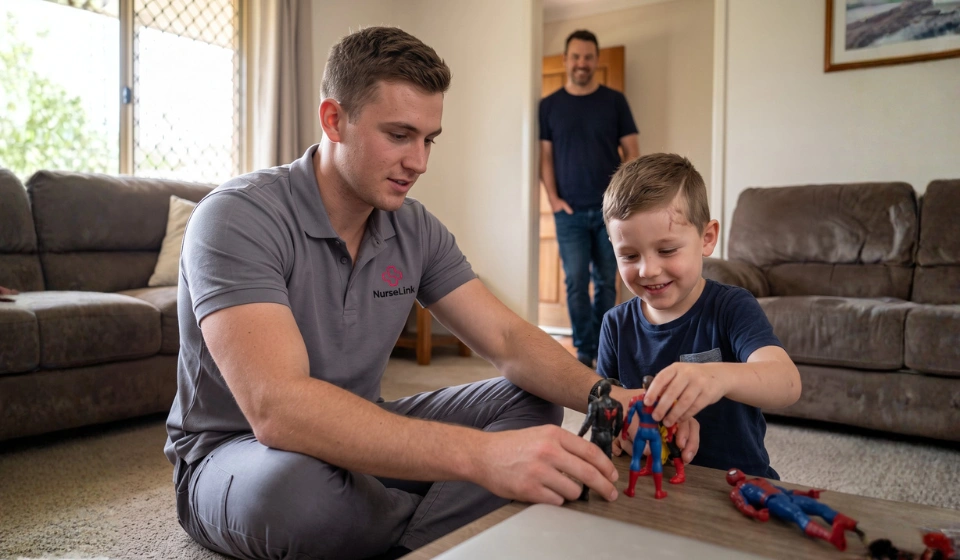
How NurseLink Healthcare Restored A Family’s Trust In The NDIS A Case Study In NDIS Support For A Child With Acquired Brain Injury, Built Around A Father Introduction There is a specific kind of exhaustion that belongs to the parent of a child with complex disabilities who has been through the NDIS system long enough to have learned, through repeated experience, not to expect too much. Not because they have given up on their child. They never give up on their child. But because the gap between what the system promises and what it consistently delivers has, over time, produced a guardedness that is both entirely reasonable and genuinely heartbreaking to witness. These are parents who attend intake meetings and answer the same questions they have answered many times before. Who watch new support workers arrive with good intentions and leave when the complexity becomes more than they signed up for. Who have learned to manage their own hope carefully, because hope that is disappointed enough times becomes something more complicated than hope, something closer to a reflex held at arm’s length. What these families need, and what they have usually stopped believing they will find, is a provider that does not just read the care plan but reads the child. That does not treat the complexity of his needs as a problem to be managed but as the specific reality of a specific person to be understood. That arrives and stays and builds the kind of relationship with the child and his family that the word support is actually supposed to mean. At NurseLink Healthcare, we hold this responsibility without reservation. This case study documents how our team supported a boy with acquired brain injury in Adelaide, South Australia, and the father who had been his primary carer through years of a system that had not yet found a way to adequately support either of them, and how the right provider, arriving at the right moment, changed what the family believed was possible. To protect the privacy of the child and his family, all names and identifying details have been kept confidential throughout this case study. The Child & His Family’s Situation The child at the centre of this case study is a boy aged between eight and ten living in Adelaide with his parents and his younger sister. He sustained an acquired brain injury at the age of four as the result of a medical event that was sudden, frightening and, in the way of these things, entirely without warning. The injury affected multiple areas of his development, producing physical impairments that required wheelchair use and significant personal care support, cognitive impairments that affected his learning, memory and processing, communication difficulties that meant his expressive language was limited and inconsistent, and a pattern of emotional and behavioural responses to frustration and sensory overload that required careful, experienced management from the people around him. He was also, as his father said at the first assessment meeting with a directness that suggested he had said it many times and intended to keep saying it until someone heard it properly, a child. He liked superheroes. He had a favourite colour. He had opinions about what he watched on television and about which of his stuffed animals was allowed to sit where and about whether his food was touching other food on his plate, which it was not allowed to be. He communicated these opinions through a combination of vocalisations, facial expressions and the particular physical tension that the people who knew him well had learned to read with considerable accuracy. He was not his diagnosis. He was a boy who had a diagnosis, and the distinction mattered to his father in a way that went well beyond semantics. His mother worked full time as a nurse, a career she had maintained partly from financial necessity and partly because her own sense of self required a space outside the weight of their family’s situation. His father had become the primary carer, reducing his own work to part time in the years following the injury to manage the school drop-offs and pick-ups and therapy appointments and the daily complexity of caring for a child whose needs were significant and specific and did not pause for weekends. He was, by the time NurseLink Healthcare first spoke with him, a man who had been doing this for several years and who had absorbed the particular toll that several years of this does to a person. He was not broken. He was competent and committed and deeply loving and thoroughly, quietly exhausted. And he had been through enough providers to have stopped, as he said himself, getting his hopes up. What The Family Had Been Through Before NurseLink Healthcare The history of NDIS provider engagements that preceded NurseLink Healthcare’s involvement was a history that his father recounted without bitterness, because bitterness was a luxury that the daily demands of his situation had not left him much room for, but with the precision of a man who had learned, through experience, what to watch for and what questions to ask. The first provider had been adequate for the first several weeks and had then begun sending different support workers to each visit, a rotation that produced in his son the behavioural responses to unfamiliarity that anyone who understood his condition would have anticipated and that had resulted, within two months, in the provider suggesting that his son’s needs were beyond what they could consistently meet. The second provider had lasted longer and had produced one support worker who had genuinely understood his son and with whom a real relationship had developed, followed by the departure of that support worker to another role and a replacement process that had not found anyone comparable and had eventually dwindled into an arrangement that was technically in place and practically inadequate. The third provider had been enthusiastic at the intake meeting and had never quite translated that enthusiasm into the
When The Cycle Cannot Wait
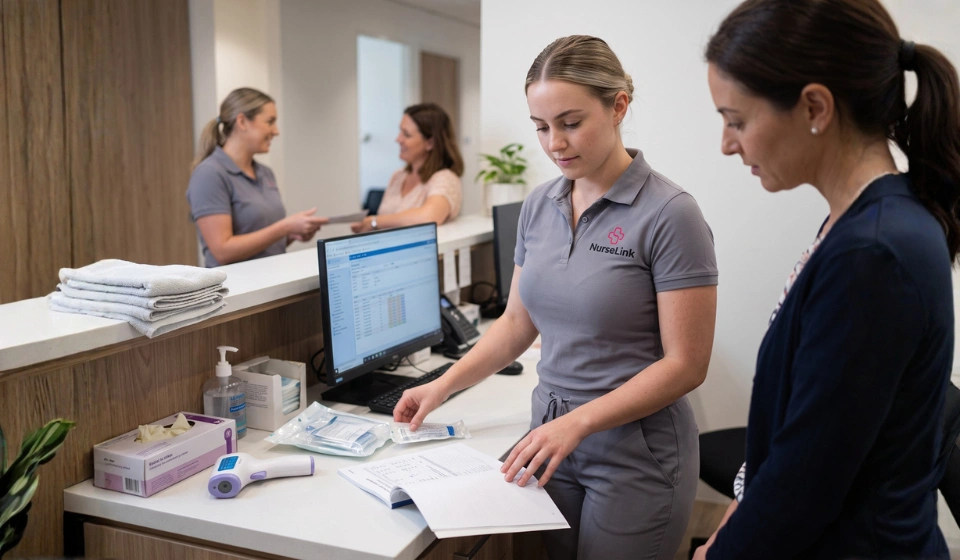
How NurseLink Kept A Fertility Clinic Running Through A Critical IVF Period. A Case Study In Specialist Fertility Nursing Support That Protected Patients At The Most Important Moment Of Their Treatment Introduction An IVF cycle does not pause for staffing problems. From the moment a woman begins her stimulation medication, the clinical timeline is set. Monitoring appointments happen on specific days because the follicles being tracked are developing on a biological schedule that does not negotiate with administrative challenges. Egg collection is performed at a window measured in hours, not days. Embryo transfer follows its own precise sequence. And the patients moving through this process, many of whom have been trying to have a child for years and for whom this cycle represents an enormous investment of hope, money and emotional courage, are depending on the clinic to be fully operational for every step of it. A fertility clinic that loses a significant portion of its nursing team in the weeks before an active IVF cycle faces a clinical and ethical challenge that is unlike almost any other staffing crisis in healthcare. The patients whose cycles are already underway cannot simply be told that the clinic is managing a restructure and that their treatment will need to wait. Their biology is not waiting. Their medication protocols are already in progress. And the consequences of a gap in nursing coverage at a critical point in an IVF cycle, a missed monitoring appointment, a delayed trigger injection, a collection procedure that cannot proceed because the right clinical support is not present, are not merely inconvenient. They can end a cycle that cannot be easily restarted and that a patient may not have the financial or emotional capacity to repeat. At NurseLink Healthcare, we understand that fertility nursing is a specialist discipline that sits at the intersection of clinical precision and profound human vulnerability. This case study documents how our team supported a private fertility clinic in Sydney, New South Wales, through four to six weeks of active IVF cycle nursing coverage after an unexpected team restructure left the clinic without adequate specialist nursing staff at the worst possible moment. To protect the privacy of the clinic and the individuals involved, all identifying details have been kept confidential throughout this case study. The Clinic & Its Situation The clinic at the centre of this case study is a well-regarded private fertility centre in Sydney, providing IVF, egg freezing, fertility assessment and related reproductive medicine services to patients from across New South Wales and beyond. It operates with a team of reproductive endocrinologists, embryologists and specialist fertility nurses whose combined clinical expertise covers the full spectrum of assisted reproductive technology that the clinic’s patient population requires. The nursing team at a fertility clinic occupies a role that is both clinically demanding and deeply relational. Fertility nurses manage the monitoring appointments that track a patient’s response to stimulation medication, administer injections, coordinate the precise timing of trigger medications and collection procedures, provide the patient education that allows women to manage complex medication protocols at home and are, in many cases, the clinical professional that patients have most contact with across the duration of their cycle. They know their patients’ histories, their anxieties and the specific emotional weight that each appointment carries for a person who has often been through a great deal to get there. The restructure that precipitated the clinic’s nursing staffing crisis had been the result of an internal organisational change that had not been expected to produce the staffing outcome it produced. The details were the clinic’s own, and they are not relevant here. What is relevant is that within a short period, the clinic found itself with an active cohort of patients mid-cycle and a nursing team that was insufficient to provide the monitoring, coordination and procedural support that those patients required. The clinic’s nurse manager, who had been managing fertility nursing teams for many years and who understood with painful clarity what the timing of this gap meant for the patients currently in cycle, contacted NurseLink Healthcare within days of the restructure outcome becoming clear. Understanding What The Clinic Actually Needed The conversation NurseLink Healthcare had with the clinic’s nurse manager was one that moved quickly from context to specifics, because the timeline did not allow for a lengthy assessment process. She knew exactly what she needed and she communicated it with the precision of a clinician who understood that imprecision in this context had direct patient consequences. She needed registered nurses with specific fertility and reproductive medicine nursing experience. Not nurses who had worked in gynaecology and felt they could adapt, and not nurses whose familiarity with reproductive medicine was theoretical. She needed nurses who had worked in IVF clinics, who understood the monitoring protocols, who could read an ultrasound scan report in the context of a stimulation cycle and understand what it meant for the patient’s clinical management, who could administer trigger injections with the timing precision that the procedure required and who could provide the patient education and emotional support that fertility patients needed from the nursing staff around them at every point in their cycle. She was also specific about the patient population context. The women currently in cycle at the clinic were at various stages of their treatment, some in early stimulation monitoring, some approaching collection and some in the luteal phase following embryo transfer. Each stage carried its own clinical requirements and its own emotional register, and the nurses placed needed to be able to move between patients at different points in their cycle without losing the specific clinical focus that each stage required. She raised something that she said she always raised when discussing fertility nursing placements, because she had learned from experience that not every nurse understood it without being told. Fertility patients are not hospital patients. They are, in most cases, otherwise healthy people who are going through a medically intensive process voluntarily, in pursuit of something they want more
Keeping The Clinic Running
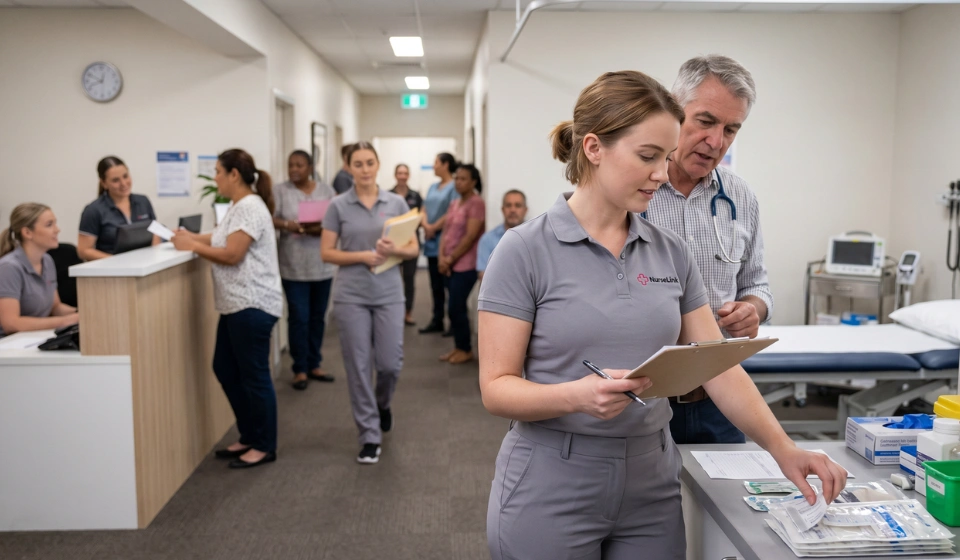
How NurseLink Healthcare Supported A Tamworth GP Clinic A Case Study In Practice Nursing Agency Support For A Busy Regional Clinic Introduction A GP clinic runs on its doctors. But anyone who has worked in one knows that it equally runs on its nurses. The practice nurse is the person who takes the blood pressure before the GP walks in, processes the pathology requests, manages the immunisation schedule, follows up on chronic disease management plans, assists with in-clinic procedures and holds together the administrative and clinical workflow that determines whether a busy appointment book translates into patients who are genuinely well looked after. When a practice has two nurses and both of them go on maternity leave within weeks of each other, the clinic does not simply become less efficient. It faces the prospect of being unable to function at the standard its patients expect and its accreditation requires. This is not an unusual scenario. It is, in fact, one of the more common staffing challenges that GP practices across regional Australia face, particularly in clinics with smaller nursing teams where the simultaneous absence of two staff members represents a complete loss of clinical nursing capacity. The patients do not stop coming. The chronic disease management reviews do not reschedule themselves. The immunisation clinics that the community depends on do not pause while the clinic works out how to cover the gap. What a clinic in this situation needs is a practice nurse with enough experience to step in without a lengthy orientation, enough flexibility to work across the full scope of general practice nursing and enough professionalism to represent the clinic’s standard of care to the patients who walk through the door. At NurseLink Healthcare, we provide exactly this kind of support. This case study documents how our team helped a busy GP clinic in Tamworth, New South Wales, maintain full clinical nursing operations across a two to three month period following the simultaneous commencement of maternity leave by both of its practice nurses. To protect the privacy of the clinic and the individuals involved, all identifying details have been kept confidential throughout this case study. The Clinic & Its Situation The clinic at the centre of this case study is a well-established general practice in Tamworth serving a patient population that includes families, older adults with chronic conditions, rural and agricultural workers and a significant number of patients with complex health needs who rely on the clinic for ongoing management and coordination with specialist services. The practice runs a busy appointment schedule across several GPs, supported by a nursing team that had, until the events of this case study, consisted of two experienced practice nurses who between them covered the full clinical and administrative nursing scope that a practice of this size and complexity requires. Both nurses had been with the clinic for several years and had built the kind of deep familiarity with the patient base and the GPs’ clinical preferences that takes time to develop and is difficult to replicate quickly. The timing of the two maternity leaves, while not deliberately coordinated, aligned in a way that left the clinic with no nursing coverage from the same week in the new year. The practice manager, who had managed staffing challenges before but had not faced a complete loss of nursing capacity, began planning for the gap several months in advance. She advertised for a temporary practice nurse, received limited response in a regional market where experienced practice nurses were not in ready supply and ultimately found herself two weeks from the start of both leaves with no solution in place. The clinic’s lead GP, who had been watching the situation develop with increasing concern, made the call to NurseLink Healthcare. Understanding What The Clinic Actually Needed The conversation NurseLink Healthcare had with the practice manager and the lead GP was practical, specific and efficiently conducted by people who understood exactly what they needed and did not have time for a protracted assessment process. The clinic needed a registered nurse with genuine general practice experience. Not a nurse who had worked primarily in a hospital setting and would need to learn the rhythms and the scope of primary care from the ground up, but a nurse who was already fluent in chronic disease management, immunisation delivery, wound care, health assessments, in-clinic procedure assistance and the particular kind of patient communication that a GP clinic requires, where the relationship with the patient is ongoing and the nurse is often the familiar face that patients feel most comfortable talking to. The lead GP was specific about scope. The clinic ran regular immunisation clinics for children and adults, managed a significant chronic disease patient load including diabetes management, hypertension monitoring and asthma reviews, provided wound care and suture removal, assisted with minor procedures in the treatment room and coordinated care plans and referrals across a complex patient base. A nurse who could cover some of this but not all of it would not solve the problem. The clinic needed someone who could manage the full scope from the first week. The practice manager raised something practical that mattered as much as the clinical scope. The clinic’s patient base was regional and largely long-standing. Many patients had been coming to the same clinic for years and had relationships with the nursing staff that were personal as well as clinical. The nurse who came in needed to understand that she was stepping into an existing patient relationship dynamic, not building a new one, and that the manner in which she engaged with patients mattered as much as her clinical accuracy. The NurseLink Healthcare Solution A Practice Nurse With The Right Background NurseLink Healthcare identified a registered nurse with several years of general practice nursing experience in a regional setting, covering the full scope of clinical tasks the clinic required. She had run immunisation clinics independently, managed chronic disease monitoring programmes, assisted across the range of in-clinic procedures the clinic performed and
When The Highway Brought Them In
How NurseLink Healthcare Supported An ICU Through A Critical Care Surge A Case Study In Emergency Critical Care Nursing Deployment For A Regional ICU Under Sudden & Severe Pressure Introduction Remote and regional hospitals carry a particular kind of responsibility. They are not simply smaller versions of metropolitan facilities. They are, for the communities they serve, often the only version. When something serious happens in the vast distances of outback Australia, the people involved do not have the option of the next hospital down the road. They have one hospital, and that hospital has to be ready for whatever arrives. The roads of central Australia are long, remote and unforgiving. When a major road accident occurs in the Northern Territory, the injured do not arrive at a hospital gradually or predictably. They arrive together, in waves, and the clinical team that receives them must absorb a surge of critical presentations with the staff, the equipment and the capacity that existed before anyone knew the day was going to go this way. For an intensive care unit operating with the staffing levels appropriate to its baseline patient volume, a sudden surge of this nature is a genuine crisis. The clinical complexity of critically injured patients requiring simultaneous intensive management stretches a nursing workforce that was sized for a different reality, and the consequences of that stretch, for the patients in those beds, are direct and serious. At NurseLink Healthcare, we exist to provide the specialist nursing capacity that regional facilities need when their own resources are not enough. This case study documents how our team supported the ICU of a regional hospital in the Northern Territory, through two to three months following a major road accident that produced a sudden and sustained surge in critical care demand that the unit’s existing nursing workforce could not absorb alone. To protect the privacy of the facility and the individuals involved, all identifying details have been kept confidential throughout this case study. The Facility & Its Situation The hospital at the centre of this case study is the principal referral hospital for a vast geographic catchment area. It serves a population spread across an enormous region, including remote Aboriginal communities, pastoral stations and the town itself, and its ICU operates as the critical care destination for the most seriously ill and injured patients across that entire area. The unit is staffed by a team of experienced critical care nurses who manage a patient cohort that reflects the particular clinical profile of remote central Australia. Trauma from road accidents and remote location incidents, the complex medical presentations associated with chronic disease in a population with limited access to primary care, and the inter-hospital transfers of patients from even more remote facilities that lack critical care capacity of their own. The team is experienced, capable and accustomed to working at the edge of what a regional ICU can manage. What they are not resourced for is a simultaneous surge of critically injured patients arriving in the immediate aftermath of a major road accident on the highway. The accident that triggered this engagement involved multiple vehicles and resulted in a significant number of critically injured patients being transported to the hospital over a short period. The initial surge placed the ICU under immediate and severe pressure, and the period that followed, as the most critically injured patients required sustained intensive management across days and weeks, produced a nursing workload that the existing team simply could not sustain at safe staffing ratios. The ICU nurse manager, a highly experienced critical care nurse who had managed difficult periods in the unit before, assessed the situation within the first twenty four hours and made the call that the team needed external nursing support. The question was how quickly it could be sourced and how qualified it would be when it arrived. NurseLink Healthcare was contacted the same day. Understanding What The ICU Actually Needed The conversation between NurseLink Healthcare and the ICU nurse manager was one that both parties approached with the directness that an acute situation demands. She needed critical care nurses, specifically nurses with ICU experience and the clinical capability to manage ventilated, sedated and haemodynamically unstable patients in a regional critical care environment with limited on-site specialist medical backup compared to a metropolitan facility. She was precise about what this meant. Critical care nursing in a regional ICU requires a level of clinical autonomy and judgment that differs from nursing in a tertiary metropolitan ICU where specialist support is always immediately available. The nurses she needed had to be capable of making sound independent clinical assessments, of identifying deterioration before it became a crisis and of managing complex clinical situations with the telemedicine and telephone support that a remote facility relies on, rather than the immediate physical presence of a specialist that a metropolitan colleague might call. That combination of high technical skill and high clinical independence was the specific requirement, and it was not negotiable. She was also honest about the environment the placed nurses would be entering. Alice Springs is not a posting that suits everyone. The clinical intensity is high, the patient cohort is complex and the geographic isolation of the location means that nurses deployed there need to be personally suited to remote area work as well as clinically qualified for it. A nurse who was excellent in a metropolitan ICU but who had never worked outside a major city was not automatically the right fit, regardless of their credentials. NurseLink Healthcare’s response was built on a clear understanding of everything she had described. The NurseLink Healthcare Solution Critical Care Nurses With Regional & Remote Experience NurseLink Healthcare’s first priority was identifying registered nurses whose backgrounds met the specific requirements of this deployment, not just ICU experience but ICU experience in settings that had prepared them for the clinical autonomy that a regional unit requires. The search drew on NurseLink Healthcare’s specialist critical care nursing network with a specific focus on nurses
Holding The Line
How NurseLink Saved A Geelong Emergency Department After Mass Resignations A Case Study In Emergency Triage Nursing Deployment During A Workforce Crisis Introduction An emergency department does not get to close. It does not get to pause operations while a staffing crisis is resolved, reschedule its patients to a more convenient time or ask the community it serves to come back when things have settled down. The doors stay open because the alternative is not an option, and every person who walks or is carried through them deserves to be assessed, triaged and treated by someone who knows what they are doing. This is what makes a sudden and significant loss of triage nursing staff in an emergency department one of the most operationally dangerous events a hospital can face. Triage is the first clinical decision in the emergency pathway. It determines who is seen first, who can safely wait and who cannot wait at all. When the nurses who perform that function are gone, not reduced or stretched but gone, the consequences reach every patient who presents to the department until the gap is filled. Mass resignations in healthcare are not common, but they happen. They happen when workplace conditions deteriorate beyond what a workforce is willing to absorb, when a specific incident acts as a catalyst for a collective decision that has been building for some time, or when a combination of circumstances aligns in a way that produces an outcome no one anticipated and no one had a contingency plan for. When an emergency department in Geelong, Victoria found itself facing exactly this situation, the pressure on its leadership team was immediate, intense and without an obvious solution within the facility’s own resources. NurseLink Healthcare was contacted within hours. To protect the privacy of the facility and the individuals involved, all identifying details have been kept confidential throughout this case study. The Facility & Its Situation The emergency department at the centre of this case study serves a significant catchment area in Geelong and its surrounds, managing a high volume of presentations across the full spectrum of emergency acuity, from minor injuries and illness to time-critical presentations requiring immediate clinical intervention. It operates around the clock, across a rostered nursing workforce that includes triage-credentialled registered nurses whose role is to assess every patient who presents, assign an Australasian Triage Scale category and ensure that the flow of patients through the department reflects clinical priority rather than arrival order. The resignation event that triggered this engagement was the result of a workplace dispute that had been simmering for some time and that reached a breaking point in a way that the department’s management had not anticipated in its timing or its scale. Within a short period, a significant number of the department’s triage-credentialled nurses had tendered their resignations, with notice periods that varied but left the department facing an immediate and severe reduction in its triage nursing capacity. The Director of Nursing, who had managed complex staffing situations before but had not encountered one of this magnitude or this speed, was working through the implications within hours of the resignations being received. The department could not function safely at the triage point without qualified triage nurses. Redistributing existing staff from other roles within the department could provide a partial bridge but not a complete one, and doing so would create secondary gaps elsewhere in the clinical workflow. Asking permanent staff to cover additional shifts was possible for a day or two but not for the weeks that lay ahead while the recruitment of permanent replacements was initiated and pursued. NurseLink Healthcare received the call that evening. Understanding What The Department Actually Needed The conversation between NurseLink Healthcare and the Director of Nursing was direct and efficient, because the situation demanded both. She needed triage-credentialled registered nurses, experienced in emergency department settings, available to begin shifts within days and capable of functioning at the triage point of a busy metropolitan-adjacent emergency department without a significant orientation period. She was specific about what triage credentialling meant in this context. The Australasian Triage Scale is the framework, but applying it in a busy emergency department requires clinical experience that goes beyond familiarity with the categories. It requires the capacity to assess a patient rapidly and accurately under pressure, to make decisions that have immediate consequences for clinical outcomes and to do so consistently across a shift that may involve hundreds of presentations of varying complexity and acuity. A nurse without genuine emergency department experience, however clinically competent in other settings, was not what this situation required. She also raised something that she acknowledged was harder to specify but that mattered enormously. The department was in a difficult moment. The remaining permanent staff were managing the aftermath of a significant workplace event alongside their clinical responsibilities, and the atmosphere in the department was tense. The nurses NurseLink Healthcare sent needed to be professionals who could read that environment, integrate without creating additional friction and bring a steadying presence to a team that was under pressure from multiple directions simultaneously. NurseLink Healthcare confirmed it could meet the brief and began mobilising immediately. The NurseLink Healthcare Solution Triage-Credentialled Nurses Identified & Deployed Within Days NurseLink Healthcare’s response prioritised finding the right nurses over finding the fastest available nurses. The requirement for genuine triage credentialling and emergency department experience narrowed the relevant pool significantly, and NurseLink Healthcare drew on its specialist emergency nursing network to identify registered nurses whose backgrounds matched what the department needed. Within days of the initial call, the first NurseLink Healthcare nurses were rostered onto triage shifts at the department. Every nurse placed had verified AHPRA registration, confirmed triage credentialling and a clinical background that included substantive emergency department experience. None arrived at the triage point without having demonstrated, through their credentials and their history, that they were qualified to be there. Each nurse received a focused orientation to the department’s specific protocols, systems and escalation pathways before their first
Keeping The Unit Open
NurseLink Healthcare’s Response To A Maternity Unit On The Verge Of Closure How The Right Nurses, At The Right Time, Kept A Community Birthing Service Running Introduction There are some services in a community that carry a weight beyond their clinical function. A maternity unit is one of them. It is the place where families begin. Where the most ordinary and most extraordinary thing a human being can experience happens, quietly and completely, in the care of people who have chosen to be present for it. When a maternity unit closes, even temporarily, the impact is felt not just in the practical inconvenience of longer drives to the next nearest facility. It is felt in the sense that something essential has been taken from a community, something that belonged to it. Across regional and outer metropolitan Australia, maternity units have been under sustained pressure for years. The national midwifery and obstetric nursing workforce is stretched, recruitment into regional positions is chronically difficult, and the gap between the number of qualified nurses and midwives a unit needs to operate safely and the number it can actually attract and retain has, for many facilities, been quietly widening for some time. When that gap becomes critical, the choice a facility faces is stark. It can close the unit, redirecting expectant mothers to services further away and absorbing the community fallout that follows. Or it can find another way. At NurseLink Healthcare, we exist to provide that other way. This case study documents how our team supported a maternity unit in the Canberra region, Australian Capital Territory, through two to three months of critical nursing and midwifery shortfall, at a point when closure had moved from a possibility to an imminent reality, and how the right nurses, deployed at the right moment, kept the unit open and kept families where they belonged. To protect the privacy of the facility and the individuals involved, all identifying details have been kept confidential throughout this case study. The Facility & Its Situation The maternity unit at the centre of this case study is part of a community hospital serving a broad catchment area in and around the Canberra region. It operates as a low to moderate risk birthing facility, supporting women through labour, birth and the immediate postnatal period, with transfer pathways to a larger tertiary facility for cases requiring obstetric intervention or neonatal intensive care. For the community it serves, the unit represents something significant. Many of the families who come through its doors have chosen it specifically because of its size, its atmosphere and the continuity of care it offers, something the larger tertiary hospitals in the region, for all their clinical capability, can find difficult to replicate. The midwives and nurses who work there tend to know their patients, to follow their pregnancies across antenatal appointments and to be genuinely present in the birth experience in a way that matters to the families who choose this path. The unit’s staffing crisis had not arrived suddenly. It had been building over the better part of a year, driven by a combination of factors that will be familiar to anyone working in regional healthcare in Australia. Several experienced midwives had retired within a relatively short period, and the positions vacated had proven difficult to fill through standard recruitment. The pool of qualified midwives willing to take on regional roles was limited, and the time required to recruit, credential and onboard permanent staff had consistently outpaced the rate at which the unit was losing people. In the months preceding the engagement with NurseLink Healthcare, the unit’s nurse manager had been running the service on a combination of overtime from the remaining permanent staff, casual shifts from a small number of locals already known to the service and a mounting sense of dread about what would happen when the next person handed in their notice or went on leave. When two midwives within a fortnight of each other announced extended personal leave, the unit’s capacity to roster safely fell below the threshold required to maintain operations. The nurse manager, who had been managing the shortfall with quiet determination for months, informed the hospital’s executive team that without additional qualified nursing support in place within weeks, the unit would need to be suspended. The executive team escalated immediately. NurseLink Healthcare was contacted the same week. Understanding What The Unit Actually Needed The initial conversation NurseLink Healthcare had with the unit’s nurse manager was one that she had clearly prepared for carefully. She had been thinking about what the unit needed and how to describe it for some time, and when the opportunity to describe it arrived, she was precise. She needed registered nurses and midwives who could work in a small, community-oriented maternity unit without requiring the kind of support and orientation that a junior or inexperienced nurse would need. The remaining permanent staff were already stretched to their limit, and the capacity to mentor, supervise or carry a less experienced placement was simply not there. The nurses NurseLink Healthcare sent needed to arrive ready to practise, to understand the environment quickly and to integrate with a small, close-knit team that was tired and under pressure and would respond to competent, warm colleagues far better than to strangers who needed hand-holding. She was also specific about the clinical scope required. The unit’s caseload included women across the low to moderate risk spectrum, and the nurses placed needed to be comfortable with the full range of care that entailed, from supporting normal labour and birth to recognising the presentations that required escalation and managing that escalation calmly and correctly. Intrapartum care, postnatal care, newborn assessment and breastfeeding support were all part of the daily reality, and nurses without genuine experience across all of these areas would not be adequate for what the unit needed. And she asked, with a directness that the NurseLink Healthcare care coordinator found entirely reasonable, for honesty. If NurseLink Healthcare could not provide what the
Open On Day One
How NurseLink Helped an Adelaide Health Centre Open on Time How Nursing Agency Support Turned an Empty Building Into a Community Ready Clinic Introduction Opening a new healthcare facility is, in theory, a moment of celebration. A community gains access to services it did not have before. A long planning process reaches its conclusion. And the people behind the project, often having worked toward this point for years, finally get to see the doors open. In practice, the weeks leading up to an opening are some of the most precarious in the life of any healthcare service. The building is ready. The equipment has arrived. The appointment bookings have begun. And yet the single most important component of any clinic, the nursing workforce that will actually deliver care, is often the piece still being assembled when everything else is already in motion. Recruiting a full nursing team for a brand new service is not something that happens overnight. Permanent positions need to be advertised, candidates need to be interviewed, references need to be checked, and the people ultimately selected often need to give notice at their current roles before they can start. That process, done properly, takes months. But community need does not wait for a recruitment process to conclude, and neither, often, does a funding agreement, a lease commencement date or a community that has been told a service is coming and is counting the days. This was the situation facing a new community health centre in Adelaide, South Australia, in the lead up to its opening. The building was ready. The community was waiting. And the permanent nursing team that would eventually run the centre was still several months away from being fully in place. That is where NurseLink Healthcare came in. To protect the privacy of the organisation and the individuals involved, the name of the facility and all identifying details have been kept confidential throughout this case study. The Facility & Its Situation The centre at the heart of this case study is a community health service established to provide primary healthcare, chronic disease management and preventative health programs to a growing outer suburban area of Adelaide. The service had been years in the planning, the product of a genuine community need identified through population health data showing that residents in the area were travelling significant distances for basic primary care, with flow on effects for chronic disease management, immunisation rates and early intervention for a range of conditions. The funding had been secured. The building, a purpose-fitted facility with consultation rooms, a treatment room and space for group health programs, was complete and ready for occupation. The centre’s management team, a small group led by an experienced health service manager who had overseen several service establishments during her career, had done everything within their control to be ready. What they did not have, in the final weeks before the planned opening date, was a nursing team. The recruitment process for the centre’s permanent nursing positions, which included several registered nurse roles and a nurse coordinator position, had been running in parallel with the construction and fitout timeline. Recruitment for new health services, particularly in growth corridor areas where housing was outpacing infrastructure and competition for nursing staff across the sector was intense, had taken longer than projected. By the time the building was ready, the centre had successfully recruited for some of its nursing positions, but not all, and even those who had been successful would not be available to start until closer to the planned opening date, with some still working through notice periods at their existing employers. The centre’s manager faced a genuinely difficult choice. The opening date had been communicated to the community, to funding bodies and to referring GPs in the area. Pushing it back was possible but came with real costs, not least to the trust of a community that had been told help was coming. Opening without adequate nursing coverage was not an option that anyone with clinical responsibility could responsibly consider. The centre’s manager reached out to several nursing agencies to explore short-term staffing support that could bridge the gap between the building being ready and the permanent team being fully in place. NurseLink Healthcare was one of the agencies she contacted, and following an initial conversation about the scope and nature of what was needed, became the agency engaged for the role. Understanding What The Centre Actually Needed The brief NurseLink Healthcare received was unusual in a specific way. Most nursing agency engagements involve supplementing an existing team that has its own established routines, culture and clinical protocols. This engagement involved something different: providing nurses who could effectively help establish those things, because the service itself was brand new and had no existing operational rhythm for incoming staff to slot into. The centre’s manager was clear about what this meant in practice. The nurses NurseLink Healthcare provided would need to be more than competent and reliable, qualities that matter in every agency placement. They would need to be the kind of experienced, adaptable professionals who could walk into a new clinical environment with no established processes and help build those processes from the ground up, alongside the centre’s small founding team. She needed registered nurses with strong primary health and community health backgrounds, comfortable across a broad scope of practice that would include immunisation clinics, chronic disease management appointments, wound care, health assessments and the kind of general clinical support that a new community health centre’s early patient base would require. She needed nurses who could work with minimal supervision, because in the early weeks, supervision capacity within the centre’s own management was stretched thinly across everything an opening required. And she needed nurses who understood, instinctively, that they were not just filling a roster gap. They were helping to set the tone for what this service would feel like to the community it was about to start serving. The engagement was structured to run for
When The Wards Couldn’t Wait
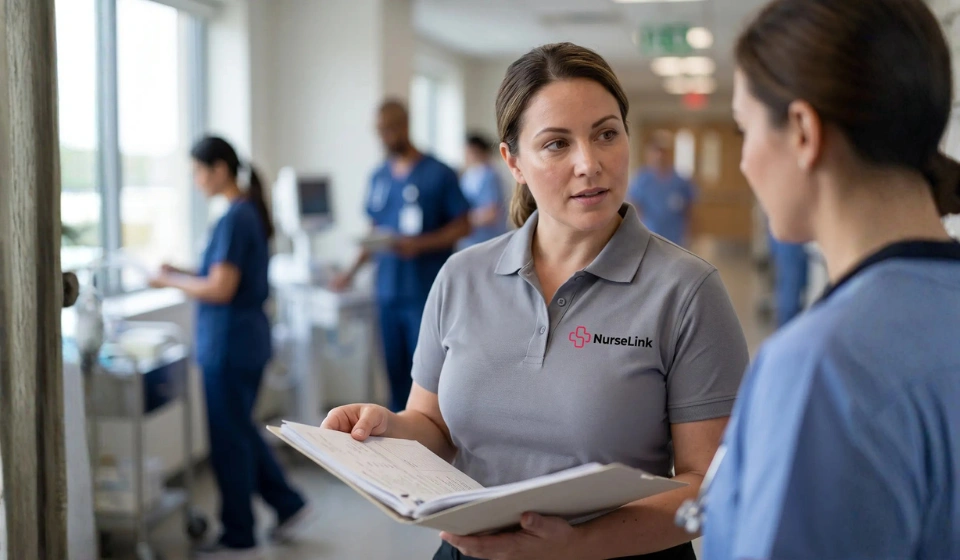
How NurseLink Helped a Perth Hospital Overcome a Staffing Crisis A Practical Example of Effective Nursing Support Introduction There is a particular kind of pressure that builds inside a hospital when it has been running short-staffed for months. It is not the sharp, visible pressure of a single crisis. It is something slower and more corrosive – the weight of good nurses trying to carry more than any person reasonably should, of patients waiting longer than they ought to, and of managers who have begun to dread the start of each new week because they do not know how they will fill the roster. That was the reality facing a mid-sized private hospital in Perth, Western Australia, when they reached out to NurseLink Healthcare. The hospital had been managing a staffing shortfall across several wards for the better part of several months. What had begun as a manageable gap had, over time, compounded into something that was genuinely affecting the quality of care the hospital could provide, the wellbeing of its permanent nursing staff and the confidence of hospital leadership in their ability to sustain safe operations. This case study documents how NurseLink Healthcare responded to that situation, what was put in place over a four-to-six-week engagement, and what changed as a result. To protect the privacy of the hospital and the individuals involved, all identifying details have been kept confidential throughout. The Hospital’s Background & Its Situation The hospital in question is a mid-sized private facility located in metropolitan Perth. It operates across a range of specialties and serves a steady, consistent patient population. Like a great many Australian private hospitals in the post-pandemic period, it had found the labour market for experienced nurses to be both competitive and unforgiving. Retention had become harder. Recruitment timelines had stretched. And the normal buffers that a well-staffed hospital relies upon, the ability to absorb unexpected absences, manage peak periods and maintain consistent care standards, had worn thin. The immediate pressure point was a combination of extended leave, resignation-driven vacancies and a period of elevated patient volume that arrived before adequate replacements had been found. The wards most affected were general medical, surgical recovery and the intensive care unit, where the need for specialised nursing skill made casual cover particularly difficult to source through conventional means. Permanent nursing staff were absorbing the gap. They were working additional hours, covering extra shifts and managing patient loads that were larger than ideal. The clinical risks were being managed, but only just, and the toll on the nursing team was evident. Morale had dropped noticeably. Several nurses had raised concerns directly with management. There was a very real possibility that the staffing shortfall, if left unaddressed, would compound further as exhausted permanent staff began to disengage or leave. The hospital’s Director of Nursing had tried a number of avenues before approaching NurseLink Healthcare. The challenge was not a lack of effort. It was a lack of access to nurses who were genuinely available, appropriately credentialed and experienced enough to step into a complex clinical environment without requiring the kind of intensive orientation that a temporary placement rarely allows for. NurseLink Healthcare was referred through a peer network of hospital administrators, with a specific recommendation that the agency had a reliable track record in placing experienced nurses quickly into acute settings. Understanding What The Hospital Actually Needed The initial consultation between NurseLink Healthcare and the hospital’s senior leadership was frank and detailed. The Director of Nursing was clear about what the hospital could not afford: nurses who required extensive hand-holding, who were unfamiliar with acute ward environments, or who would need significant supervision from a permanent staff base that was already stretched to capacity. What was needed were nurses who could be genuinely functional from the first shift. Registered Nurses with solid acute ward experience who understood how a busy surgical or general medical ward operates and could fit into an existing team without disrupting it. Enrolled Nurses who could provide competent and consistent support without requiring constant direction. And for the ICU specifically, nurses with genuine critical care experience and the clinical confidence to manage complex, unstable patients alongside a small permanent team. Beyond the clinical requirements, the Director of Nursing articulated something that is often left unsaid in staffing conversations but matters enormously in practice. She wanted nurses who would be good for team morale. Who would come in with a professional and collaborative approach, who would not create friction with permanent staff and who, in some small way, might help ease the exhaustion that had settled over the wards rather than adding to it. NurseLink Healthcare also spoke directly with several senior nursing staff during the assessment phase. Their perspective added important texture. What they needed was not simply more bodies in scrubs. They needed colleagues, people who understood the clinical environment, who pulled their weight and who contributed to the sense that things were being managed rather than merely endured. The placement brief NurseLink Healthcare developed from these conversations was specific, prioritised and grounded in the hospital’s operational reality rather than a generic staffing checklist. The NurseLink Healthcare Solution Delivered Rapid Access To A Credentialed, Experienced Nursing Pool NurseLink Healthcare’s first task was to identify nurses who were the right fit for this specific environment, not simply nurses who were available. The distinction matters. An experienced nurse placed in the wrong setting can be as disruptive as no nurse at all, and the hospital did not have the bandwidth to manage poor placements. Within the first week of the engagement, NurseLink Healthcare had confirmed placement of Registered Nurses across the general medical and surgical recovery wards and commenced the credentialing and orientation process for an ICU-experienced nurse to join the critical care team. Enrolled Nurses were placed in a supporting role across general wards, carefully matched to the skill level and supervision capacity available in each ward’s permanent cohort. Every nurse placed had been pre-screened not only for clinical qualifications and