Surgery is one of the most vulnerable experiences a person can go through, and behind every successful procedure is a team of nurses guiding patients safely from admission to recovery. So, what is perioperative nursing? It refers to the specialised care delivered across the three phases of surgery: the pre-operative stage, where patients are prepared, the intra-operative stage, where the procedure takes place, and the post-operative stage, where recovery begins. Perioperative nurses act as patient advocates throughout this journey, ensuring safety, dignity and comfort at every step. You will find them working across public and private hospitals, day surgery units and specialist surgical centres, collaborating closely with surgeons, anaesthetists and recovery teams. With rising surgical volumes and an ageing population in Australia, demand for skilled perioperative nurses continues to grow.
A Day In The Life Of A Perioperative Nurse
No two shifts in the operating theatre look quite the same. One day might involve back-to-back orthopaedic lists, another could mean assisting on complex cardiac cases. What stays consistent is the unwavering focus on patient safety, strict sterility and seamless teamwork. Perioperative nurses generally rotate through three core roles during their career, each one demanding a different set of skills and clinical thinking.
1. The Scrub & Scout Nurse
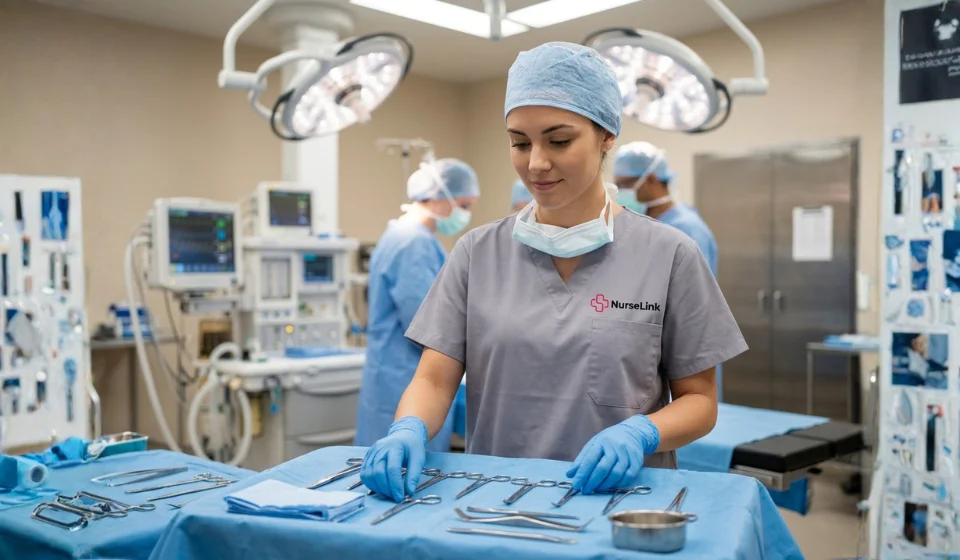
The scrub nurse works directly within the sterile field, preparing instruments, passing them to the surgeon and anticipating what will be needed next, sometimes before it is even requested. Maintaining sterility is non-negotiable, and even the smallest break in technique can compromise a patient’s outcome.
The scout nurse, also known as the circulating nurse, manages everything outside the sterile field. This includes counting instruments and swabs at multiple points during the case, documenting the procedure accurately, fetching additional supplies and coordinating with external teams such as pathology or imaging. Both positions rely heavily on attention to detail, solid anatomy knowledge and a clear understanding of how each surgical workflow unfolds.
2. Inside The Operating Theatre
Before a single patient enters the room, the theatre needs to be ready. Perioperative nurses set up the space with the correct equipment, instruments and consumables specific to the procedure on the list. This preparation can take significant time, especially for specialty cases involving robotics or implants.
Once the patient is in the room, the team conducts the surgical safety checklist, often referred to as the WHO “Time Out”. This step confirms patient identity, the procedure being performed, the surgical site and any allergies or anaesthetic concerns. Throughout the case, nurses monitor sterility, manage infection control practices and ensure the patient is positioned safely to avoid pressure injuries or nerve damage. Once surgery is complete, they hand over to the Post-Anaesthesia Care Unit (PACU) team with a thorough clinical handover.
3. Caring For Patients Under Anaesthesia
The anaesthetic nurse role is a fascinating mix of clinical preparation and emotional support. These nurses assist the anaesthetist with airway management, securing IV access, drawing up and labelling drugs, and preparing emergency equipment. During the case, they continuously monitor vital signs, fluid balance and how the patient is responding to the anaesthetic agents being used.
Equally important is the human side of the role. Patients are often anxious in the moments before induction, and a calm voice or reassuring presence can make a real difference. Anaesthetic nurses also need to recognise early warning signs of serious complications such as malignant hyperthermia, anaphylaxis or sudden cardiovascular changes, then act quickly alongside the anaesthetist to manage them.
How You Can Become A Perioperative Nurse?
Becoming a perioperative nurse in Australia is a structured journey, but it is one that opens up rewarding career opportunities in a high stakes clinical environment. Here is what the typical pathway looks like.
1. Start With A Bachelor of Nursing
The first step is completing a three year Bachelor of Nursing degree at an accredited Australian university. During this time, students gain foundational knowledge across anatomy, pharmacology, microbiology and patient care, all of which become essential when working in surgical settings. Clinical placements form a major part of the degree, and some students may be lucky enough to rotate through surgical wards or even spend time observing in theatre, which can be a useful preview of the perioperative environment.
2. Get Registered With AHPRA
Once you graduate, the next step is applying for registration through the Australian Health Practitioner Regulation Agency (AHPRA), specifically with the Nursing and Midwifery Board of Australia (NMBA). To register, you will need to meet English language requirements, undergo criminal history checks and commit to continuing professional development. Registration must be renewed annually, and maintaining it is what allows you to legally practise as a Registered Nurse in Australia.
3. Take On A Graduate Transition Year
Most hospitals offer a twelve month Graduate Nurse Program, which is designed to help new nurses transition from study into clinical practice. These programs usually involve rotations across different wards, giving graduates exposure to a variety of patient populations and clinical challenges. Some hospitals run a dedicated perioperative stream within their graduate program, but these positions are highly competitive, so applying early and clearly demonstrating your interest in theatre nursing is key. This year is where you build confidence, sharpen your time management and develop the clinical judgement that perioperative nursing demands.
4. Land Your First Perioperative Role
After completing your graduate year, you can begin applying for entry level theatre positions, dedicated post graduate perioperative programs, or recovery and PACU roles, which can serve as a strong entry point into the surgical world. From there, many nurses choose to pursue further study such as a Graduate Certificate or a Master’s in Perioperative Nursing to deepen their expertise. Joining professional bodies like the Australian College of Perioperative Nurses (ACORN) can also support your professional growth and connect you with mentors in the field.
Skills Needed For Perioperative Nursing
Theatre is not a place for guesswork. Perioperative nursing duties require a unique blend of technical capability, clinical awareness and personal resilience. While experience builds many of these skills over time, the most effective theatre nurses tend to share a common foundation.
Some of the most important skills include:
- Strong clinical knowledge across anatomy, surgical procedures and pharmacology, which underpins safe decision making in every case.
- Sharp attention to detail, particularly when it comes to sterile technique, instrument and swab counts and accurate documentation.
- The ability to stay calm under pressure and respond quickly when an emergency unfolds.
- Excellent communication and teamwork skills, since theatre teams rely on clear, concise exchanges to keep patients safe.
- Manual dexterity and physical stamina to handle long surgical cases that may stretch over many hours.
- Critical thinking and sound clinical decision making, especially when situations change suddenly.
- A genuine commitment to lifelong learning as surgical technology, techniques and best practice continue to evolve.
What ties all of these together is mindset. Perioperative nurses tend to be the kind of people who enjoy problem solving, take pride in precision and find satisfaction in being part of something larger than themselves.
Key Takeaways
Perioperative nursing is a dynamic, highly specialised field that supports patients through every stage of surgery, from the first conversation in pre-admission through to safe recovery. The role of a perioperative nurse offers genuine variety across scrub, scout, anaesthetic and recovery positions, with clear pathways for career progression and ongoing professional development. The journey begins with a Bachelor of Nursing, AHPRA registration and a strong graduate foundation, but success in theatre ultimately comes down to technical skill, teamwork and a deep commitment to patient safety. For nurses who thrive in fast paced, detail driven environments where their work directly shapes patient outcomes, perioperative nursing is one of the most rewarding career paths in Australian healthcare today.