
When The Highway Brought Them In
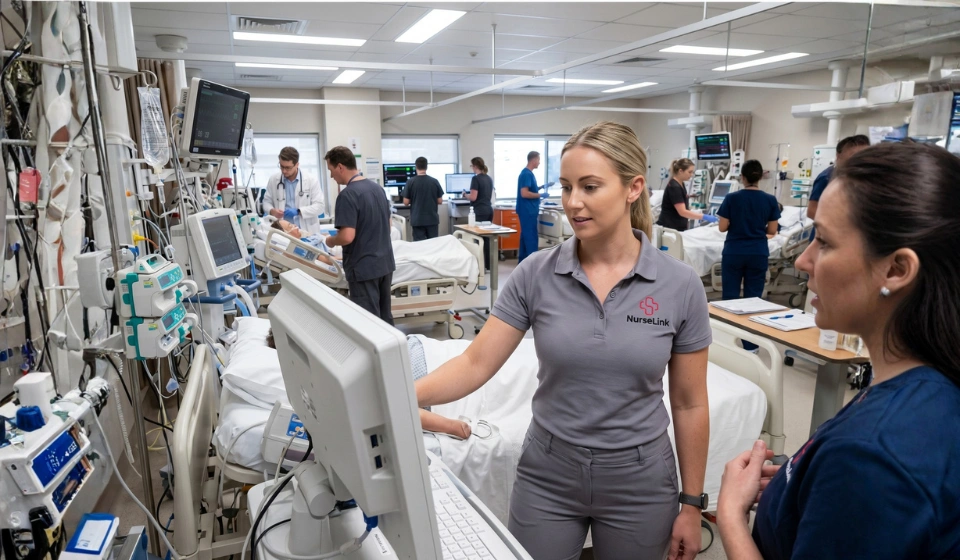
How NurseLink Healthcare Supported An ICU Through A Critical Care Surge
A Case Study In Emergency Critical Care Nursing Deployment For A Regional ICU Under Sudden & Severe Pressure
Introduction
Remote and regional hospitals carry a particular kind of responsibility. They are not simply smaller versions of metropolitan facilities. They are, for the communities they serve, often the only version. When something serious happens in the vast distances of outback Australia, the people involved do not have the option of the next hospital down the road. They have one hospital, and that hospital has to be ready for whatever arrives.
The roads of central Australia are long, remote and unforgiving. When a major road accident occurs in the Northern Territory, the injured do not arrive at a hospital gradually or predictably. They arrive together, in waves, and the clinical team that receives them must absorb a surge of critical presentations with the staff, the equipment and the capacity that existed before anyone knew the day was going to go this way.
For an intensive care unit operating with the staffing levels appropriate to its baseline patient volume, a sudden surge of this nature is a genuine crisis. The clinical complexity of critically injured patients requiring simultaneous intensive management stretches a nursing workforce that was sized for a different reality, and the consequences of that stretch, for the patients in those beds, are direct and serious.
At NurseLink Healthcare, we exist to provide the specialist nursing capacity that regional facilities need when their own resources are not enough. This case study documents how our team supported the ICU of a regional hospital in the Northern Territory, through two to three months following a major road accident that produced a sudden and sustained surge in critical care demand that the unit’s existing nursing workforce could not absorb alone.
To protect the privacy of the facility and the individuals involved, all identifying details have been kept confidential throughout this case study.
The Facility & Its Situation
The hospital at the centre of this case study is the principal referral hospital for a vast geographic catchment area. It serves a population spread across an enormous region, including remote Aboriginal communities, pastoral stations and the town itself, and its ICU operates as the critical care destination for the most seriously ill and injured patients across that entire area.
The unit is staffed by a team of experienced critical care nurses who manage a patient cohort that reflects the particular clinical profile of remote central Australia. Trauma from road accidents and remote location incidents, the complex medical presentations associated with chronic disease in a population with limited access to primary care, and the inter-hospital transfers of patients from even more remote facilities that lack critical care capacity of their own. The team is experienced, capable and accustomed to working at the edge of what a regional ICU can manage. What they are not resourced for is a simultaneous surge of critically injured patients arriving in the immediate aftermath of a major road accident on the highway.
The accident that triggered this engagement involved multiple vehicles and resulted in a significant number of critically injured patients being transported to the hospital over a short period. The initial surge placed the ICU under immediate and severe pressure, and the period that followed, as the most critically injured patients required sustained intensive management across days and weeks, produced a nursing workload that the existing team simply could not sustain at safe staffing ratios.
The ICU nurse manager, a highly experienced critical care nurse who had managed difficult periods in the unit before, assessed the situation within the first twenty four hours and made the call that the team needed external nursing support. The question was how quickly it could be sourced and how qualified it would be when it arrived.
NurseLink Healthcare was contacted the same day.
Understanding What The ICU Actually Needed
The conversation between NurseLink Healthcare and the ICU nurse manager was one that both parties approached with the directness that an acute situation demands. She needed critical care nurses, specifically nurses with ICU experience and the clinical capability to manage ventilated, sedated and haemodynamically unstable patients in a regional critical care environment with limited on-site specialist medical backup compared to a metropolitan facility.
She was precise about what this meant. Critical care nursing in a regional ICU requires a level of clinical autonomy and judgment that differs from nursing in a tertiary metropolitan ICU where specialist support is always immediately available. The nurses she needed had to be capable of making sound independent clinical assessments, of identifying deterioration before it became a crisis and of managing complex clinical situations with the telemedicine and telephone support that a remote facility relies on, rather than the immediate physical presence of a specialist that a metropolitan colleague might call. That combination of high technical skill and high clinical independence was the specific requirement, and it was not negotiable.
She was also honest about the environment the placed nurses would be entering. Alice Springs is not a posting that suits everyone. The clinical intensity is high, the patient cohort is complex and the geographic isolation of the location means that nurses deployed there need to be personally suited to remote area work as well as clinically qualified for it. A nurse who was excellent in a metropolitan ICU but who had never worked outside a major city was not automatically the right fit, regardless of their credentials.
NurseLink Healthcare’s response was built on a clear understanding of everything she had described.
The NurseLink Healthcare Solution
Critical Care Nurses With Regional & Remote Experience
NurseLink Healthcare’s first priority was identifying registered nurses whose backgrounds met the specific requirements of this deployment, not just ICU experience but ICU experience in settings that had prepared them for the clinical autonomy that a regional unit requires. The search drew on NurseLink Healthcare’s specialist critical care nursing network with a specific focus on nurses who had worked in regional or remote facilities, who had experience managing complex critical care patients without immediate specialist backup and whose professional history demonstrated the judgment and independence that the ICU needed.
Every nurse identified for the deployment was vetted thoroughly. AHPRA registration was confirmed, critical care credentials and post-graduate qualifications were verified, and clinical references were obtained and checked. No nurse was deployed to an ICU managing critically injured patients on the basis of their availability alone. The clinical match was the determining criterion, and the deployment timeline was built around finding the right people rather than the fastest available people.
Within days of the initial contact, the first NurseLink Healthcare nurses were en route to the ICU’s location. The speed was possible because the groundwork of a specialist nursing network, with pre-verified credentials and known clinical profiles, was already in place before the call came.
Operational Integration With The Existing ICU Team
The nurses NurseLink Healthcare deployed arrived at the unit with the clinical confidence of experienced critical care practitioners and the professional humility to understand that they were entering an established team with its own protocols, its own culture and its own knowledge of the patient cohort that had been accumulating before they arrived.
The ICU nurse manager had organised a focused orientation for each arriving nurse that covered the unit’s specific protocols, its documentation systems, its escalation pathways and the particular clinical profile of the patients currently in the unit. For experienced critical care nurses, this orientation was efficiently absorbed. They were not being taught how to nurse in an ICU. They were being shown how this ICU worked, and that is a significantly smaller knowledge transfer.
Within the first week, the placed nurses were functioning as integrated members of the team, taking patient assignments, participating in ward rounds and contributing to the clinical decision making that an ICU shift requires, without the supervisory overhead that less experienced placements would have imposed on an already stretched permanent team.
Sustaining The Surge Across The Full Engagement Period
The nature of a major trauma surge is that its demands do not resolve quickly. Critically injured patients require intensive nursing support for days and weeks, and the caseload that arrived in the immediate aftermath of the accident continued to make significant nursing demands on the unit well into the weeks that followed. NurseLink Healthcare’s deployment was structured to cover this sustained period, not simply the acute peak.
The roster was built to maintain safe staffing ratios across all shifts, including nights and weekends, for the duration of the engagement. As patients’ conditions evolved and the acuity profile of the unit shifted over the weeks, the deployment was adjusted in close communication with the ICU nurse manager to ensure that the level of nursing support matched the level of clinical demand. When additional capacity was needed for a particular period, NurseLink Healthcare responded. When the permanent team had recovered sufficiently to manage a reduction in agency support, the arrangement was adjusted accordingly.
After-Hours Support & Ongoing Communication
Throughout the engagement, NurseLink Healthcare’s account manager maintained regular communication with the ICU nurse manager, providing a responsive point of contact for any issues with the placement and ensuring that the operational management of the deployment did not add to the administrative burden of a nurse manager who was already managing an extraordinary clinical period.
When one of the deployed nurses experienced a personal situation that required them to leave the deployment ahead of schedule, NurseLink Healthcare managed the replacement promptly and without disruption to the unit’s staffing continuity. The ICU nurse manager did not have to solve a rostering problem. She had a clinical unit to run.
Outcomes & Impact
Safe Staffing Ratios Were Maintained Throughout The Surge
For the full two to three month period of NurseLink Healthcare’s involvement, the ICU maintained the nursing staffing ratios required for the safe management of its patient cohort, including the elevated acuity caseload that the road accident had produced. No shift ran below the minimum safe staffing level for the patient census. No patient received a reduced standard of monitoring or management because of an inadequate nursing workforce. The clinical standard that critically ill patients deserve was maintained without interruption.
The Permanent Team Was Protected From Unsustainable Overextension
The permanent nursing team, which had absorbed the initial shock of the surge with the professionalism and commitment that characterises experienced critical care nurses, was protected from the kind of sustained overextension that produces burnout, error and the longer term workforce damage that regional hospitals can ill afford. Overtime hours were managed within acceptable limits. Rest periods between shifts were maintained. The team that had been there before the accident was, at the end of the engagement, still intact and still functional.
The ICU nurse manager noted, in her feedback to NurseLink Healthcare, that this outcome was one she had not been certain of in the days immediately following the accident. She had seen what sustained critical care surges could do to a nursing team, and she had been genuinely concerned about her people. NurseLink Healthcare’s deployment had been the difference between a team that was stretched and a team that was broken.
Critically Injured Patients Received The Care They Required
The most fundamental measure of the engagement’s success was the standard of care received by the patients in the ICU across the surge period. Critically injured patients in a regional facility are among the most vulnerable clinical populations in the country, far from the resources of a major metropolitan centre and entirely dependent on the skill and attentiveness of the team around them. The nursing workforce NurseLink Healthcare provided was qualified, experienced and committed to the standard of care that those patients needed and deserved.
The Unit Returned To Stable Operations
As the surge caseload resolved and the patient census returned toward its baseline, the NurseLink Healthcare deployment wound down in a planned and coordinated way, with the permanent team resuming full operational responsibility for the unit without the disruption that an abrupt end to agency support can sometimes produce. The transition was managed over a period of weeks, with the permanent team gradually re-absorbing full shift responsibility as the patient volume supported it.
A Reflection From The ICU Nurse Manager
In her feedback to NurseLink Healthcare following the conclusion of the engagement, the ICU nurse manager shared the following:
“We had critically injured patients arriving faster than we could absorb them, and I had a team that was already working at its limit. I needed experienced ICU nurses who could walk into a regional unit and function at the level those patients required, without me having to supervise them through it. That is exactly what NurseLink sent. The nurses they deployed were outstanding, clinically and as people. My team came through this in one piece. Our patients received the care they needed. In our environment, that is everything there is.”
Key Takeaways From This Case Study
Regional ICUs need critical care nurses with regional capability, not just ICU credentials. The clinical autonomy required to nurse in a regional intensive care unit, where specialist backup is not immediately physically present, demands a specific kind of practitioner. Deploying nurses whose entire experience is in metropolitan facilities with full specialist support on site is not an adequate response to a regional critical care surge.
Speed of deployment matters in an acute surge, but not at the cost of clinical quality. The pressure to fill a critical care gap quickly can create the temptation to deploy the first available nurses rather than the most appropriate ones. NurseLink Healthcare’s specialist network made it possible to respond quickly without compromising on the clinical match that a surge of this nature required.
Protecting the permanent team is a strategic clinical outcome. A regional hospital’s permanent nursing workforce is not easily replaced. The experienced critical care nurses who staff a regional ICU represent years of recruitment, training and retention that cannot be quickly rebuilt if burnout or overextension drives them out. Agency support that protects the permanent team from unsustainable demand is not simply a welfare consideration. It is a long-term clinical investment.
Communication between agency and facility must be active, not reactive. A nursing agency deployment into a surge environment cannot be set and forgotten. The clinical demands of the situation evolve, the roster needs active management and the facility’s leadership needs a responsive agency contact who treats the engagement as an ongoing operational partnership rather than a completed placement.
Conclusion
A major road accident in the outback does not announce itself. It arrives without warning, sends its injured to the nearest hospital and leaves the clinical team there to manage the consequences with whatever they have. What they had was an experienced ICU team, a nurse manager who knew exactly what she needed and the good sense to make the call to NurseLink Healthcare immediately.
What NurseLink Healthcare provided was the critical care nursing capacity that made it possible for a regional ICU to hold its standard of care through a sustained surge that would have overwhelmed its existing resources. The patients in those beds received the intensive nursing they needed. The permanent team came through the surge intact. And the hospital that serves one of Australia’s most remote communities was able to do what it exists to do, even when the highway made that harder than anyone had planned for.
If your facility is facing a critical care staffing gap, whether from a sudden surge or a sustained shortage, we welcome the call. NurseLink Healthcare is here to provide the specialist nursing support that your patients and your team deserve.
Latest Post
When The Highway Brought Them In
Holding The Line
Open On Day One

When The Wards Couldn’t Wait
Burnout Across An Entire Healthcare Team
When The Roster Falls Apart At Midnight

When The Ambulance Left, The Real Work Started.
One Sick Call, One Struggling Ward
Reliable Nursing Support At Home

Ensuring Continuity Of Care With Nursing Agency Support

Restoring Stability In Aged Care