
When The Wards Couldn’t Wait
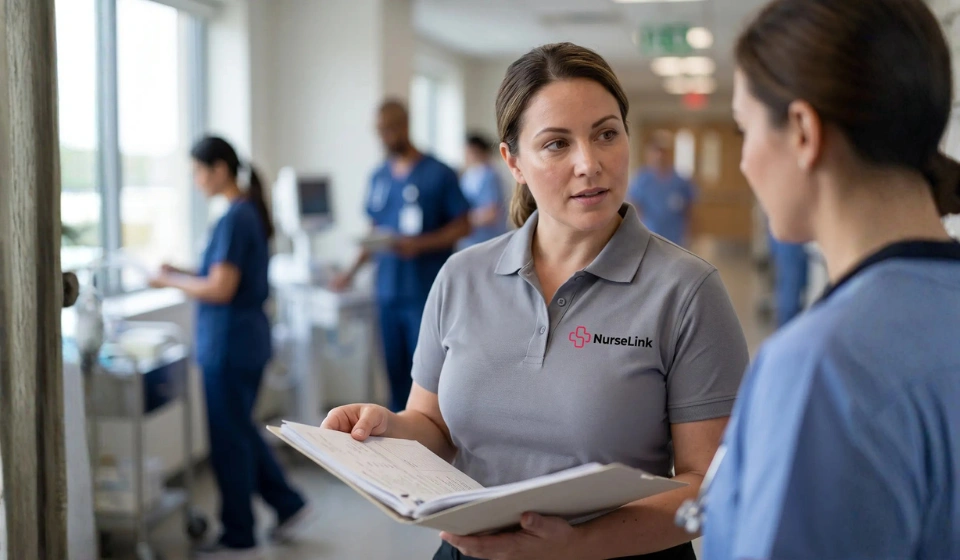
How NurseLink Helped a Perth Hospital Overcome a Staffing Crisis
A Practical Example of Effective Nursing Support
Introduction
There is a particular kind of pressure that builds inside a hospital when it has been running short-staffed for months. It is not the sharp, visible pressure of a single crisis. It is something slower and more corrosive – the weight of good nurses trying to carry more than any person reasonably should, of patients waiting longer than they ought to, and of managers who have begun to dread the start of each new week because they do not know how they will fill the roster.
That was the reality facing a mid-sized private hospital in Perth, Western Australia, when they reached out to NurseLink Healthcare. The hospital had been managing a staffing shortfall across several wards for the better part of several months. What had begun as a manageable gap had, over time, compounded into something that was genuinely affecting the quality of care the hospital could provide, the wellbeing of its permanent nursing staff and the confidence of hospital leadership in their ability to sustain safe operations.
This case study documents how NurseLink Healthcare responded to that situation, what was put in place over a four-to-six-week engagement, and what changed as a result. To protect the privacy of the hospital and the individuals involved, all identifying details have been kept confidential throughout.
The Hospital's Background & Its Situation
The hospital in question is a mid-sized private facility located in metropolitan Perth. It operates across a range of specialties and serves a steady, consistent patient population. Like a great many Australian private hospitals in the post-pandemic period, it had found the labour market for experienced nurses to be both competitive and unforgiving. Retention had become harder. Recruitment timelines had stretched. And the normal buffers that a well-staffed hospital relies upon, the ability to absorb unexpected absences, manage peak periods and maintain consistent care standards, had worn thin.
The immediate pressure point was a combination of extended leave, resignation-driven vacancies and a period of elevated patient volume that arrived before adequate replacements had been found. The wards most affected were general medical, surgical recovery and the intensive care unit, where the need for specialised nursing skill made casual cover particularly difficult to source through conventional means.
Permanent nursing staff were absorbing the gap. They were working additional hours, covering extra shifts and managing patient loads that were larger than ideal. The clinical risks were being managed, but only just, and the toll on the nursing team was evident. Morale had dropped noticeably. Several nurses had raised concerns directly with management. There was a very real possibility that the staffing shortfall, if left unaddressed, would compound further as exhausted permanent staff began to disengage or leave.
The hospital’s Director of Nursing had tried a number of avenues before approaching NurseLink Healthcare. The challenge was not a lack of effort. It was a lack of access to nurses who were genuinely available, appropriately credentialed and experienced enough to step into a complex clinical environment without requiring the kind of intensive orientation that a temporary placement rarely allows for. NurseLink Healthcare was referred through a peer network of hospital administrators, with a specific recommendation that the agency had a reliable track record in placing experienced nurses quickly into acute settings.
Understanding What The Hospital Actually Needed
The initial consultation between NurseLink Healthcare and the hospital’s senior leadership was frank and detailed. The Director of Nursing was clear about what the hospital could not afford: nurses who required extensive hand-holding, who were unfamiliar with acute ward environments, or who would need significant supervision from a permanent staff base that was already stretched to capacity.
What was needed were nurses who could be genuinely functional from the first shift. Registered Nurses with solid acute ward experience who understood how a busy surgical or general medical ward operates and could fit into an existing team without disrupting it. Enrolled Nurses who could provide competent and consistent support without requiring constant direction. And for the ICU specifically, nurses with genuine critical care experience and the clinical confidence to manage complex, unstable patients alongside a small permanent team.
Beyond the clinical requirements, the Director of Nursing articulated something that is often left unsaid in staffing conversations but matters enormously in practice. She wanted nurses who would be good for team morale. Who would come in with a professional and collaborative approach, who would not create friction with permanent staff and who, in some small way, might help ease the exhaustion that had settled over the wards rather than adding to it.
NurseLink Healthcare also spoke directly with several senior nursing staff during the assessment phase. Their perspective added important texture. What they needed was not simply more bodies in scrubs. They needed colleagues, people who understood the clinical environment, who pulled their weight and who contributed to the sense that things were being managed rather than merely endured.
The placement brief NurseLink Healthcare developed from these conversations was specific, prioritised and grounded in the hospital’s operational reality rather than a generic staffing checklist.
The NurseLink Healthcare Solution Delivered
Rapid Access To A Credentialed, Experienced Nursing Pool
NurseLink Healthcare’s first task was to identify nurses who were the right fit for this specific environment, not simply nurses who were available. The distinction matters. An experienced nurse placed in the wrong setting can be as disruptive as no nurse at all, and the hospital did not have the bandwidth to manage poor placements.
Within the first week of the engagement, NurseLink Healthcare had confirmed placement of Registered Nurses across the general medical and surgical recovery wards and commenced the credentialing and orientation process for an ICU-experienced nurse to join the critical care team. Enrolled Nurses were placed in a supporting role across general wards, carefully matched to the skill level and supervision capacity available in each ward’s permanent cohort.
Every nurse placed had been pre-screened not only for clinical qualifications and currency of registration but for their experience in comparable acute environments. References were verified. Previous placements in similar settings were confirmed. The aim was to ensure that each nurse arrived already knowing, in broad terms, what a shift in that type of ward would look like and what would be expected of them.
Consistent Rostering & Reliable Shift Coverage
One of the practical frustrations the hospital had experienced with other agencies in the past was inconsistency. Different nurses turning up each shift. No continuity. Permanent staff spending the start of every shift reorienting someone new instead of getting on with the work of caring for patients.
NurseLink Healthcare made consistency an explicit priority. Where possible, the same nurses were rostered to the same wards across the engagement period. Where rotation was necessary, it was managed deliberately rather than defaulted to, with overlap built into handover arrangements to preserve continuity of patient care. By the second week of the engagement, the hospital’s ward managers were consistently seeing familiar faces from the NurseLink Healthcare team, and the integration between temporary and permanent staff had improved markedly.
ICU-Specific Placement & Clinical Calibration
The intensive care unit presented the most clinically demanding placement challenge. ICU nursing requires a particular depth of knowledge and a specific kind of composure. It is not an environment where a capable but generalist nurse can simply step in and be effective. The patient cohort is complex, the equipment is specialised and the margin for error is narrow.
NurseLink Healthcare placed an ICU-experienced nurse whose background included several years of critical care nursing in a comparable metropolitan hospital setting. Before the first shift, there was a structured orientation conversation with the ICU’s Nurse Unit Manager, covering patient acuity, equipment specifics and team communication norms. This was not a box-ticking exercise. It was a genuine clinical calibration designed to ensure that the nurse arrived prepared rather than simply present.
The ICU Nurse Unit Manager later reflected that the NurseLink Healthcare placement had integrated into the team more smoothly than she had anticipated, and that the nurse’s clinical contribution had been genuinely valuable rather than merely adequate.
Ongoing Communication & Placement Review
Throughout the engagement, NurseLink Healthcare maintained active communication with the hospital’s Director of Nursing and ward managers. Weekly check-ins were held to review how placements were tracking, whether any adjustments were needed and how the hospital’s staffing picture was evolving.
On one occasion, a nurse placed in the surgical recovery ward indicated mid-engagement that she was moving to a different city for personal reasons. NurseLink Healthcare had a replacement confirmed and inducted within forty-eight hours, with no gap in coverage for the ward. That kind of responsiveness, the ability to absorb an unexpected change without leaving the hospital exposed, was something the Director of Nursing noted specifically in the post-engagement debrief.
Outcomes & Impact
No Shift Went Unstaffed For The Duration Of The Engagement
The baseline requirement of the engagement was that the hospital’s critical wards would have adequate nursing cover for every shift during the placement period. That requirement was met without exception across the four to six weeks of NurseLink Healthcare’s involvement. For a hospital that had been managing coverage anxiety on a daily basis, this alone represented a meaningful shift in operational confidence.
Staff Morale Improved In Tangible & Measurable Ways
Perhaps the most significant outcome of the engagement was not one that appeared on a roster or a coverage report. It was the change in atmosphere across the affected wards.
Permanent nursing staff who had been carrying an unsustainable load for months experienced what it felt like to have adequate support again. Patient-to-nurse ratios normalised. The additional hours and double shifts that had become routine began to ease. Nurses who had been visibly exhausted had room, for the first time in months, to recover some of their energy and reconnect with why they had chosen the profession.
Ward managers reported a noticeable improvement in team cohesion. The NurseLink Healthcare nurses had, as had been specifically requested, integrated professionally and collaboratively into existing teams. Several permanent nurses commented positively on the quality and attitude of the temporary placements, which in itself was telling. Temporary nurses are not always welcomed warmly into tight-knit permanent ward teams. When they are, it reflects both the quality of the placement and the care taken in making it.
Patient Care Quality Was Maintained & Restored
Across the engagement period, there were no reportable clinical incidents attributable to staffing inadequacy in the wards covered by NurseLink Healthcare placements. Patient satisfaction indicators, as tracked by the hospital’s internal mechanisms, showed improvement across the surgical recovery and general medical wards. In the ICU, the permanent team’s clinical capacity was meaningfully extended by the addition of a credentialed critical care nurse, enabling the unit to manage its patient cohort without the compressed margins that had previously been a source of ongoing concern.
A Reflection From The Director Of Nursing
“We had been struggling for longer than I want to admit. By the time we contacted NurseLink, I think some of us had started to accept that this was just what things were going to be like. What NurseLink gave us, very quickly and very practically, was competent, professional nurses who could genuinely function in our environment from day one. But what I didn’t expect was how much it would matter to the team. Our permanent nurses are proud people. They care deeply about what they do. Watching them get some relief, watching the wards start to feel normal again, that was something. We’re in a different place now than we were four months ago, and NurseLink Healthcare is a meaningful part of why.”
Key Takeaways From This Case Study
A Staffing Gap Left Unaddressed Does Not Stay The Same Size.
The hospital’s experience before engaging NurseLink Healthcare illustrates a pattern that is common and well-documented. A manageable shortfall, left unresolved, compounds. Permanent staff absorb the pressure until they can no longer do so, morale deteriorates, and the risk of further departures increases. Early intervention through quality agency support is almost always less costly, clinically and operationally, than allowing a gap to deepen.
Fit Matters As Much As Availability.
The difference between a nurse who is merely available and a nurse who is genuinely right for a specific environment is significant. NurseLink Healthcare’s approach of matching nurses to settings based on detailed clinical background, not just credential verification, was central to the quality of the outcomes this engagement produced. Placing the wrong nurse in a complex ward is not a solution. It is a different kind of problem.
Temporary Nurses Can Be A genuine Asset To Team Morale.
There is sometimes an assumption that temporary nursing staff represent a necessary inconvenience, adequately skilled but disruptive to established team dynamics. This engagement offered a counterexample. When temporary nurses are well-matched, professionally oriented and genuinely capable, they can contribute positively to the atmosphere of a ward rather than straining it. The right placement, made well, lifts a team rather than burdening it.
Consistency Within A Temporary Arrangement Is Not A Luxury.
The hospital’s previous experience with agency staff had been marked by inconsistency, different nurses each shift, no continuity, permanent staff repeatedly reorienting new faces. NurseLink Healthcare treated continuity as a clinical priority, not an administrative detail. The improvement in ward function and in the relationship between temporary and permanent staff was directly connected to the consistency of the placement roster.
Responsive Account Management Is Part Of The Clinical Service.
The mid-engagement departure of one placed nurse and its seamless resolution illustrated something important about what distinguishes an effective nursing agency from an adequate one. The ability to respond quickly, competently and without drama when circumstances change is not a secondary feature. It is a core component of what a hospital in genuine need requires from its staffing partner.
Conclusion
A hospital under sustained staffing pressure is not just an administrative challenge. It is a human one. The nurses carrying the load are not abstractions on a roster. They are professionals who chose a demanding and meaningful vocation, and who deserve to practise it in conditions that allow them to do it well. The patients in their care deserve the same.
NurseLink Healthcare’s engagement with this Perth hospital was, in the scope of the work, a contained and practical piece of temporary staffing. But the impact of that work extended well beyond the shifts covered and the wards rostered. It gave a stretched team breathing room. It gave hospital leadership confidence that the situation was stabilising. And it gave nurses who had been running on empty the chance to remember what it feels like when the work is genuinely sustainable.
That is what good nursing agency support looks like at its best. Not just bodies in shifts, but the right people in the right places, placed with care, managed with attention and delivering a standard of clinical work that a hospital under pressure can genuinely rely on.
If your hospital or healthcare facility is navigating a staffing shortfall, whether acute or ongoing, we encourage you to speak with the NurseLink Healthcare team. We are experienced in placing Registered Nurses, Enrolled Nurses and specialised nursing staff across a wide range of acute and non-acute settings, and we understand that the hospitals we work with cannot afford anything less than genuinely capable, reliable support.
Latest Post
When The Wards Couldn’t Wait
Burnout Across An Entire Healthcare Team
When The Roster Falls Apart At Midnight

When The Ambulance Left, The Real Work Started.
One Sick Call, One Struggling Ward
Reliable Nursing Support At Home