Open On Day One
How NurseLink Helped an Adelaide Health Centre Open on Time
How Nursing Agency Support Turned an Empty Building Into a Community Ready Clinic
Introduction
Opening a new healthcare facility is, in theory, a moment of celebration. A community gains access to services it did not have before. A long planning process reaches its conclusion. And the people behind the project, often having worked toward this point for years, finally get to see the doors open.
In practice, the weeks leading up to an opening are some of the most precarious in the life of any healthcare service. The building is ready. The equipment has arrived. The appointment bookings have begun. And yet the single most important component of any clinic, the nursing workforce that will actually deliver care, is often the piece still being assembled when everything else is already in motion.
Recruiting a full nursing team for a brand new service is not something that happens overnight. Permanent positions need to be advertised, candidates need to be interviewed, references need to be checked, and the people ultimately selected often need to give notice at their current roles before they can start. That process, done properly, takes months. But community need does not wait for a recruitment process to conclude, and neither, often, does a funding agreement, a lease commencement date or a community that has been told a service is coming and is counting the days.
This was the situation facing a new community health centre in Adelaide, South Australia, in the lead up to its opening. The building was ready. The community was waiting. And the permanent nursing team that would eventually run the centre was still several months away from being fully in place.
That is where NurseLink Healthcare came in.
To protect the privacy of the organisation and the individuals involved, the name of the facility and all identifying details have been kept confidential throughout this case study.
The Facility & Its Situation
The centre at the heart of this case study is a community health service established to provide primary healthcare, chronic disease management and preventative health programs to a growing outer suburban area of Adelaide. The service had been years in the planning, the product of a genuine community need identified through population health data showing that residents in the area were travelling significant distances for basic primary care, with flow on effects for chronic disease management, immunisation rates and early intervention for a range of conditions.
The funding had been secured. The building, a purpose-fitted facility with consultation rooms, a treatment room and space for group health programs, was complete and ready for occupation. The centre’s management team, a small group led by an experienced health service manager who had overseen several service establishments during her career, had done everything within their control to be ready.
What they did not have, in the final weeks before the planned opening date, was a nursing team.
The recruitment process for the centre’s permanent nursing positions, which included several registered nurse roles and a nurse coordinator position, had been running in parallel with the construction and fitout timeline. Recruitment for new health services, particularly in growth corridor areas where housing was outpacing infrastructure and competition for nursing staff across the sector was intense, had taken longer than projected. By the time the building was ready, the centre had successfully recruited for some of its nursing positions, but not all, and even those who had been successful would not be available to start until closer to the planned opening date, with some still working through notice periods at their existing employers.
The centre’s manager faced a genuinely difficult choice. The opening date had been communicated to the community, to funding bodies and to referring GPs in the area. Pushing it back was possible but came with real costs, not least to the trust of a community that had been told help was coming. Opening without adequate nursing coverage was not an option that anyone with clinical responsibility could responsibly consider.
The centre’s manager reached out to several nursing agencies to explore short-term staffing support that could bridge the gap between the building being ready and the permanent team being fully in place. NurseLink Healthcare was one of the agencies she contacted, and following an initial conversation about the scope and nature of what was needed, became the agency engaged for the role.
Understanding What The Centre Actually Needed
The brief NurseLink Healthcare received was unusual in a specific way. Most nursing agency engagements involve supplementing an existing team that has its own established routines, culture and clinical protocols. This engagement involved something different: providing nurses who could effectively help establish those things, because the service itself was brand new and had no existing operational rhythm for incoming staff to slot into.
The centre’s manager was clear about what this meant in practice. The nurses NurseLink Healthcare provided would need to be more than competent and reliable, qualities that matter in every agency placement. They would need to be the kind of experienced, adaptable professionals who could walk into a new clinical environment with no established processes and help build those processes from the ground up, alongside the centre’s small founding team.
She needed registered nurses with strong primary health and community health backgrounds, comfortable across a broad scope of practice that would include immunisation clinics, chronic disease management appointments, wound care, health assessments and the kind of general clinical support that a new community health centre’s early patient base would require. She needed nurses who could work with minimal supervision, because in the early weeks, supervision capacity within the centre’s own management was stretched thinly across everything an opening required. And she needed nurses who understood, instinctively, that they were not just filling a roster gap. They were helping to set the tone for what this service would feel like to the community it was about to start serving.
The engagement was structured to run for two to three months, covering the period between the centre’s opening and the point at which its permanent nursing team would be fully recruited, onboarded and settled into their roles.
The NurseLink Healthcare Solution
Experienced Community Health Nurses, Not Just Available Nurses
NurseLink Healthcare’s response to this brief began with selection. Rather than placing the first available registered nurses from its general pool, NurseLink Healthcare specifically identified nurses within its network who had genuine community health and primary care experience, including backgrounds in chronic disease management programs, immunisation services and general practice nursing. This mattered because the clinical context of a community health centre is meaningfully different from an acute hospital ward, and a nurse without relevant experience, however skilled in other settings, would have faced a steep learning curve at exactly the moment when the centre could least afford one.
The nurses placed brought with them not just clinical competence but a working familiarity with the kind of patient interactions, documentation requirements and program structures that community health centres typically involve. They did not need to be taught what a chronic disease management plan was or how a community immunisation clinic typically operates. They arrived already fluent in the language of the environment they were stepping into.
Helping To Establish Day One Operations
In the days immediately before opening, NurseLink Healthcare’s nurses worked alongside the centre’s manager and the handful of permanent staff who were already in place to help finalise the practical readiness of the clinical spaces. This included setting up treatment rooms, organising clinical supplies, reviewing draft clinical protocols and providing input, based on their own experience, on workflow considerations that the centre’s management team, coming from a more administrative and project management background, had not yet encountered.
This contribution went beyond the scope of a typical agency placement, but it reflected something NurseLink Healthcare believes matters in engagements like this one. A nurse placed into a new service is not just there to see patients. They are there to help that service become what it is meant to be, and experienced nurses bring an enormous amount of practical, ground level knowledge about how clinical spaces actually function day to day.
Full Clinical Coverage From The Opening Day
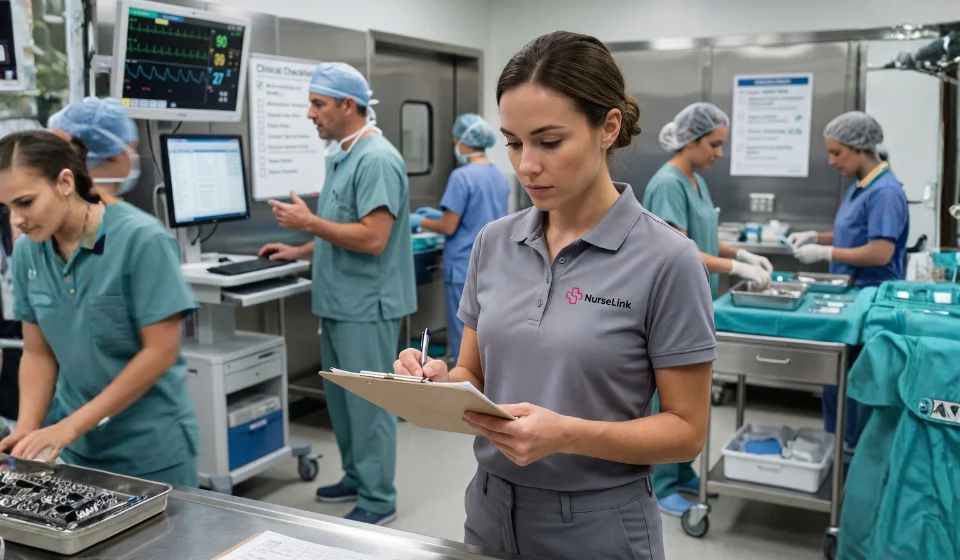
On the centre’s opening day, and for every day of operation through the engagement period, NurseLink Healthcare’s nurses provided the clinical workforce that allowed the centre to deliver on its promised services. Appointments that had been booked in the weeks leading up to opening, by GPs in the area who had been told the service was coming and had been holding referrals in anticipation, were seen. Immunisation clinics ran as scheduled. Chronic disease management appointments, the kind of ongoing care that makes the genuine difference to long term health outcomes in a community like this one, began on time.
For a community that had been waiting for this service, the experience of the centre simply working, of appointments happening, of nurses being present and capable and ready, mattered enormously. The opening was not delayed, scaled back or apologetic. It was, from the patient’s perspective, simply a new health service that had opened and was functioning.
A Bridge, Not A Substitute
Throughout the engagement, NurseLink Healthcare’s nurses worked closely alongside the centre’s permanent staff as they arrived progressively over the following weeks. Rather than operating as a separate parallel workforce, the agency nurses actively supported the integration of new permanent staff, sharing the operational knowledge they had built in the early weeks and helping new starters understand the systems, the patient base and the rhythms that had been established.
By the time the engagement concluded, the transition from agency supported to fully permanent staffing was, by the centre manager’s account, almost seamless. The permanent team did not arrive into a vacuum or a chaotic improvised environment. They arrived into a service that was already running, with established routines that NurseLink Healthcare’s nurses had helped build and were now ready to hand over.
Outcomes & Impact
The Centre Opened On The Scheduled Date
The most immediate and significant outcome was the simplest one. The centre opened when it had told its community it would open. The recruitment timeline for permanent staff, which had run longer than projected, did not become a public delay or a broken commitment. The community that had been waiting for this service received it on time.
Staff Morale Was Strong From The Outset
For the centre’s small founding management team, who had carried the weight of the establishment project for a long time and were facing the prospect of an opening without adequate clinical staff, the arrival of NurseLink Healthcare’s experienced nurses had an immediate and significant effect. The centre’s manager described feeling, for the first time in weeks, that the project was actually going to work. That sense of relief and confidence flowed through to the small permanent team already in place, who found themselves working alongside capable colleagues rather than trying to cover an impossible gap themselves.
As permanent staff arrived progressively over the following weeks, they joined a team that already had momentum, a working routine and a sense that things were under control. That foundation, established by NurseLink Healthcare’s nurses in the earliest and most precarious weeks, set the tone for the culture of the service going forward.
Patient Care Quality Was Established From The First Appointment
Because the nurses placed by NurseLink Healthcare had genuine community health experience, the standard of care delivered from the centre’s very first day of operation was consistent with what an established service would provide. There was no period of the centre finding its feet clinically while patients experienced a service that was still working out how it operated. The quality was there from the beginning, because the people delivering it had brought that quality with them.
A Reflection From The Centre's Manager
In her feedback to NurseLink Healthcare following the conclusion of the engagement, the centre’s manager reflected on what the support had meant:
“I had spent two years getting this centre to the point where the doors could open, and in the final weeks I genuinely did not know how we were going to do it without enough nurses. NurseLink sent us people who did not just fill a gap. They helped us become a functioning health service. They knew things about how community health centres run that none of us, frankly, knew yet. By the time our own nurses arrived, there was already a service here for them to join. I do not think I will ever fully be able to explain how much that mattered.”
Key Takeaways From This Case Study
A new service is only as ready as its workforce. A building, equipment and bookings do not make a healthcare service operational. The nursing workforce is what actually delivers care, and a gap in that workforce at the point of opening is a gap in the service itself, regardless of how ready everything else is.
Experience matters more than availability for establishment placements. When agency nurses are being placed into a new service rather than an established one, their value lies not just in their clinical skills but in their familiarity with how services in that setting typically operate. NurseLink Healthcare’s selection process for this engagement reflected an understanding that the right experience was the determining factor, not simply who was available first.
Agency support can do more than fill a roster. In situations where a new service is being established, experienced agency nurses can contribute to the practical setup of clinical operations in ways that go beyond seeing patients. That contribution can shape the foundation a new service is built on.
A smooth handover protects the culture of a new service. The transition from agency supported to permanently staffed should not feel like a disruption. When agency nurses actively support the integration of incoming permanent staff, the culture and operational rhythm established in the early weeks carries through, rather than being lost and rebuilt.
Conclusion
A new health service represents a promise made to a community, often years before the doors actually open. Keeping that promise depends on countless details coming together at the right time, and few of those details matter more than having the right nurses in place on day one.
NurseLink Healthcare exists to help healthcare organisations meet moments like this one, not just by filling gaps but by bringing the kind of experienced, capable nursing professionals who can help a new service become what it was always meant to be.
The community health centre at the centre of this case study opened on schedule, served its community from day one and transitioned smoothly into permanent operation, because the right nurses were there at the right time. That is what nursing agency support, done properly, can make possible.
If your organisation is establishing a new service, opening a new facility or facing a staffing gap that threatens an important milestone, we welcome the conversation. NurseLink Healthcare is here to help you open your doors when you need to, with the standard of care your community deserves from the very first day.
Latest Post
Open On Day One

When The Wards Couldn’t Wait
Burnout Across An Entire Healthcare Team
When The Roster Falls Apart At Midnight

When The Ambulance Left, The Real Work Started.
One Sick Call, One Struggling Ward