The Patients The Clinic Kept Losing To The Hospital
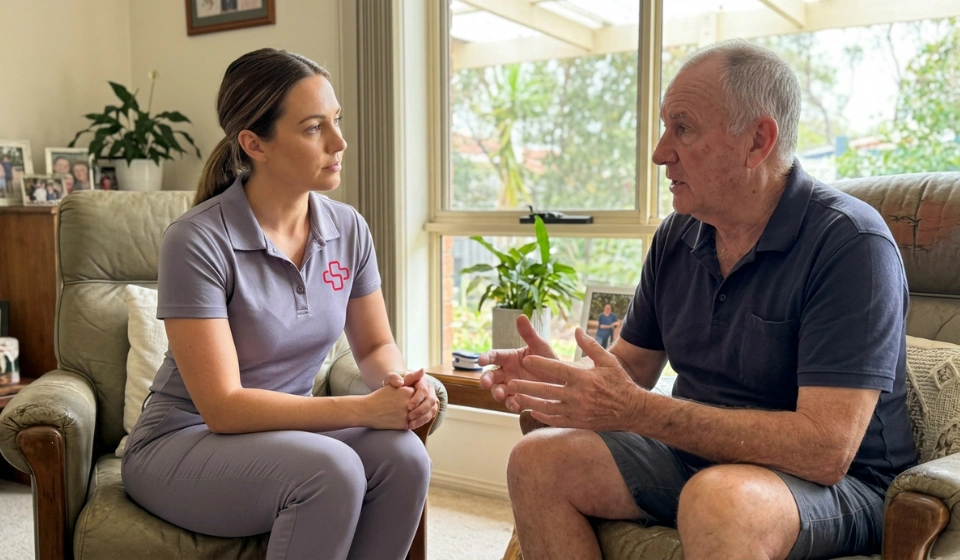
How NurseLink 's Nurse-Led Chronic Disease Program Helped A Medical Centre Break A Cycle Of Preventable Readmissions
A Case Study In Proactive Nursing That Caught Problems Between Appointments, Not Just During Them
Introduction
General practice, for all its strengths, was never really designed around the rhythm that chronic disease actually follows. A patient managing heart failure, COPD or complex diabetes does not deteriorate neatly between scheduled appointments. Fluid retention creeps up over days. Medication adherence slips quietly. Early warning signs, a bit more breathlessness, a few kilograms gained in a week, go unnoticed by the patient and unseen by the clinic, until they resolve themselves as an ambulance call and a hospital admission that, in a meaningful number of cases, proper monitoring could have prevented entirely.
For busy medical centres managing large chronic disease caseloads, this gap is a familiar and frustrating one. GPs know their patients well during consultations but simply do not have the capacity, within a standard appointment model, to catch the slow drift toward crisis that happens in the weeks between visits. The result, often, is a pattern of preventable hospital presentations that everyone involved, GP, patient and family, recognises in hindsight as something that should have been caught earlier, if only someone had been watching closely enough, consistently enough, to notice.
This case study documents how NurseLink Healthcare partnered with a busy medical centre in Dandenong to establish a nurse-led chronic disease management program for its elderly patient population, and how consistent, proactive nursing oversight between GP appointments meaningfully reduced a pattern of avoidable hospital readmissions that had, for some time, felt to the clinic like an intractable problem.
To protect the privacy of all parties, identifying details of the clinic, its staff and its patients have been withheld or altered throughout this case study.
The Facility & Its Situation
The facility is a busy medical centre in Dandenong serving a large and demographically diverse patient population, with a substantial caseload of elderly patients managing chronic conditions including heart failure, chronic obstructive pulmonary disease and complex, insulin-dependent diabetes. The clinic’s GPs were experienced and its patients generally well cared for during consultations, but the practice, like many of its size, had no dedicated capacity for proactive monitoring of chronic disease patients between scheduled appointments.
Over the preceding year, the clinic’s practice manager had noticed a pattern that concerned her considerably: a recurring subset of elderly chronic disease patients presenting to the local hospital’s emergency department with exacerbations that, on review, often showed clear warning signs in the days beforehand, signs that had simply gone unnoticed because no one at the clinic had capacity to be checking for them between appointments. Several GPs had independently raised the same frustration, describing patients they knew well enough to recognise, in hindsight, exactly what had likely gone wrong, without having had any practical way to catch it in time.
The clinic had explored several options, additional GP appointment slots, more frequent scheduled reviews, but each ran into the same structural limitation: proactive, ongoing monitoring between visits required a genuinely different kind of care than the appointment-based model the practice was built around, and none of its existing staff had capacity to provide it without compromising the acute care the clinic was already stretched to deliver.
Understanding What The Facility Actually Needed
When the practice manager approached NurseLink Healthcare, the request went beyond simply adding clinical staff. She needed a genuinely nurse-led program, not an additional layer of appointments, but ongoing, structured contact with the clinic’s highest-risk chronic disease patients between their scheduled GP visits, capable of identifying early warning signs and intervening before they escalated into hospital presentations.
Critically, she was explicit that this could not function as a service operating separately from the clinic’s existing GPs. Whatever program was established needed to integrate directly with each patient’s existing care plan and communicate promptly and clearly with their treating GP whenever a concern arose, rather than creating a parallel monitoring system that risked confusing patients or duplicating clinical decisions already being made elsewhere.
She also needed a program capable of building genuine relationships with a patient population that included many older, sometimes isolated individuals, for whom consistency of contact mattered considerably, patients who would respond far better to a familiar nurse checking in regularly than to a rotating, unfamiliar service they had to re-explain their situation to at every contact.
The NurseLink Healthcare Solution
A Dedicated Nurse Embedded Within The Clinic's Existing Care Model
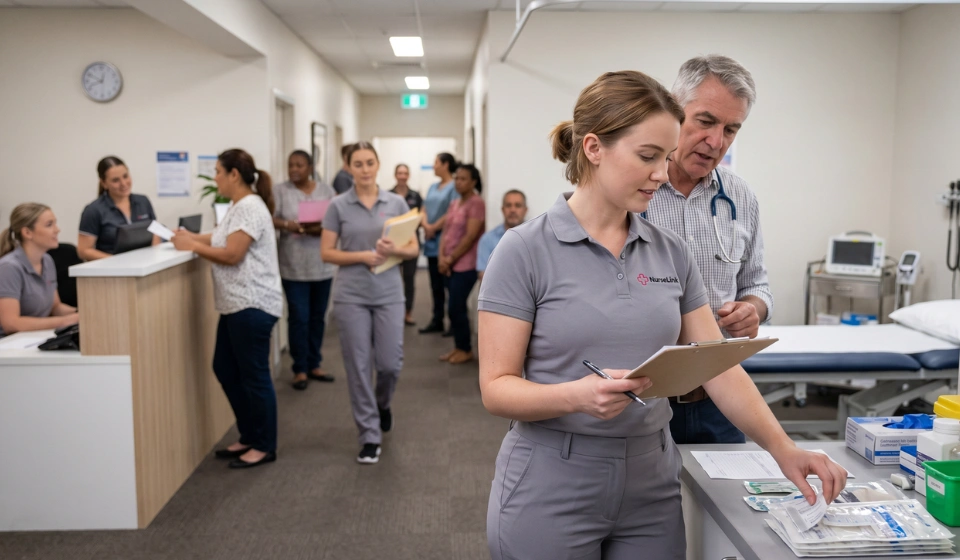
NurseLink Healthcare placed a credentialed practice nurse with substantial chronic disease management experience directly within the clinic’s workflow, working from within the practice several days each week rather than operating as an external, disconnected service, with direct access to patient records and established communication channels with each patient’s treating GP.
Structured, Proactive Contact Built Around Individual Risk
Working with the clinic’s GPs, the nurse identified an initial cohort of patients considered highest risk for preventable readmission, based on recent hospital history and disease complexity, and established a structured schedule of proactive phone and in-person check-ins tailored to each patient’s specific condition, more frequent contact for recently discharged heart failure patients, for instance, than for more stable diabetes patients requiring less intensive monitoring.
Genuine Continuity Rather Than Rotating Contact
Recognising the practice manager’s concern about consistency, the same nurse maintained contact with each patient across the duration of the program, allowing genuine familiarity to develop, patients quickly learning to recognise her voice on the phone and trust her judgement, a relationship that meaningfully improved how honestly and promptly patients reported symptoms they might otherwise have downplayed or ignored.
Clear Escalation Pathways Directly To The Treating GP
Whenever the nurse identified a concerning change during a check-in, weight gain suggesting fluid retention, worsening breathlessness, inconsistent medication adherence, she followed a clearly established escalation pathway directly to the patient’s treating GP, ensuring concerns reached clinical decision-makers promptly rather than being noted and left for the patient’s next scheduled appointment.
Practical Education Woven Into Every Contact
Beyond monitoring, the nurse used each check-in as an opportunity for brief, practical education, helping patients understand their own early warning signs, correct inhaler technique, the importance of daily weight monitoring for heart failure patients, education that gradually built patients’ own capacity to notice problems themselves, rather than leaving early detection solely dependent on the nurse’s contact schedule.
Regular Reporting That Kept The Whole Clinic Informed
The nurse provided the clinic’s GPs with regular, structured updates on each patient’s status, ensuring that chronic disease management remained a shared, visible responsibility across the practice rather than becoming siloed within the nurse-led program alone, and that GPs retained full clinical oversight of their own patients throughout.
Outcomes & Impact
Preventable Hospital Presentations Declined Measurably
Across the first year of the program, the clinic’s practice manager tracked a significant reduction in emergency department presentations among the enrolled chronic disease cohort compared to the same patients’ presentation history in the preceding year, a change she attributed directly to earlier identification and intervention made possible by consistent nursing contact.
Patients Reported Genuine Reassurance, Not Just Better Outcomes
Several enrolled patients, in feedback collected by the clinic, described the regular check-ins as providing a sense of safety they had not previously had, knowing that someone familiar was actively watching for problems rather than waiting for their condition to become serious enough to warrant urgent attention.
GPs Gained Capacity Without Losing Clinical Oversight
The clinic’s GPs reported that the program had genuinely reduced the burden of managing complex chronic disease patients within standard appointment slots, while the clear escalation and reporting structure meant they remained fully informed and in control of clinical decisions for their own patients throughout.
The Clinic Strengthened Its Reputation With Patients & Referrers
The practice manager noted that word of the program had spread among the clinic’s elderly patient population, with several new patients specifically citing the chronic disease support as a reason for choosing the practice, and local specialists beginning to view the clinic favourably as a well-coordinated referral destination for complex chronic disease patients.
A Sustainable, Scalable Model For Future Growth
Based on the program’s results, the clinic expanded the nurse-led model to a broader cohort of chronic disease patients in its second year, with the practice manager describing the initial partnership as having fundamentally changed how the clinic approached chronic disease management, from a purely reactive, appointment-based model to one genuinely built around ongoing prevention.
A Reflection From The Practice Manager
Following the program’s first full year, the clinic’s practice manager shared the following with NurseLink Healthcare:
She said that before the program began, the clinic’s GPs had grown almost resigned to a certain number of preventable hospital admissions each year among their sickest chronic disease patients, not because anyone was providing poor care, but because the appointment model simply wasn’t built to catch problems in the gaps between visits. What changed things was having a nurse genuinely embedded in the practice, known to patients, trusted by GPs, and structurally connected to the clinic’s existing workflow rather than operating as a separate service bolted on beside it. She said the drop in emergency presentations mattered enormously, but what surprised her more was how much calmer her sickest patients seemed, knowing someone was actively checking on them rather than waiting for the next scheduled review. She added that she now considers proactive chronic disease nursing not an add-on service but something close to a basic standard of care that every practice managing complex, elderly patients should have access to.
Key Takeaways From This Case Study
Appointment-based general practice is not structurally designed to catch the gradual deterioration chronic disease often follows. Proactive nursing contact between scheduled visits addresses a genuine structural gap, not simply an efficiency improvement.
A nurse-led program only succeeds within a clinic if it is genuinely integrated with existing GP care, not operated as a parallel service. Clear escalation pathways and regular reporting kept clinical oversight properly centred with each patient’s treating GP throughout.
Continuity of contact meaningfully changes how honestly and promptly elderly patients report symptoms. Building a genuine, ongoing relationship with the same nurse improved early disclosure of concerning changes far more than rotating, unfamiliar contact would have achieved.
Proactive monitoring builds patient trust and reassurance alongside measurable clinical outcomes. Reduced hospital presentations mattered, but patients’ own sense of safety, knowing someone was actively watching, proved just as significant to the program’s success.
A successful pilot program can reshape how a facility approaches an entire category of care. What began as a targeted response to a specific readmission problem became, for this clinic, a broader shift toward proactive rather than purely reactive chronic disease management.
Conclusion
A medical centre that had grown quietly resigned to a recurring pattern of preventable hospital admissions among its sickest elderly patients found, through a genuinely embedded, nurse-led chronic disease program, that the gap between GP appointments did not have to remain unwatched. For the clinic at the centre of this case study, NurseLink Healthcare provided not only measurable reductions in avoidable hospital presentations, but a fundamentally more proactive model of care that changed how the practice thought about managing chronic disease altogether.
Its sickest patients are being watched more closely now, not just seen periodically. Its GPs have real capacity to manage complex cases without carrying the entire burden alone. And a clinic that once accepted preventable admissions as simply part of managing chronic disease now expects better, because it has seen what better looks like.
If your practice is facing a recurring pattern of preventable chronic disease admissions, we encourage you to reach out to the NurseLink Healthcare team. We help you catch the problems that happen between appointments, before they become emergencies.
Latest Post
The Patients The Clinic Kept Losing To The Hospital
The Skill The Hospital Didn’t Have On Staff
Keeping The Lights On, Properly
The Morning Her Carer Didn’t Come
The Wound He Was Too Frightened To Look At

Giving A Family Their Days Back
When The Only Nurse Leaves
When The Contract Ended Without Warning
The Father Who Kept Showing Up
When The Cycle Cannot Wait
Keeping The Clinic Running
When The Highway Brought Them In
Holding The Line
Open On Day One

When The Wards Couldn’t Wait
Keeping The Unit Open
Burnout Across An Entire Healthcare Team
When The Roster Falls Apart At Midnight

One Sick Call, One Struggling Ward

When The Ambulance Left, The Real Work Started.
Reliable Nursing Support At Home

Ensuring Continuity Of Care With Nursing Agency Support

Restoring Stability In Aged Care
Nursing Agency Staffing Solution (Aged Care Facility)