The Wound He Was Too Frightened To Look At
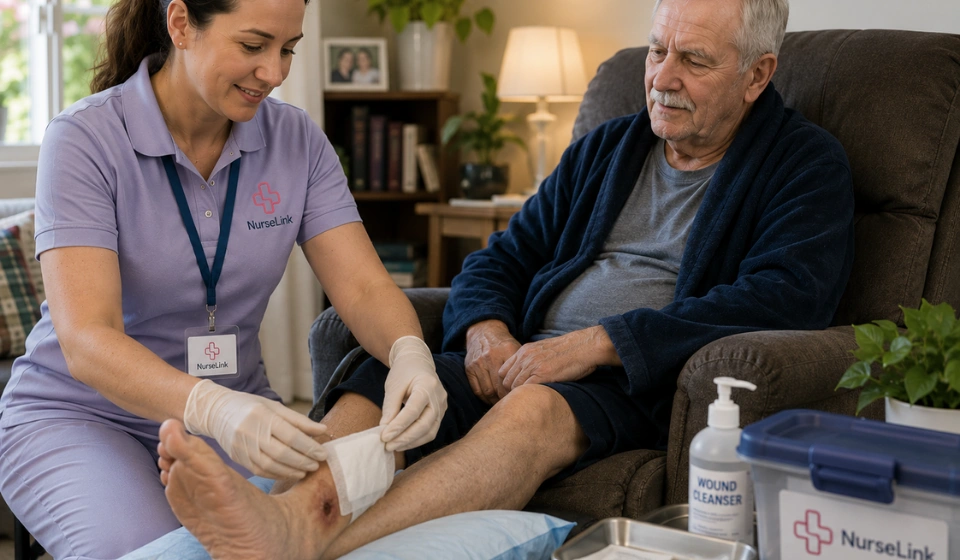
How NurseLink Healthcare's Wound Care Nursing Helped An Adelaide Man Avoid Amputation
A Case Study In Skilled Clinical Nursing That Started With Trust, Not Just A Dressing Change
Introduction
Diabetic foot wounds are one of the more quietly dangerous complications of chronic disease management, precisely because they do not always announce themselves with urgency. A small wound can sit, largely unremarked, for weeks. Reduced sensation from diabetic neuropathy can mean a patient genuinely does not feel how serious it has become. And for a certain kind of patient, an older man managing alone, private about his health, uncomfortable asking for help, the gap between a wound that needed attention weeks ago and a wound that finally gets it can widen for reasons that have very little to do with medical knowledge and everything to do with avoidance, fear and a particular kind of stubborn self-reliance.
By the time these wounds are finally assessed, the clinical picture can be serious, and the conversation about amputation, once it enters the room, changes everything about how a patient engages with his own care. Skilled wound care nursing exists to intervene as early and as effectively as possible in exactly this kind of situation, and its success depends on two things at once: genuine clinical expertise in complex wound management, and enough trust built with a frightened, often ashamed patient that he actually lets the nurse see what is happening and follows the plan she puts in place.
This case study documents how NurseLink Healthcare provided complex wound care nursing to a man in his early seventies in Adelaide, whose diabetic foot wound had progressed, largely through avoidance, to a point where amputation had become a real possibility, and how a combination of clinical skill and patient, non-judgemental trust-building helped him heal and keep his foot.
To protect the privacy of the client, all names and identifying details have been kept confidential throughout this case study.
The Client & His Situation
The client is a man in his early seventies living alone in a suburban home in Adelaide’s north, a widower of some years whose wife had, by his own account, been the one who used to notice things about his health before he did. He had lived with type 2 diabetes for close to two decades, managed with a mix of medication and, by his own admission, inconsistent attention to the diet and monitoring routines his GP had recommended over the years.
The wound began, as far as anyone could reconstruct afterwards, as a small blister on the sole of his foot, likely from a shoe that no longer fit quite as well as it once had, combined with the reduced sensation in his feet that years of diabetes had caused. He had not felt it form. He noticed it, eventually, not because of pain but because he saw a mark on his sock, and by the time he saw it clearly, it was already an open wound.
What happened next was less a medical failure than a very human one. He did not go to his GP immediately. He told the NurseLink Healthcare nurse, much later, that he had known, in a vague way, that a wound like this on a diabetic foot needed proper attention, and that this very knowledge was part of why he avoided dealing with it. He was afraid of what a doctor might say, afraid of the word amputation which he had heard applied to a friend’s situation some years before, and had managed the wound himself with basic dressings from the chemist for close to six weeks before a home visit from his daughter, who called in weekly, discovered the state of it and insisted, over his considerable resistance, that he see his GP immediately.
His GP’s assessment was serious. The wound showed signs of infection and delayed healing consistent with poor diabetic control, and he was referred urgently to a specialist wound clinic, where the assessing podiatrist and vascular specialist agreed that the wound was at a stage where, without intensive and consistent treatment, the risk of it progressing to a point requiring partial amputation was real and immediate. He was started on a structured wound management plan and referred for nursing support at home to manage dressing changes, monitor the wound closely and support him with the broader diabetes management that would give the wound its best chance of healing.
Understanding What He Actually Needed
The initial nursing assessment, conducted by a NurseLink Healthcare wound care nurse in his home, took place against the backdrop of a man who was, by his daughter’s account beforehand, deeply frightened and deeply embarrassed, a combination that the nurse recognised immediately as something that would need to be managed just as carefully as the wound itself.
Clinically, he needed frequent, skilled dressing changes performed by a nurse experienced in complex diabetic wound management, close monitoring for signs of worsening infection or improving healing, and support coordinating with his GP, podiatrist and the vascular specialist overseeing his case, so that his broader diabetes management, and not just the wound in isolation, was being properly addressed.
But the nurse recognised, within the first visit, that the clinical plan alone would not succeed if it did not also address why the wound had reached this point in the first place. He was, she noted, a man who found it very difficult to let anyone see him as vulnerable, and a wound care regime that felt like ongoing judgement of his earlier avoidance risked making him withdraw from the plan exactly as he had withdrawn from seeking help in the first place. What he needed, alongside the clinical care, was a nurse who would not make him relive his embarrassment at every visit, who would treat the six weeks of avoidance as something already in the past rather than something to keep returning to, and who would help him feel genuinely capable of being part of his own recovery rather than simply a passive recipient of treatment he had failed to seek in time.
His daughter, present for part of the initial visit, added that she needed to feel confident her father’s wound was being properly monitored given how reluctant he had been to disclose problems previously, without the arrangement making him feel so surveilled that he pulled away from her involvement altogether.
The NurseLink Healthcare Solution
A Wound Care Nurse Chosen For Clinical Skill & A Non-Judgemental Manner
NurseLink Healthcare assigned a registered nurse with substantial experience in complex diabetic wound management, chosen specifically for a calm, direct and entirely non-judgemental manner that the care coordinator judged well suited to a client whose fear and embarrassment were, at this stage, as clinically relevant as the wound itself. Before the first visit, she reviewed his full referral history and made a deliberate decision about how she would open the relationship: with warmth and competence, and with no reference at all to the weeks of avoidance that had brought him to this point, beyond what was clinically necessary.
Establishing Trust Before Anything Else
The first visit focused as much on the relationship as on the wound itself. The nurse explained clearly and without alarm what she was seeing, what the plan would involve and what he could expect, and made a point, early in the conversation, of telling him plainly that her job from here was to help him heal and keep his foot, not to review how the wound had started. This small, deliberate reassurance, the nurse later reflected, visibly changed his posture in the room.
She also asked him, directly, what would make the ongoing visits feel manageable rather than dreaded, a question he had clearly not expected and took a moment to answer. He said he did not want to feel like a burden, and he did not want to feel talked down to. She told him plainly that neither would happen, and made sure, across the following weeks, that neither did.
Rigorous, Consistent Clinical Wound Management
The nursing care itself was thorough and closely coordinated with his broader medical team. Dressing changes were performed several times a week in line with the wound clinic’s protocol, with careful debridement, infection monitoring and wound measurement tracked consistently at each visit so that his progress, or any concerning changes, could be identified early and communicated promptly to his GP and the specialist team overseeing his case.
The nurse also worked with him, gently and incrementally, on the broader diabetes management that gave the wound its best chance of healing, including practical, non-lecturing conversations about blood glucose monitoring and footwear, framed always as things that would help him heal faster rather than corrections of past failure.
Restoring His Confidence In Managing His Own Health
As the weeks progressed and the wound began, gradually, to show genuine signs of healing, the nurse made a point of showing him the measurable progress directly, the reducing wound size, the improving tissue, rather than simply reporting it to him in the abstract. This visible evidence of his own recovery, the nurse noted, did more to rebuild his engagement with his own care than any amount of general encouragement could have.
By the later stage of the engagement, he had begun checking his own feet daily without being reminded, a habit his daughter identified as one of the clearest signs that something fundamental had shifted, not only in the wound’s healing but in his relationship to his own health more broadly.
Keeping His Daughter Appropriately Informed
The nurse maintained light, regular contact with his daughter, providing enough information for her to feel confident the wound was being properly managed without discussing anything he had not agreed to share, an arrangement that respected both his autonomy and her genuine need for reassurance, and one that both father and daughter reported, separately, as working well.
Outcomes & Impact
The Wound Healed & Amputation Was Avoided
Over a period of several months, the wound healed fully under close nursing supervision, with regular reviews by his podiatrist and vascular specialist confirming steady, uncomplicated progress throughout. His vascular specialist, at the appointment confirming full closure, noted that the consistency and quality of the nursing care at home had been a significant factor in avoiding the amputation that had been a genuine possibility at the outset, and that earlier and less consistent wound management would very likely have produced a different outcome.
His Broader Diabetes Management Improved
Beyond the wound itself, his engagement with his broader diabetes management improved meaningfully over the course of the nursing support, including more consistent blood glucose monitoring and a noticeably more proactive attitude toward his own foot care, changes his GP identified at a subsequent review as a genuinely positive shift from his pattern of management in the years prior to the wound.
He Regained Trust In Seeking Help Early
Perhaps the most significant long-term outcome of the engagement was a change in how he related to his own health concerns going forward. Where he had previously avoided a serious wound for six weeks out of fear and embarrassment, he told the nurse toward the end of the engagement that he now understood, in a way he had not before, that raising a concern early was far less frightening than the alternative, a shift his daughter described as giving her genuine confidence that a similar situation would be handled very differently in future.
His Independence Was Protected
By avoiding amputation and restoring full healing, the engagement protected the client’s mobility and independence at a stage of life where either could easily have been permanently compromised. He remained able to live independently in his own home, continue his daily walks and manage his own household, outcomes that both he and his daughter identified as the things that had mattered most throughout the entire experience.
A Reflection From The Client
Near the end of the engagement, he shared the following with the NurseLink Healthcare care coordinator:
“I did not want anyone to see that wound, because I was ashamed of how long I had left it. What I got instead of judgement was a nurse who just got on with fixing it and made me feel like I was part of getting it right, not the reason it had gone wrong in the first place. I still have both my feet. I check them every single day now, which I never did before. I am walking around the block again like I used to. I do not think I would say this to many people, but I am grateful someone finally saw that wound properly, and grateful it was someone who made it easy to let her.”
Key Takeaways From This Case Study
Shame and fear are often the real barriers to timely wound care, not lack of knowledge. Patients who delay treatment for serious wounds frequently understand the risk perfectly well. What stops them is fear of judgement or bad news, and addressing that fear directly is often the necessary first step before any clinical plan can succeed.
Non-judgemental, forward-focused care rebuilds engagement faster than any amount of clinical correctness alone. A nurse who deliberately avoided dwelling on the client’s earlier avoidance, and instead focused entirely on the path forward, built the trust that made consistent treatment possible.
Showing a patient his own measurable progress restores his confidence and participation. Concrete, visible evidence of healing did more to re-engage this client with his own care than general reassurance could have achieved.
Family involvement needs to be balanced carefully against patient autonomy. Providing appropriate reassurance to a worried family member, without compromising the client’s privacy or sense of control over his own care, protected both the clinical relationship and the family relationship simultaneously.
Consistent, skilled nursing care can be the difference between healing and amputation. In complex diabetic wound cases, the reliability and clinical quality of ongoing nursing support materially affects the ultimate outcome, not just the speed of recovery.
Conclusion
A wound left too long out of fear became, through consistent and genuinely skilled nursing care, a wound that healed fully, without the amputation that had once seemed like a real possibility. For the man at the centre of this case study, NurseLink Healthcare provided the clinical expertise his recovery required and the patient, non-judgemental trust that made it possible for him to fully engage with his own care.
He kept his foot. He is walking his old route around the block again. And he checks his feet every single day, a small habit that represents, in its own quiet way, everything that changed.
If you or someone you love is managing a wound that feels frightening to face, we encourage you to reach out to the NurseLink Healthcare team. We are here to help you heal, not to judge how long it took to ask.
Latest Post
The Wound He Was Too Frightened To Look At
Giving A Family Their Days Back
When The Only Nurse Leaves
When The Contract Ended Without Warning
The Father Who Kept Showing Up
When The Cycle Cannot Wait
Keeping The Clinic Running
When The Highway Brought Them In
Holding The Line
Open On Day One

When The Wards Couldn’t Wait
Keeping The Unit Open
Burnout Across An Entire Healthcare Team
When The Roster Falls Apart At Midnight
One Sick Call, One Struggling Ward

When The Ambulance Left, The Real Work Started.
Reliable Nursing Support At Home
Ensuring Continuity Of Care With Nursing Agency Support
Restoring Stability In Aged Care
Nursing Agency Staffing Solution (Aged Care Facility)