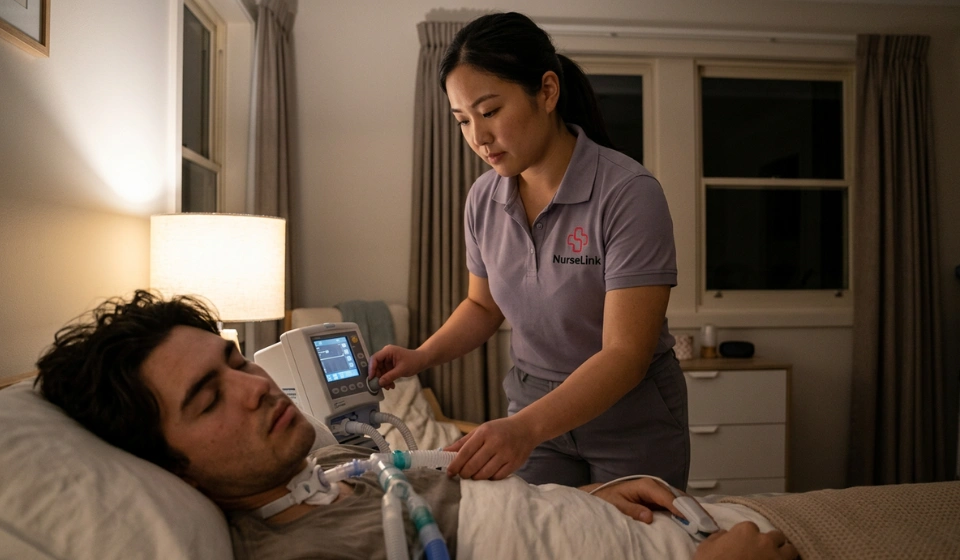
The Morning Her Carer Didn’t Come
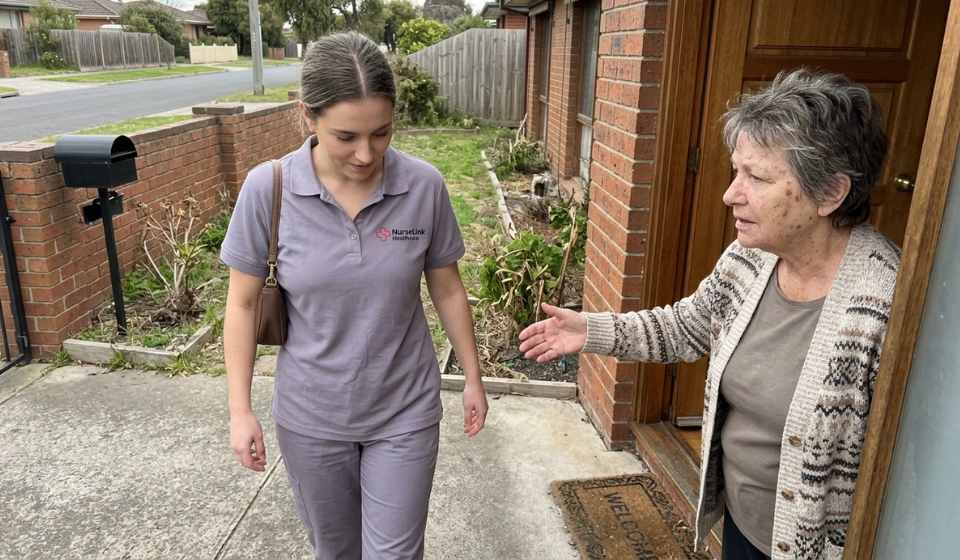
How NurseLink's Rapid Response Staffing Kept A Melbourne Woman Safe At Home
A Case Study In Emergency Care Coordination That Started With A Phone Call At 6 am
Introduction
For people who rely on daily personal care to live independently, the relationship with a regular support worker is rarely just logistical. It is built, visit by visit, into something closer to trust, a familiarity with routines, preferences and small unspoken cues that make care feel less like a service and more like a partnership. Which is exactly why the sudden loss of that worker, with no warning and no time to prepare, is never a small disruption. It is, for many participants, the difference between a normal morning and a genuine crisis.
Support worker unavailability is one of the more quietly destabilising risks in home-based care, precisely because it tends to arrive without notice. Illness, family emergencies and accidents do not consult rosters. And when a participant depends on a single familiar face for essential morning care, medication, mobility support, personal hygiene, a gap of even a few hours can carry real consequences, not only physically but in the sense of safety and control that consistent care is meant to provide.
This case study documents how NurseLink Healthcare responded when a woman in her late sixties, living alone in Melbourne’s northern suburbs, woke to find her regular support worker unable to attend, and how a rapid, carefully coordinated staffing response prevented what could otherwise have become a serious safety incident.
To protect the privacy of the client, all names and identifying details have been kept confidential throughout this case study.
The Client & Her Situation
The client is a woman in her late sixties living independently in a single-storey home in Melbourne’s north, managing progressive multiple sclerosis that had, over the preceding two years, made her increasingly reliant on daily support for mobility, medication management and personal care. She lived alone, her adult children interstate, and had built her sense of independence carefully around a single, trusted arrangement: a regular support worker who arrived each morning at 7am to assist her out of bed, manage her medication routine and help her prepare for the day.
She had, by her own account, structured almost everything around that consistency. She did not sleep well without knowing the morning was covered. She had, more than once, told her support coordinator that the routine mattered to her as much as the physical assistance itself, that knowing exactly what to expect each morning was part of what let her feel in control of a condition that so often made her feel otherwise.
On a Tuesday morning in early winter, her regular support worker, who had cared for her consistently for over a year, was involved in a car accident on the way to her shift. She was not seriously injured, but was taken to hospital for assessment and was, understandably, in no position to notify anyone beyond her own family for several hours. Her previous agency’s after-hours contact went unanswered. By 7:30am, with no support worker and no word from her regular provider, the client was alone, unable to safely mobilise from bed without assistance, and had not yet taken morning medication that needed to be administered with food.
Her support coordinator, contacted directly by the client’s neighbour who had noticed her distress through a phone call, reached out to NurseLink Healthcare shortly after 8am, seeking emergency cover with no advance notice and no margin for delay.
Understanding What She Actually Needed
When NurseLink Healthcare’s rostering team took the call, the clinical picture was straightforward but urgent: a participant with a physical disability, alone, unable to mobilise independently, overdue for medication, and with no support in place. But the coordinator on the call recognised, within the first few minutes, that the practical staffing problem was only part of what needed managing. The client, by the time contact was made directly with her, was audibly shaken, not only by the physical discomfort of the delay but by what it had done to her sense of safety in an arrangement she had relied on precisely because it had, until that morning, never failed her.
She needed, first and immediately, a qualified support worker on-site as quickly as possible, someone experienced in MS-related mobility support and comfortable stepping into an established care plan without a lengthy handover the situation did not allow time for. But she also needed, the coordinator judged, to be spoken to directly and honestly throughout the process, rather than left waiting on vague reassurances, so that the sense of control the disruption had taken from her could begin to be restored before the replacement worker even arrived.
Her support coordinator, managing the situation from a distance, needed confidence that NurseLink Healthcare could not only fill the immediate gap but do so with a worker genuinely suited to the client’s needs, rather than the first available name, given how much the client’s wellbeing depended on the quality of that first, unplanned introduction.
The NurseLink Healthcare Solution
A Rostering Team Built For Genuine Urgency
NurseLink Healthcare maintains an on-call roster of qualified support workers specifically for situations where standard scheduling processes are too slow for what a participant needs. Within minutes of the coordinator’s call, the rostering team began cross-referencing available on-call staff against the client’s existing care plan, prioritising workers with relevant experience in progressive neurological conditions and manual handling for safe transfers, rather than simply the nearest available name.
A Worker Matched On Fit, Not Just Availability
The support worker ultimately assigned had several years of experience with MS-related care and had, in a previous placement, supported a client with a strikingly similar daily routine. She was briefed by phone on the way to the client’s home, given access to the existing care plan notes covering medication timing, mobility preferences and personal care requirements, and arrived at the client’s door at 9:05am, just over an hour after the coordinator’s initial call.
Communication That Restored A Sense Of Control
Before the replacement worker arrived, NurseLink Healthcare’s care coordinator called the client directly, explained clearly what was happening, who was coming and when, and stayed in brief, calm contact until the worker was on-site. This small step, the coordinator later reflected, mattered as much to the client as the practical resolution itself. Being told plainly what to expect, rather than left to wait uncertainly, was, in the client’s own words afterwards, the thing that stopped the morning from feeling entirely out of her hands.
A Handover Designed To Minimise Disruption
On arrival, the support worker took time, briefly but deliberately, to introduce herself properly before beginning any physical assistance, talking the client through what she understood of the care plan and checking her preferences directly rather than assuming the notes covered everything that mattered. Medication was administered with breakfast shortly after, and the client was assisted through her usual morning routine with the same order and pacing she was used to, adjusted only where she asked for it to be.
Continuity Beyond The Immediate Emergency
Recognising that a single emergency visit would not fully resolve the client’s underlying vulnerability to future disruptions, NurseLink Healthcare’s coordinator worked with the client and her support coordinator over the following days to establish an ongoing arrangement: a documented backup worker, already familiar with her care plan, formally attached to her file as a secondary contact should her regular worker ever again be unavailable at short notice.
Outcomes & Impact
The Immediate Risk Was Resolved Within Two Hours
From the initial call to a qualified worker on-site and the client safely mobilised and medicated, the entire response took just over two hours, well within the window needed to prevent any physical harm from the delayed medication and extended immobility, and avoiding what could otherwise have become an emergency hospital presentation.
Her Trust In Her Care Arrangement Was Rebuilt, Not Just Restored
The client’s support coordinator noted, in a follow-up review several weeks later, that the client had spoken about the incident not with lingering anxiety but with something closer to relief, specifically because the response had shown her that a gap in her regular care did not automatically mean a crisis. Knowing a genuine backup now existed, formally and specifically for her, gave her a sense of security her previous arrangement had never quite offered.
A Backup Plan Now Protects Her Against Future Disruption
The formal secondary worker arrangement put in place after the incident has meant that, in the months since, the client has faced two further instances of short-notice unavailability from her regular worker, both resolved within the hour by a support worker already familiar with her routine, with none of the distress or delay of the original incident.
Her Independence Was Protected
By resolving the immediate gap quickly and establishing lasting continuity afterwards, the response protected not just the client’s physical safety on that particular morning but the broader independence her entire care arrangement was built to support, allowing her to remain confidently in her own home rather than facing pressure toward a higher-support living arrangement.
A Reflection From The Client
Some weeks after the incident, the client shared the following with her support coordinator:
She said that morning had frightened her more than she expected it to, not because of the physical discomfort but because it made her realise how much her sense of safety depended on one single person never having a bad day. What changed things for her was not just that someone came quickly, but that someone spoke to her honestly the entire time and treated the disruption as something worth fixing properly, not just patching over. She said she has not worried about it happening again the way she used to, because now she knows there is an actual plan in place rather than just hoping for the best. She added that being treated like her routine and her preferences still mattered, even in an emergency, made the whole experience feel far less like something that had happened to her and more like something that had been handled properly on her behalf.
Key Takeaways From This Case Study
A missed shift is rarely just a scheduling problem for the participant experiencing it. For people whose safety and independence depend on consistent daily support, an unexpected gap can quickly become a genuine risk, both physically and to their confidence in their own care arrangement.
Speed matters, but so does communication during the gap itself. Resolving the immediate staffing emergency quickly was essential, but keeping the client informed and reassured throughout the process did as much to protect her wellbeing as the practical fix.
Matching a replacement worker to the client’s actual needs, not just their availability, materially affects how well an emergency placement works. Relevant experience and a proper handover meant the client’s routine was disrupted as little as possible, even under significant time pressure.
A genuine emergency response should produce lasting protection, not just a one-off fix. Establishing a formal backup arrangement afterwards turned a stressful incident into a structural improvement in the client’s ongoing care.
Reliable, well-coordinated staffing infrastructure is a safety issue, not just an operational one. The ability to respond within hours, rather than days, was the difference between a contained disruption and a serious incident.
Conclusion
A morning that began with real risk, a woman alone, overdue for care, and shaken by the sudden loss of a routine she had built her independence around, was resolved through fast, carefully coordinated staffing and a response that treated her wellbeing as more than a logistics problem to be solved. For the client at the centre of this case study, NurseLink Healthcare provided not only a qualified replacement worker within hours, but the lasting reassurance of a care arrangement built to withstand the unexpected.
She remains in her own home. Her mornings are, once again, something she can rely on. And she now knows, in a way she did not before, that a single bad day for one support worker will never again mean a crisis for her.
If you or someone you love has experienced a gap in essential care, we encourage you to reach out to the NurseLink Healthcare team. We are here to respond when it matters most, not just to fill a shift.
Latest Post
The Wound He Was Too Frightened To Look At

Giving A Family Their Days Back
When The Only Nurse Leaves
When The Contract Ended Without Warning
The Father Who Kept Showing Up
When The Cycle Cannot Wait
Keeping The Clinic Running
When The Highway Brought Them In
Holding The Line
Open On Day One

When The Wards Couldn’t Wait
Keeping The Unit Open
Burnout Across An Entire Healthcare Team
When The Roster Falls Apart At Midnight
One Sick Call, One Struggling Ward

When The Ambulance Left, The Real Work Started.
Reliable Nursing Support At Home

Ensuring Continuity Of Care With Nursing Agency Support

Restoring Stability In Aged Care

Nursing Agency Staffing Solution (Aged Care Facility)