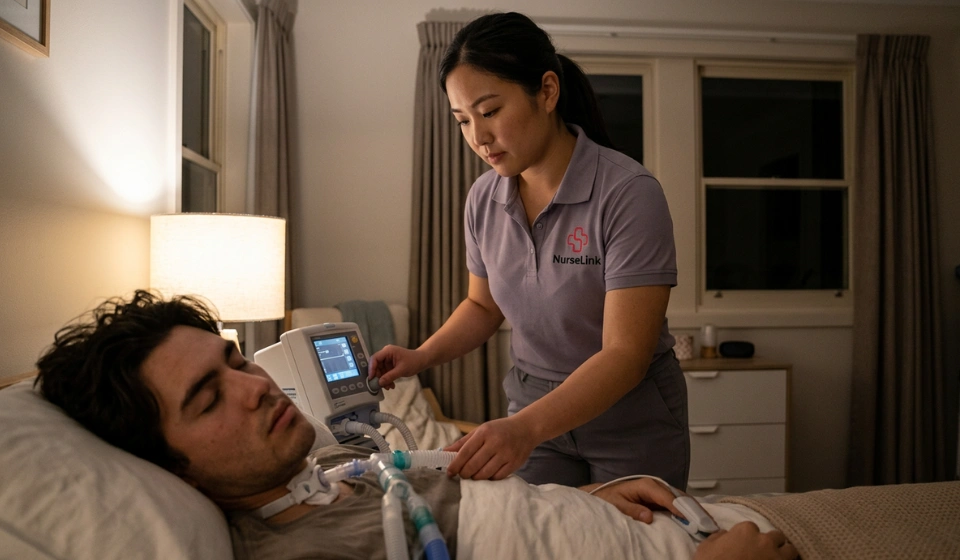
Keeping The Lights On, Properly
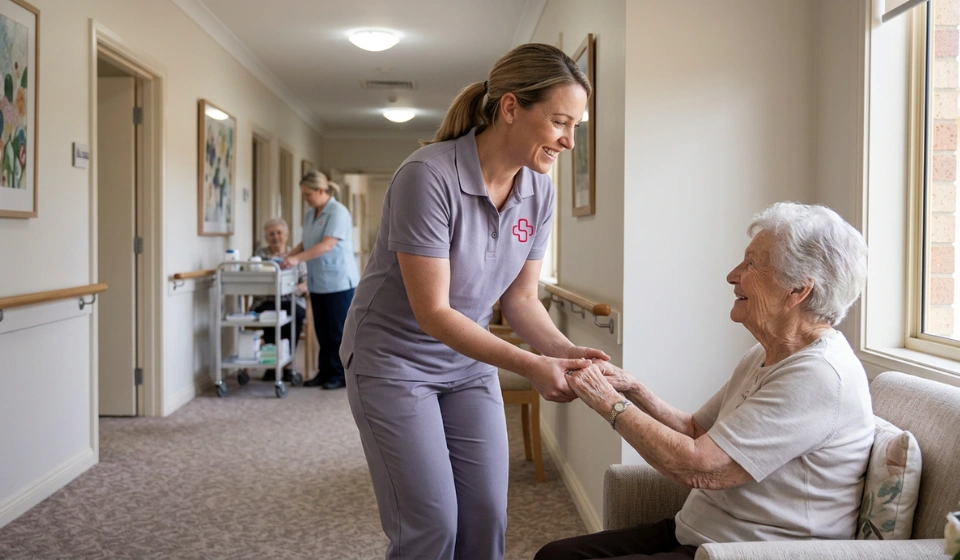
How NurseLink Helped A Regional Aged Care Home Solve A Staffing Shortage That Had Gone On Far Too Long
A Case Study In Facility Staffing That Restored Both Rosters And Confidence
Introduction
Regional and rural aged care facilities face a workforce challenge that is, in most cases, structural rather than circumstantial. It is not usually one difficult month or one unlucky run of resignations. It is a persistent, ongoing shortfall in the local supply of registered nurses and qualified care staff, driven by broader patterns in where clinical professionals choose to live and work, that leaves many regional facilities managing chronic understaffing as an ongoing condition rather than a temporary problem to be solved once and then forgotten.
The consequences of this kind of chronic shortage extend well beyond the roster itself. Existing staff, stretched thin across shifts that should have more coverage than they do, face mounting fatigue and burnout risk. Clinical governance and quality of care come under sustained pressure, given how difficult it becomes to maintain consistent standards when staffing is perpetually stretched. Facility management, meanwhile, often finds itself locked in an exhausting, ongoing cycle of recruitment attempts that fail to produce a lasting solution, because the underlying supply problem in the local labour market does not resolve simply because a facility urgently needs it to.
Agency staffing support exists to break this cycle, not by pretending the underlying workforce shortage does not exist, but by providing a reliable, properly qualified supply of nursing and care staff that lets a facility maintain safe, consistent standards of care while a longer-term local workforce solution, if one is achievable at all, is pursued over time.
This case study documents how NurseLink Healthcare supported a residential aged care facility in regional New South Wales, struggling with chronic and prolonged understaffing across both registered nursing and care staff roles, through an ongoing, multi-role staffing arrangement that stabilised the facility’s care delivery and gave its own management genuine breathing room for the first time in a considerable period.
To protect the privacy of the facility and its residents, identifying details have been kept confidential throughout this case study.
The Facility & Its Situation
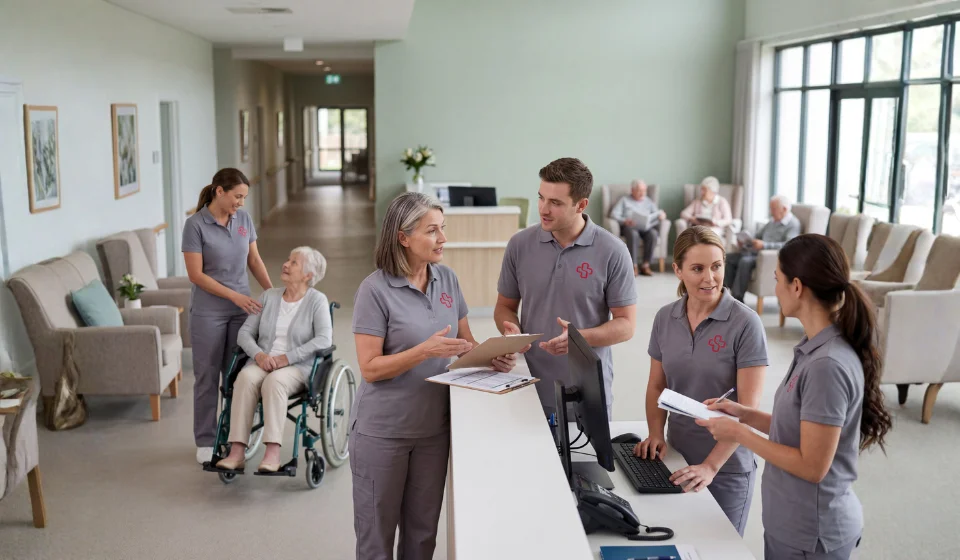
The facility is a sixty-bed residential aged care home in a regional New South Wales town, serving a community with a significant and growing older population and limited alternative aged care options within a reasonable distance. It had, for several years prior to engaging NurseLink Healthcare, experienced a persistent shortfall in its ability to recruit and retain registered nurses and qualified care staff, a pattern consistent with the broader workforce challenges affecting regional aged care across the sector, but one that had, by the time of the engagement, reached a genuinely difficult point.
The facility’s director of nursing described, in the initial conversation with NurseLink Healthcare, a roster that had become a source of constant, low-grade crisis management rather than settled, predictable planning. Shifts were regularly covered through a combination of existing staff working significant overtime, last-minute recruitment attempts that frequently fell through, and, on the more difficult occasions, a genuine risk of shifts going unfilled entirely, a scenario the facility had narrowly avoided on several occasions but had never been confident of continuing to avoid indefinitely.
The existing staff, deeply committed to the residents they cared for and to the facility itself, were, by the director of nursing’s account, showing clear signs of accumulated fatigue from the sustained pressure of the staffing gap. Several long-serving staff members had raised concerns about their own sustainability in the role, concerns the director of nursing took seriously but had limited capacity to resolve given how consistently local recruitment efforts had failed to produce lasting results.
The facility’s board had, in the months before engaging NurseLink Healthcare, begun raising direct questions about the sustainability of the current staffing model and the clinical governance risk the ongoing shortfall represented, pressure the director of nursing described as entirely reasonable but also considerably compounding the difficulty of a situation that was, by that point, already consuming a disproportionate share of her time and attention.
Understanding What The Facility Actually Needed
The initial assessment conversation between NurseLink Healthcare and the facility’s leadership, including the director of nursing and the facility’s general manager, focused on understanding both the immediate roster gaps and the deeper, ongoing nature of the staffing challenge, given that a short-term fix would do little to address a problem that had, by this stage, been building for years.
The facility needed reliable coverage across both registered nurse and qualified care staff roles, spanning day, evening and night shifts, delivered consistently enough that existing staff could step back from the unsustainable overtime pattern they had been managing and that shift coverage could finally be planned with genuine confidence rather than assembled anxiously, week by week. Given the facility’s regional location, this needed to include staff willing and able to work in a regional setting, a specific recruitment and logistics challenge that a purely metropolitan staffing pool would not adequately address.
Beyond the immediate rostering need, the director of nursing was clear that consistency of staff mattered enormously to the residents themselves, many of whom lived with cognitive impairment and depended, for their own comfort and orientation, on familiar faces rather than an unpredictable rotation of unfamiliar agency staff each shift. She was direct that a staffing solution built purely around filling gaps, without regard to continuity, risked solving one problem while creating another, given how much residents’ wellbeing depended on relationships with staff who knew them.
The facility’s general manager added that the board’s confidence needed to be genuinely restored, which meant the staffing solution needed to be demonstrably reliable and sustainable over time, not simply a temporary reprieve that left the underlying governance risk unresolved in the eyes of the board overseeing the facility’s operations.
The NurseLink Healthcare Solution
Building A Consistent, Known Pool Of Regional Staff
Rather than filling shifts reactively with whichever staff happened to be available at short notice, NurseLink Healthcare worked to build a consistent, dedicated pool of registered nurses and care staff specifically committed to regular, ongoing shifts at this facility, including staff based regionally and staff willing to travel for structured blocks of work, an approach designed deliberately to maximise the continuity that the director of nursing had identified as critical to resident wellbeing.
This pool was managed with the facility’s specific roster in mind, prioritising the same staff for the same regular shifts wherever possible, so that residents and existing permanent staff encountered familiar faces consistently rather than an unpredictable rotation of unfamiliar agency personnel from shift to shift.
Thorough Orientation That Protected Continuity Of Care
Each nurse and care worker joining the facility’s regular staffing pool was given a genuine orientation to the facility, its residents, its clinical protocols and its particular routines, an investment of time upfront that paid off in the quality and consistency of care delivered across subsequent shifts. The director of nursing noted that this properly resourced orientation process was a clear point of difference from some previous staffing arrangements the facility had tried, which had sometimes placed staff into shifts with minimal preparation, at real cost to both care quality and the confidence of existing permanent staff working alongside them.
Covering The Full Scope Of Roster Needs, Not Just The Hardest Shifts
The staffing arrangement covered both registered nurse and qualified care staff roles across the full span of shifts the facility required, addressing the roster comprehensively rather than only the hardest-to-fill gaps, an approach that allowed the facility’s existing permanent staff to step back from the unsustainable overtime pattern they had been managing and return to a genuinely manageable working rhythm of their own.
Reliable, Predictable Rostering That Restored Genuine Planning Capacity
Once the arrangement was established, the facility’s rostering moved from a pattern of constant, reactive crisis management to something the director of nursing could plan with genuine confidence weeks in advance, a shift that freed a considerable amount of her own time and attention, previously consumed almost entirely by roster firefighting, to focus on the broader clinical governance and quality improvement work her role was meant to prioritise.
Ongoing Communication & Genuine Partnership With Facility Leadership
NurseLink Healthcare maintained regular, structured communication with the facility’s leadership throughout the engagement, reviewing roster performance, addressing any emerging concerns promptly and adjusting the staffing pool over time as the facility’s own needs and circumstances evolved, an ongoing partnership model rather than a transactional shift-filling service, which the director of nursing identified as central to the confidence the arrangement ultimately restored.
Outcomes & Impact
A Fully & Reliably Staffed Roster
Across the engagement, the facility’s roster moved from a state of chronic, precarious understaffing to consistent, reliable coverage across all shifts and roles, with the facility no longer facing the genuine risk of unfilled shifts that had previously been a recurring and significant concern for its leadership.
Existing Staff Recovered From Sustained Overtime Pressure
The facility’s permanent staff, previously managing an unsustainable pattern of overtime to cover ongoing gaps, were able to return to a genuinely manageable working rhythm, a shift the director of nursing identified as directly addressing the staff sustainability concerns that several long-serving team members had raised in the period before NurseLink Healthcare’s involvement began.
Residents Experienced Genuine Continuity Of Care
The deliberate focus on building a consistent, familiar staffing pool rather than filling shifts reactively meant residents, including those living with cognitive impairment who depended heavily on familiar faces, experienced considerably greater continuity in who was caring for them, an outcome the director of nursing described as one of the clearest and most meaningful improvements the arrangement produced, reflected in noticeably calmer and more settled behaviour among several residents who had previously shown distress in response to unfamiliar staff rotations.
The Board's Confidence Was Restored
The facility’s general manager, reporting to the board on the staffing arrangement’s performance over the following months, was able to demonstrate genuine, sustained improvement in roster reliability and clinical governance risk, restoring board confidence in the facility’s staffing model and relieving the director of nursing of the additional pressure that the board’s earlier direct questioning had understandably added to an already difficult situation.
Facility Leadership Regained Capacity For Strategic Work
Perhaps the broadest outcome of the engagement was the time and attention the director of nursing was able to redirect, once the roster was no longer consuming her days in reactive crisis management, toward the clinical quality and governance work her role was designed to prioritise, a shift she described as restoring her own capacity to lead the facility rather than simply firefight its most immediate operational problem, shift by shift.
A Reflection From The Director Of Nursing
Several months into the ongoing arrangement, she shared the following with the NurseLink Healthcare account manager:
“We had been managing a genuine, ongoing staffing crisis for years, not months, and I had reached a point where I was spending almost all of my time simply trying to fill the next shift rather than actually leading clinical care in this facility. What NurseLink gave us was not just bodies to fill gaps. It was a proper, known team of nurses and care staff who our residents recognise and trust, and a roster I can finally plan weeks ahead instead of scrambling day to day. Our own staff are no longer running themselves into the ground on overtime. Our board has confidence in us again. I finally have time to do the parts of my job I actually trained for, instead of just fighting fires every single day.”
Key Takeaways From This Case Study
Chronic regional staffing shortages require an ongoing, structural solution, not a series of short-term fixes. A facility facing a persistent, years-long shortfall needs a staffing partner capable of providing reliable, sustained coverage, not just intermittent gap-filling that leaves the underlying problem unresolved.
Continuity of staff matters as much in facility staffing as it does in individual client care. Residents, particularly those living with cognitive impairment, depend on familiar faces for their own comfort and wellbeing, making a deliberately built, consistent staffing pool considerably more valuable than reactive, unpredictable shift-filling.
Proper orientation of agency staff protects both care quality and permanent staff confidence. Investing genuine time in orienting nursing and care staff to a facility’s specific residents and protocols pays off directly in the consistency and safety of the care delivered.
Relieving existing permanent staff from unsustainable overtime protects the facility’s whole workforce, not just the roster gap being filled. A properly resourced staffing arrangement allows a facility’s own committed staff to return to a sustainable working rhythm, addressing retention risk alongside the immediate coverage problem.
Reliable staffing restores leadership capacity for genuine clinical governance work. When facility leaders are no longer consumed by daily roster crisis management, they regain the time and attention needed to focus on the broader quality and governance responsibilities their roles actually require.
Conclusion
Chronic understaffing in regional aged care is a genuine and ongoing structural challenge, and solving it properly requires more than a temporary reprieve. For the facility at the centre of this case study, NurseLink Healthcare provided a consistent, properly resourced staffing partnership that restored reliable rostering, protected its existing staff from unsustainable strain, gave its residents the continuity of care they depended on, and returned its leadership’s time and attention to the work of genuinely leading the facility rather than simply keeping its roster afloat.
The roster is filled, weeks in advance, with a team the residents know and trust. The board has its confidence back. And the director of nursing, for the first time in a considerable while, has the time to actually lead.
If your facility is managing an ongoing staffing shortage that short-term fixes have failed to resolve, we encourage you to reach out to the NurseLink Healthcare team. We are here to build a reliable, lasting staffing solution, not just fill tomorrow’s gap.
Latest Post
The Patients The Clinic Kept Losing To The Hospital
The Skill The Hospital Didn’t Have On Staff
Keeping The Lights On, Properly
The Morning Her Carer Didn’t Come
The Wound He Was Too Frightened To Look At

Giving A Family Their Days Back
When The Only Nurse Leaves
When The Contract Ended Without Warning
The Father Who Kept Showing Up
When The Cycle Cannot Wait
Keeping The Clinic Running
When The Highway Brought Them In
Holding The Line
Open On Day One
When The Wards Couldn’t Wait
Keeping The Unit Open
Burnout Across An Entire Healthcare Team
When The Roster Falls Apart At Midnight
One Sick Call, One Struggling Ward

When The Ambulance Left, The Real Work Started.
Reliable Nursing Support At Home

Ensuring Continuity Of Care With Nursing Agency Support

Restoring Stability In Aged Care

Nursing Agency Staffing Solution (Aged Care Facility)