
When The Contract Ended Without Warning
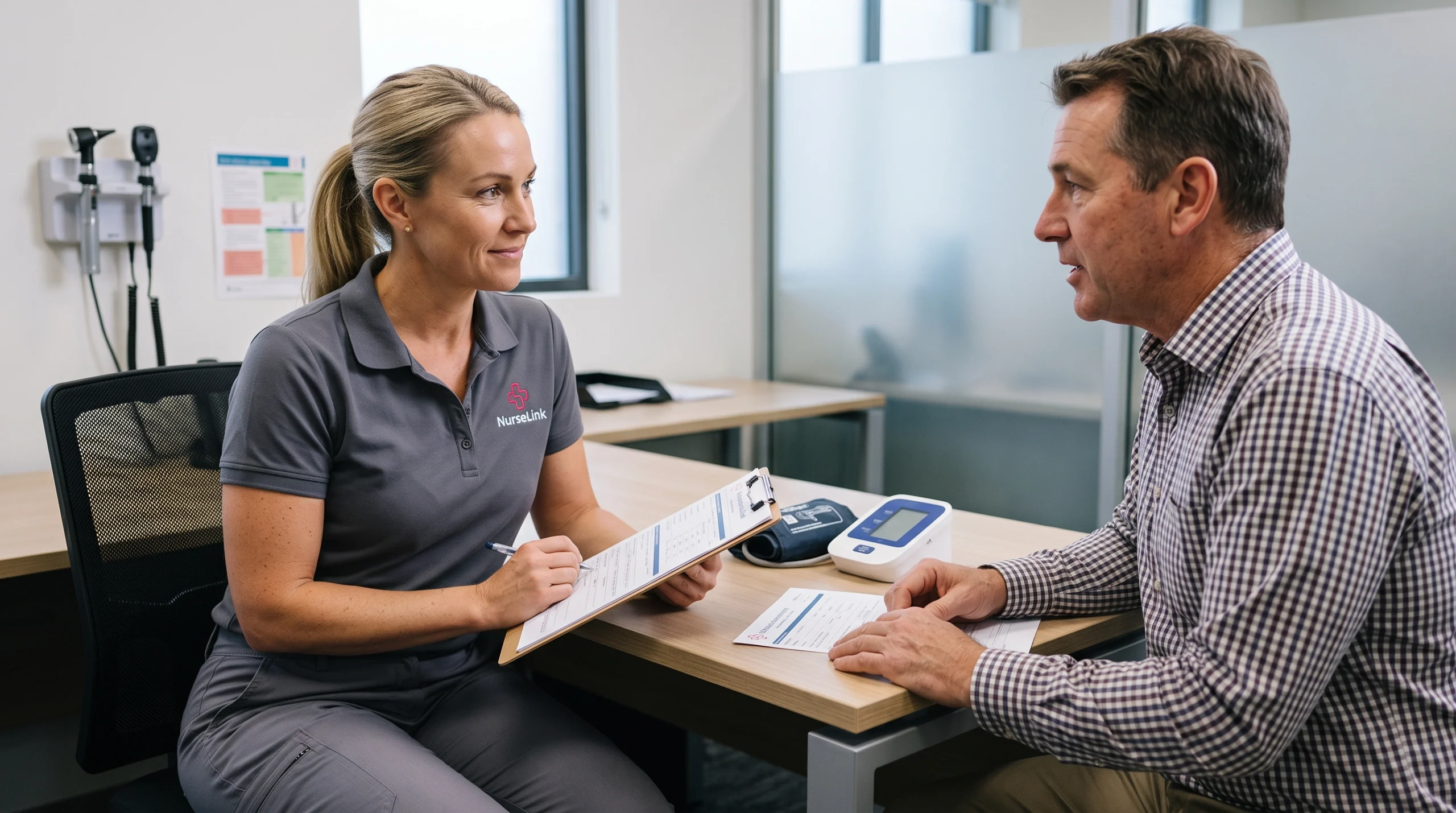
How NurseLink Kept A Sydney Workplace Health Clinic Running
A Case Study In Occupational Health Nursing Deployment For A Corporate Clinic
Introduction
Workplace health is not a discretionary service. For organisations with a serious commitment to the safety and wellbeing of their workforce, the occupational health clinic is not a benefit or a perk. It is the clinical infrastructure through which pre-employment assessments are conducted, workplace injuries are managed, return-to-work programmes are monitored and the regulatory requirements of a large employer’s health and safety obligations are met. When that infrastructure disappears without warning, the consequences are not simply operational. They are legal, clinical and reputational.
A corporate workplace health clinic that loses its occupational health nurse overnight is not a clinic that can simply manage without clinical coverage while it works out what to do next. It is a clinic with a workforce that depends on it, with health and safety obligations that continue regardless of the staffing situation, with pre-employment assessments booked for candidates starting next week and with a return-to-work coordinator who needs clinical input for cases that cannot be put on hold because the nurse has gone.
Finding a qualified occupational health nurse quickly, in a market where occupational health nursing is a specialist discipline with its own scope of practice and its own credentialling requirements, is not a problem that resolves itself through a general nursing availability search. It requires a provider with the specialist network to identify the right person and the operational capacity to deploy them before the gap produces consequences that are harder to manage than the gap itself.
At NurseLink Healthcare, we provide exactly this kind of specialist response. This case study documents how our team supported a corporate workplace health clinic in Sydney, New South Wales, through four to six weeks following the sudden and unannounced withdrawal of its occupational health nursing provider, ensuring that the clinic’s clinical services, its regulatory compliance and its workforce obligations were maintained without interruption.
To protect the privacy of the organisation and the individuals involved, all identifying details have been kept confidential throughout this case study.
The Organisation & Its Situation
The organisation at the centre of this case study is a large corporate entity operating from a significant office and operational complex in Sydney. It employs several hundred people across a range of functions, including both sedentary office roles and more physically demanding operational positions that carry elevated workplace health and safety risk profiles. The organisation’s commitment to workforce health and safety was reflected in its decision, some years earlier, to establish an on-site workplace health clinic staffed by a qualified occupational health nurse whose role covered the full scope of corporate occupational health nursing practice.
The clinic had been operating under a contracted provider arrangement, through which the occupational health nurse was supplied and managed by a specialist occupational health services company. The arrangement had been in place for some time and had functioned adequately. The organisation’s workplace health and safety manager, who had oversight of the clinic, had not had particular cause to question it.
The withdrawal of the provider was sudden and, from the organisation’s perspective, entirely without adequate notice. A communication received late on a Friday afternoon advised that the provider was unable to continue the arrangement and that clinical coverage would cease at the end of that business day. The occupational health nurse who had been staffing the clinic would not be returning on Monday.
The workplace health and safety manager, who received the communication at the end of a working week with no forewarning, spent a portion of her weekend identifying what the clinic had scheduled for the following week and what the clinical and regulatory implications of those appointments proceeding without nursing coverage were. The picture that emerged was not comfortable. Pre-employment medicals for candidates commencing the following week. A return-to-work review for an employee whose programme required clinical monitoring. A health surveillance appointment for workers in a role with specific regulatory health monitoring requirements. And the general clinical availability that the workforce expected from a clinic that had been operating consistently for years.
She contacted NurseLink Healthcare on Monday morning.
Understanding What The Organisation Actually Needed
The conversation NurseLink Healthcare had with the workplace health and safety manager was one that both parties understood needed to move quickly from context to specifics, because the clinical gap was already open and every day without coverage had implications.
She needed a registered nurse with occupational health nursing experience and, specifically, with familiarity with the scope of practice that a corporate workplace health clinic requires. Pre-employment medical assessments are a distinct clinical skill that requires knowledge of the relevant standards, the ability to conduct functional assessments appropriate to the role requirements and the documentation practice that supports both the employer’s decision-making and the candidate’s clinical record. Health surveillance for workers in specific roles with regulatory monitoring requirements is a clinical function that requires understanding of the relevant legislation and the specific monitoring protocols it mandates. Return-to-work programme support requires clinical knowledge of occupational rehabilitation processes and the communication skills to work effectively with the injured worker, their treating team and the return-to-work coordinator simultaneously.
She was also specific about something that went beyond the clinical scope. The clinic’s relationship with the organisation’s workforce was one that had been built over time. The nurse who had been staffing it was known to the workforce and had established a clinical relationship with many of the employees who used the clinic regularly. The person NurseLink Healthcare placed needed to be someone who understood that they were stepping into an established clinical environment with existing patient relationships and who would manage that transition with the professionalism and the interpersonal skill it required.
She needed coverage from the following day. NurseLink Healthcare confirmed it could provide it and began identifying candidates immediately.
The NurseLink Healthcare Solution
An Occupational Health Nurse Identified & Deployed Within Twenty-Four Hours
NurseLink Healthcare’s response to the brief drew on its specialist occupational health nursing network with a focus that was specific to the clinical scope the organisation required. The pool of registered nurses with genuine occupational health nursing experience and the specific competencies that a corporate clinic required was not large, and identifying the right person required targeted outreach rather than a general availability search.
Within twenty-four hours of the initial contact, NurseLink Healthcare had identified and confirmed a registered nurse with significant occupational health nursing experience in corporate settings, including specific experience conducting pre-employment medical assessments, managing health surveillance programmes and supporting return-to-work processes. Her credentials were verified, her occupational health nursing background was confirmed through clinical reference checks and she was briefed comprehensively on the organisation, its clinic’s scope of practice and the specific appointments and obligations that required immediate attention.
She arrived at the clinic on Tuesday morning, two business days after the provider had withdrawn. The appointments that had been scheduled for Monday had been rescheduled to Tuesday and Wednesday, and every scheduled clinical obligation for the week was met.
Pre-Employment Assessments Conducted Without Disruption To Onboarding
The pre-employment medical assessments that had been scheduled for candidates commencing the following week were conducted on time and to the clinical standard that the organisation’s pre-employment process required. The placed nurse was familiar with the relevant assessment frameworks and conducted each assessment with the thoroughness and the documentation practice that supported the organisation’s hiring decisions without creating delays for candidates whose start dates were already confirmed.
The human resources team, which had been bracing for the possibility of needing to delay onboarding for the affected candidates, found instead that the assessments proceeded as planned. The candidates who were assessed were unaware that anything had changed in the clinic’s staffing arrangement. From their perspective, they had attended their pre-employment medical and been assessed by a qualified occupational health nurse. The operational disruption that the provider withdrawal had threatened to produce in the onboarding process did not materialise.
Health Surveillance & Regulatory Compliance Maintained
The health surveillance programme for workers in roles with specific regulatory monitoring requirements was maintained throughout the engagement without a gap in the monitoring schedule. The placed nurse reviewed the surveillance programme, familiarised herself with the specific regulatory requirements applicable to the relevant roles and conducted the scheduled surveillance appointments with the clinical rigour and the documentation practice that regulatory compliance required.
The organisation’s workplace health and safety manager, who had been managing the anxiety of a potential compliance gap since the provider withdrawal, found that the regulatory monitoring obligations that had been her primary concern were being managed with the same standard that the permanent arrangement had provided. The compliance risk that the withdrawal had created was managed before it produced a compliance failure.
Return-To-Work Support That Kept Programmes On Track
The employee whose return-to-work programme required clinical monitoring during the engagement period received the clinical oversight that their programme required without delay or disruption. The placed nurse engaged with the return-to-work coordinator, reviewed the programme documentation and provided the clinical input that the programme’s progress depended on, communicating appropriately with the employee’s treating team and maintaining the documentation that the programme required.
For an employee who was already managing the vulnerability of a return-to-work process following a workplace injury, the continuity of clinical oversight was not a minor operational matter. It was the assurance that the programme they were depending on for their return to their role was being managed with the attention it required, regardless of what had changed in the clinic’s staffing arrangement.
A Clinician Who Understood The Workforce Relationship
The placed nurse’s engagement with the organisation’s workforce reflected an understanding that the clinic’s clinical function was inseparable from its relationship with the people it served. Employees who came to the clinic were not anonymous patients. They were members of a workforce who had an existing relationship with the clinic and who expected to be treated with the familiarity and the respect that the clinic’s history in the organisation had established.
She managed every interaction with the professional warmth and the clinical confidence that the clinic’s workforce expected. She was attentive to the specific concerns that individual employees brought to appointments, communicated clearly and respectfully and managed the transition of unfamiliar clinical personnel in the workplace with the interpersonal skill that made the transition, for the employees using the clinic, largely unremarkable.
The workplace health and safety manager noted, at a check-in call midway through the engagement, that she had received no complaints from employees about the change in nursing staff and two unsolicited positive comments about the standard of care they had received. In a situation where the change in clinical personnel had been abrupt and unplanned, this outcome reflected the quality of the placed nurse’s engagement with the workforce.
Supporting The Permanent Recruitment Process
With the immediate clinical gap covered, the workplace health and safety manager was able to pursue the permanent occupational health nursing arrangement with the focus and the time that a proper procurement process required. She was not managing a clinical gap and a recruitment process simultaneously, which was the scenario that the provider withdrawal had initially appeared to make inevitable. She was managing a functioning clinic and a recruitment process in parallel, which is a considerably more manageable undertaking.
NurseLink Healthcare’s placed nurse provided a comprehensive handover document at the conclusion of the engagement, covering the status of all active clinical programmes, the surveillance schedule, the documentation of the return-to-work case and the specific clinical and operational features of the clinic that a new permanent arrangement would need to understand. The handover ensured that whatever permanent arrangement the organisation put in place would begin with the full picture of what the clinic was managing rather than needing to reconstruct it.
Outcomes & Impact
The Clinic Did Not Miss A Single Day Of Clinical Coverage
From the Tuesday following the provider withdrawal to the conclusion of the engagement, the clinic operated without a gap in clinical coverage. Every appointment was met. Every regulatory obligation was fulfilled. Every employee who came to the clinic for clinical support received it from a qualified occupational health nurse who understood what she was doing and why it mattered.
Regulatory Compliance Was Maintained Throughout
The health surveillance programme that had been the workplace health and safety manager’s primary compliance concern at the time of the provider withdrawal was maintained throughout the engagement without a gap in the monitoring schedule. The organisation’s regulatory obligations under the relevant workplace health and safety legislation were met without interruption, and the compliance risk that the sudden provider withdrawal had created was managed before it produced a consequence that would have been significantly more difficult to address after the fact.
The Workforce Experienced No Disruption
The workforce that the clinic served experienced the provider withdrawal as an entirely invisible event. They came to the clinic. They received clinical care. They left without knowing that anything had changed. That invisibility was, from the organisation’s perspective, the clearest possible measure of how effectively the gap had been managed.
The Organisation's Confidence In Its Clinical Infrastructure Was Restored
The workplace health and safety manager described the engagement’s most significant outcome not in operational terms but in terms of confidence. The sudden withdrawal of the previous provider had produced a period of acute uncertainty about the organisation’s ability to maintain its clinical and regulatory obligations. NurseLink Healthcare’s rapid and effective response had replaced that uncertainty with a working clinic and, in the weeks that followed, the time and the stability to put a better permanent arrangement in place than the one that had withdrawn without warning.
A Reflection From The Workplace Health & Safety Manager
In her feedback to NurseLink Healthcare following the conclusion of the engagement, she shared the following:
“On Friday afternoon we had a provider. On Monday morning we did not. By Tuesday we had NurseLink in the clinic and every appointment that week was met. The nurse they sent knew exactly what occupational health nursing in a corporate setting required. She managed our workforce with professionalism and she managed our compliance obligations without missing a beat. We came out of a genuinely difficult situation with our clinical programme intact and our workforce none the wiser. I cannot ask for more than that.”
Key Takeaways From This Case Study
Occupational health nursing is a specialist discipline that requires specific experience. A registered nurse placed into a corporate workplace health clinic without occupational health nursing experience will not be able to perform the pre-employment assessments, health surveillance and return-to-work support that the role requires. NurseLink Healthcare’s placement of an experienced occupational health nurse was the foundation on which the successful engagement was built.
A sudden provider withdrawal is a clinical and compliance emergency, not just an operational inconvenience. The regulatory obligations of a corporate employer with a workplace health clinic do not pause because the clinic’s nursing provider has withdrawn. Treating the gap with urgency proportionate to its clinical and legal implications is what NurseLink Healthcare’s response reflected.
Speed of specialist deployment depends on the depth of the specialist network. Placing an experienced occupational health nurse within twenty-four hours of an emergency brief is not possible through a reactive general nursing search. It requires an existing specialist network with pre-verified credentials. NurseLink Healthcare’s response time was made possible by the network that was already in place.
A good handover at the end of a placement protects the organisation’s clinical continuity. A placed nurse who leaves a comprehensive clinical handover at the end of an engagement gives the incoming permanent arrangement the full picture it needs to continue without a gap. NurseLink Healthcare’s approach to the end of this engagement reflected the same standard of clinical thoroughness that had characterised its beginning.
Conclusion
A corporate workplace health clinic that loses its occupational health nurse overnight does not have the luxury of a gradual response. Its clinical obligations continue, its regulatory requirements continue and its workforce continues to depend on a service that cannot simply be paused while the organisation works out what to do next.
NurseLink Healthcare provided the rapid, specialist response that the situation required. An experienced occupational health nurse, in the clinic within twenty-four hours, managing the full scope of clinical obligations without a gap and without a single employee experiencing the disruption that the provider withdrawal had threatened to produce.
The clinic kept running. The compliance was maintained. The workforce never knew anything had changed. That is what specialist nursing agency support, deployed with speed and with the right clinical match, can deliver.
If your organisation operates a workplace health clinic and is facing a sudden nursing vacancy, or if you are looking for a specialist nursing agency partner that can respond when standard options are not enough, we welcome the conversation. NurseLink Healthcare is here to keep your clinical services running when the unexpected happens.
Latest Post
When The Cycle Cannot Wait
Keeping The Clinic Running
When The Highway Brought Them In
Holding The Line

Open On Day One

When The Wards Couldn’t Wait
Burnout Across An Entire Healthcare Team

When The Roster Falls Apart At Midnight

When The Ambulance Left, The Real Work Started.
One Sick Call, One Struggling Ward

Reliable Nursing Support At Home

Ensuring Continuity Of Care With Nursing Agency Support

Restoring Stability In Aged Care