How NurseLink's Overnight Nursing Let A Patient Come Home, & Let His Wife Sleep Again
A Case Study In Night-Shift Nursing That Understood Who Else Was Awake
Introduction
Hospitals run around the clock for a reason: illness does not keep office hours, and for many patients, the night is when risk is highest and reassurance hardest to find. When a patient with complex needs comes home, the day is usually manageable. Visits are scheduled, equipment is set up, family members are alert and capable. It is the night that frightens people. The house goes quiet, the monitoring that was constant in hospital becomes the responsibility of a spouse or a child who has not slept properly in weeks, and every small noise from the next room carries the question of whether something is wrong.
Overnight nursing at home addresses a need that rarely appears in discharge planning documents and is often only understood by families after they have tried to manage without it. A skilled nurse in the house through the night does something that daytime visits cannot: she takes over the watching. For a patient with a condition that can change quickly, and for the family member who has been doing that watching alone, the difference is not simply clinical. It is the difference between a home that functions as a place of recovery and one that functions as a place of vigil.
This case study documents how NurseLink Healthcare provided overnight nursing care to a man in his late sixties in Box Hill, discharged home with a tracheostomy following treatment for throat cancer, and how a carefully matched night nurse made it possible for him to remain in his own home, and for his wife of forty years to finally, after months of fragmented rest, sleep.
To protect the privacy of the client and his family, all names and identifying details have been kept confidential throughout this case study.
The Client & His Situation
The client is a man in his late sixties living in Box Hill with his wife, a retired primary school teacher, in the home they had shared for more than three decades. Following surgery and radiotherapy for throat cancer, he had been left with a tracheostomy, a tube placed in the front of his neck to maintain his airway, which he required for the foreseeable future. His treating team was optimistic about his recovery but clear that, for the early months at home, his airway would need careful watching.
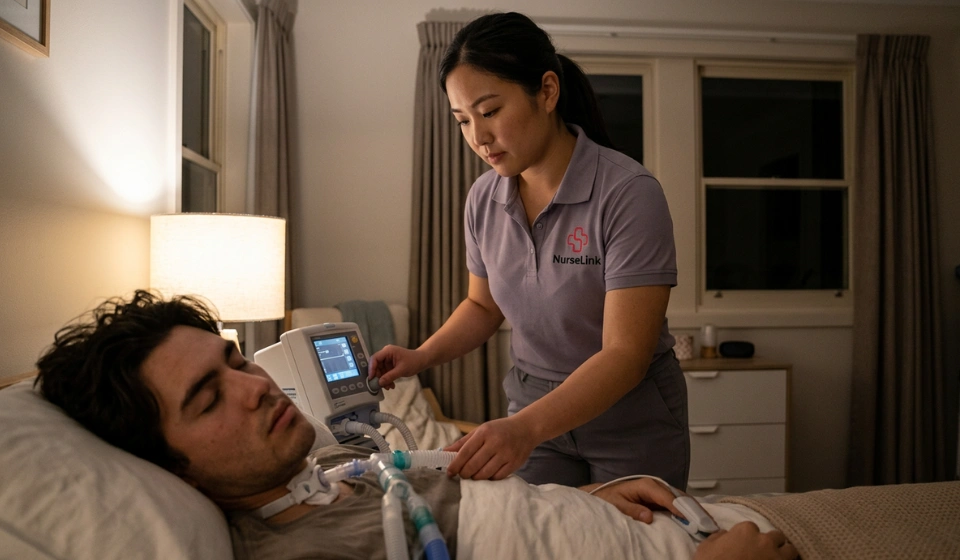
A tracheostomy brings with it a set of practical realities that families rarely anticipate. Secretions can build up and block the tube, particularly overnight, when a patient is lying down and less able to clear his airway. Humidification must be maintained. Suctioning may be needed at short notice. Most of all, the patient and those caring for him must be able to recognise, quickly, when something is not right.
His wife had been trained by the hospital in the basics of tracheostomy care and had handled the first weeks at home with quiet determination. But by the time the family sought additional support, she was sleeping in fragments, rising several times a night to check on him, and had developed a habit he described as listening to the house. She had not slept more than two consecutive hours in nearly three months. His hospital discharge team, during a follow-up appointment, observed that she looked exhausted and gently asked how long she thought she could continue.
Understanding What The Family Actually Needed
When NurseLink Healthcare’s clinical coordinator visited the home, the clinical requirement was clear: overnight nursing by a registered nurse experienced in tracheostomy care, capable of monitoring his airway, performing suctioning and humidification management as directed by his treating team, and recognising and escalating any concerning changes quickly.
But the coordinator recognised, early in the visit, that the family’s need was layered. The client himself, a proud and private man, had been quietly mortified by how much his wife was doing for him. He worried aloud that he was consuming her, and that coming home had traded his comfort for her health. He did not want a stranger in his bedroom, but he wanted, more than he wanted privacy, for his wife to stop looking the way she looked.
His wife, for her part, did not trust easily that anyone else would listen as closely as she did. She had developed, over three months, an intimate sense of the sounds of his breathing, and she was frightened that a nurse who did not know him might miss the small changes she had learned to catch. She needed to feel certain that handing over the night did not mean handing over her understanding of him.
Both of them needed the arrangement to feel like an extension of their home rather than an intrusion into it, and both needed to know that if anything changed, the nurse would act quickly and competently.
The NurseLink Healthcare Solution
A Night Nurse Chosen For Airway Experience & Quiet Presence
NurseLink Healthcare assigned a registered nurse with extensive experience in tracheostomy and airway management across hospital and community settings, selected deliberately for a calm, unobtrusive manner. The coordinator judged that a nurse who could be present and attentive without dominating the household would suit a couple who valued their privacy.
A Handover That Treated The Wife As The Expert On Her Husband
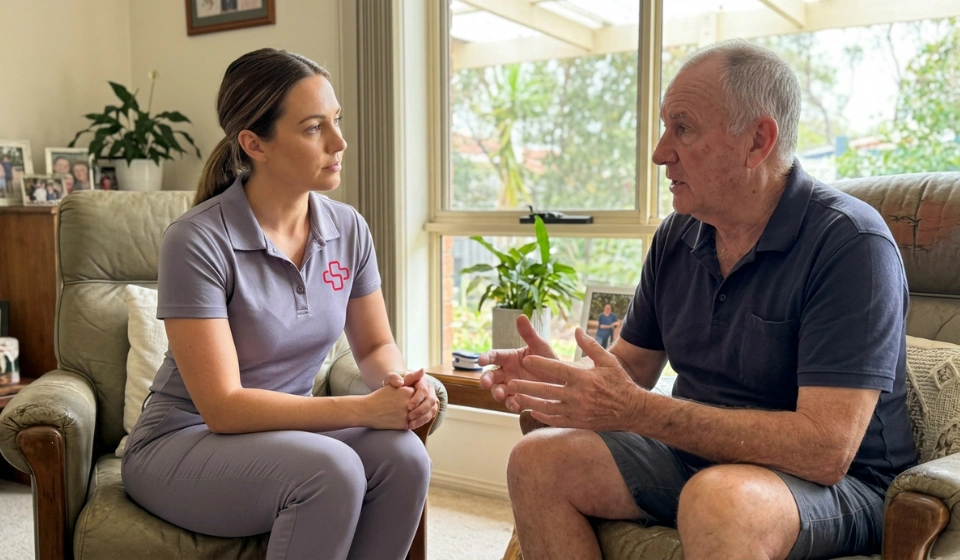
Before the first overnight shift, the nurse spent an evening with the couple, listening as the wife explained what she had learned, the particular sound that meant his tube needed suctioning, the positions in which he breathed more easily, the times of night when secretions tended to build. The nurse took notes, asked questions and repeated back what she had heard, and in doing so conveyed something the wife later said she had not expected: that her months of watching were being treated as knowledge, not anxiety.
Clear Clinical Boundaries & Escalation Pathways
The nurse worked within the care plan set by his treating head and neck team, with clearly documented steps for what she could manage independently and when to call the hospital’s after-hours service or emergency services. Both the couple and the nurse were clear on these boundaries from the first night, which gave the wife confidence that care was both competent and appropriately supervised.
A Setup That Made The Night Feel Like Home
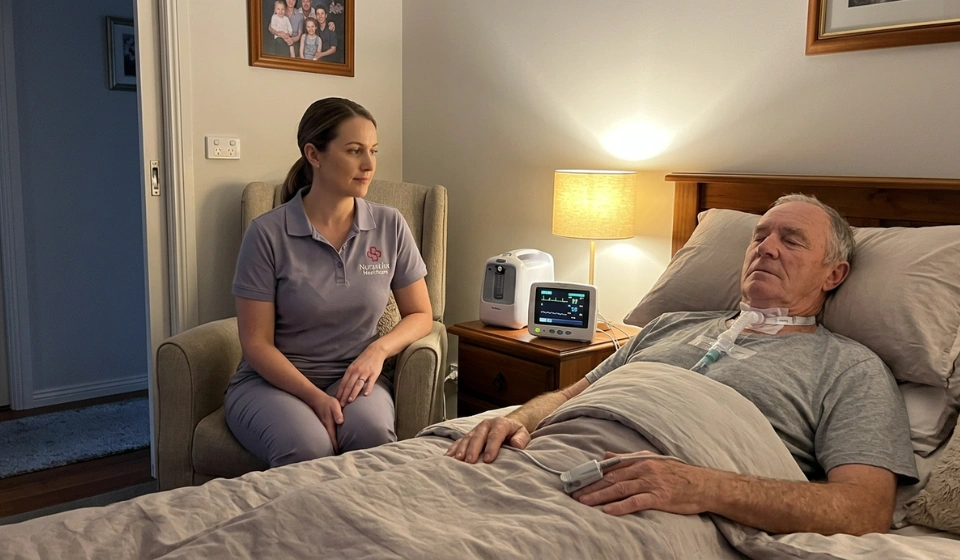
The nurse set herself up in a quiet corner of the adjoining room, with a monitor and necessary equipment arranged to minimise disturbance. She introduced herself each evening, checked on the client’s comfort before he settled, and left a brief, written note each morning for his wife covering how the night had gone, so that the wife woke to reassurance rather than uncertainty.
Gradual Return Of The Wife's Sleep
For the first week, the wife told the coordinator, she still woke at the same times she always had, lay listening, and then, hearing the soft movements of the nurse next door, slowly allowed herself to drift back to sleep. By the third week she was sleeping through. The coordinator treated this as a clinical outcome in its own right.
Regular Review With The Treating Team
The nurse communicated regularly with his specialist team, providing observations on his overnight breathing, secretion patterns and comfort, and the team used this information to adjust his care plan. As his airway stabilised and his confidence grew, the frequency of overnight support was gradually reviewed in consultation with the family.
Outcomes & Impact
He Remained Safely At Home Through The Highest-Risk Months
Across several months of overnight nursing, there were no airway emergencies and no unplanned hospital readmissions, and a small number of minor concerns, including a partial blockage of his tube on one night, were handled promptly and calmly by the nurse in line with his care plan.
His Wife Recovered Her Sleep & Her Strength
Within a month of the arrangement beginning, his wife was sleeping through the night for the first time since his discharge. Her GP noted, at a routine appointment, that she looked like a different person.
His Sense Of Dignity Was Protected
Because overnight care was delivered unobtrusively and with genuine respect for the couple’s privacy, the client reported that he did not feel like a patient in his own home. He described the nurse as a quiet presence who made the nights feel safe rather than medicalised.
Their Marriage Found Its Footing Again
Both spouses reflected that months of vigilance had quietly turned their relationship into one of carer and patient. With nights covered, they were able to spend their days as husband and wife again, talking, planning and sharing small pleasures that had slipped away.
His Recovery Progressed With Confidence
With a settled household and reliable overnight cover, he was able to focus on his rehabilitation, and his treating team noted steady progress. As his airway stabilised, the overnight arrangement was gradually reduced and eventually concluded as planned.
A Reflection From The Client's Wife
Some weeks after the overnight arrangement ended, the client’s wife shared the following with the NurseLink Healthcare coordinator:
She said that for three months she had believed she was the only person who could keep her husband safe at night, and that the idea of sleeping felt almost like negligence. What changed things for her was a nurse who listened to everything she had learned and then quietly took over the watching, without making her feel she had been replaced. She said the first night she slept through, she woke in a panic, certain something must have gone wrong, and found her husband sleeping peacefully and the nurse writing her morning note. She said she cried in the kitchen afterwards, not from sadness, but because she had not realised how far past the end of her strength she had been. She added that the nights had been the hardest part of bringing him home, and that having someone take them on was what made it possible for the rest of their life to start again.
Key Takeaways From This Case Study
The night is often the real challenge of home care for complex patients. Daytime support is easier to arrange and easier to manage, while the vigilance required overnight is what exhausts families and drives readmissions.
Overnight nursing is a safety measure for the carer as well as the patient. A spouse running on fragmented sleep is a risk in her own right, and addressing her rest was central to making the arrangement sustainable.
Family members who have been watching closely hold real expertise. Treating the wife’s observations as clinical information built trust and improved the quality of the nurse’s care.
Unobtrusive presence matters for patients who value privacy. A calm, quiet nurse allowed the client to remain at home without feeling that his home had become a ward.
Clear escalation pathways make home overnight care safe. Knowing exactly when the nurse would act and when she would call for help gave the family confidence in the arrangement.
Conclusion
A man who needed careful watching through the night, and a wife who had been providing that watching alone for far longer than anyone should, found through overnight nursing that recovery at home did not have to cost the carer her health. For the family at the centre of this case study, NurseLink Healthcare provided not only skilled airway care, but a night that both of them could finally trust.
He is recovering at home. His wife sleeps through the night. And a Box Hill couple have been given back the ordinary rhythm of their evenings and mornings.
If someone you love is coming home with needs that make the nights frightening, we encourage you to reach out to the NurseLink Healthcare team. We take on the watching, so you can rest.