How NurseLink Healthcare's Nursing Support Helped A Moonee Ponds Family Make Sense Of Their Father's Medications
A Case Study In Nursing That Turned A Frightening Pile Of Tablets Into A Routine A Family Could Trust
Introduction
Few things worry families more than medication. After a hospital stay, a new diagnosis or a change in a loved one’s health, it is common for a person to arrive home with a bag of new prescriptions, a discharge summary full of unfamiliar terms and instructions to take some things with food, others without, some in the morning, some at night and a few only when needed. Families are expected to absorb all of it quickly, often while still processing the news that led to it.
For older people living with several conditions, the picture is rarely simple. Medications are prescribed by different specialists at different times. Doses change. Brands differ from generics. Old tablets sit alongside new ones in the same cupboard. It is easy to see how mistakes happen, not through carelessness, but through complexity. A missed dose, a doubled dose or a mix-up between two similar-looking packets can have real consequences, and the fear of getting it wrong can quietly dominate a household.
Nursing support in this area is not about taking control of a person’s medications. It is about bringing order, understanding and confidence to a system that has become overwhelming, and about working within the care plan set by the person’s doctors and pharmacist. This case study documents how NurseLink Healthcare supported a family in Moonee Ponds whose father, in his late seventies, had come home from hospital on a complicated medication regimen, and how a registered nurse helped the whole family move from anxiety to a routine they could trust.
To protect the privacy of the client and his family, all names and identifying details have been kept confidential throughout this case study.
The Family & Their Situation
The family consists of a man in his late seventies, his wife, in her early seventies, and their adult daughter, who lived a short drive away and worked part time. A son lived interstate and phoned most evenings.
The client, a retired tram driver with a dry sense of humour and a lifelong dislike of fuss, had been living with several long-term conditions for some years. After a recent hospital admission, during which several changes were made to his treatment, he came home with a new list of medications, some replacing earlier ones, some added to them. The discharge paperwork was thorough but dense. His GP had updated his records. A community pharmacist had been helpful. And yet, within a fortnight, the family felt they were barely coping.
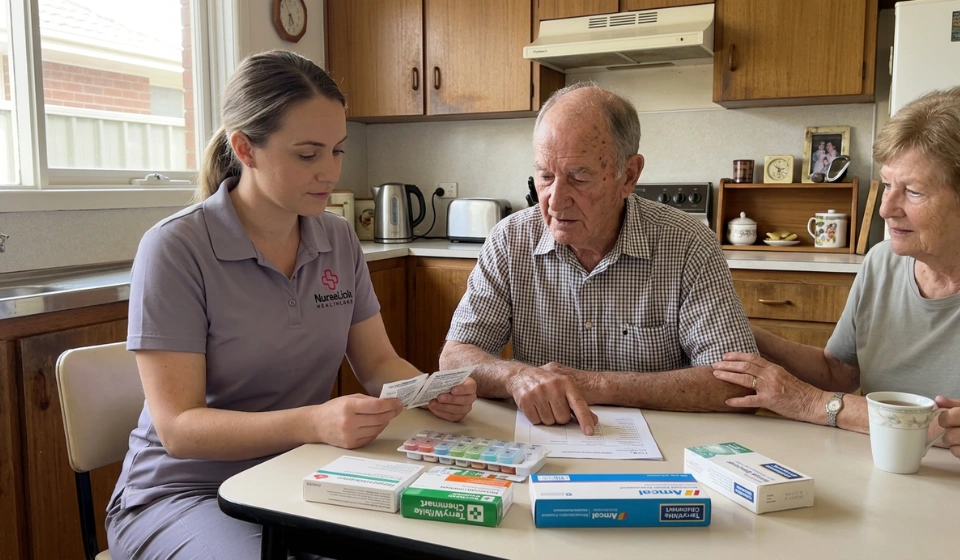
His wife, who had always managed the household, found herself standing in the kitchen each morning surrounded by boxes, blister packs and bottles, trying to remember which were new, which were old and which had been stopped. She had begun writing lists on the back of envelopes. Their daughter, visiting midweek, noticed that some of the old tablets were still in the cupboard alongside the new ones, and that her father had taken a tablet from the wrong packet on at least one occasion. Nothing serious had happened, but she lay awake that night imagining what might have.
The client himself was frustrated. He felt he was being treated like a child. He did not like being asked whether he had taken his tablets and had begun to answer yes whether or not he had. His wife, hearing this, did not know whether to believe him. The conversations at home had become tense, and the household, usually warm and easygoing, had developed an edge.
Understanding What The Family Actually Needed
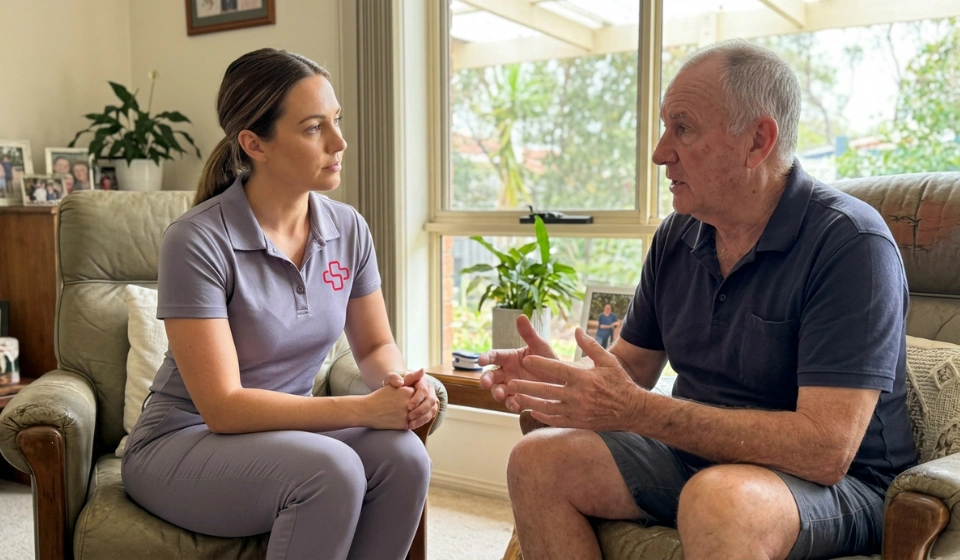
When the family approached NurseLink Healthcare, their request was framed as a question: could a nurse come and help them work out what he was supposed to be taking? In the first visit, the registered nurse assigned to the family listened carefully to each person before opening a single box. What she heard was that the real problem was not the medications themselves, but the loss of trust that had grown up around them.
The client needed to feel respected. He did not want to be monitored or managed. He wanted to understand what he was taking and why, and to have a system that allowed him to remain in charge of his own health to the greatest extent possible. He needed explanations that treated him as an intelligent adult.
His wife needed clarity and relief. She needed a system she could rely on, so that she could stop acting as a nervous gatekeeper, and could be his wife again rather than his medication supervisor. She also needed to know what to look for if something was wrong.
Their daughter needed reassurance that the regimen was safe, that the old and new medications had been properly sorted and that someone clinically qualified had reviewed the arrangement. She also needed a clear understanding of when to contact his doctor or pharmacist.
All three needed a shared picture. The tension at home came partly from the fact that each of them held a slightly different understanding of what he was meant to be taking, and none of them could be sure they were right.
The NurseLink Healthcare Solution
A Registered Nurse Chosen For Clarity & Respect
NurseLink Healthcare assigned a registered nurse with extensive community and medication management experience, chosen for her plain-speaking, unhurried manner. The coordinator judged that a man who disliked fuss would respond best to someone who explained things clearly and treated him as a partner.
Starting With What Was Actually In The Cupboard
On her first visit, the nurse sat with the family at the kitchen table and gathered every medication in the house, including old packets, over-the-counter products and supplements. Together they went through each item, compared it against the hospital discharge summary and the GP’s current list, and set aside anything that was out of date or no longer prescribed. Rather than make decisions herself, the nurse noted where information was unclear and arranged to confirm it with the client’s GP and pharmacist.
Working Within The Doctors' Care Plan
The nurse was clear with the family, from the beginning, that her role was to support the plan set by his doctors, not to change it. Where there were questions, such as two medications that seemed to overlap or an instruction that was ambiguous, she contacted the GP or pharmacist on the family’s behalf and brought back clear answers. This approach gave the family confidence that decisions were being made by the right people, and that nothing was being improvised at the kitchen table.
Building A System That Fitted Their Lives
With the medication list confirmed, the nurse worked with the family to create a simple, clear routine. A pharmacist-prepared pack was arranged, organised by time of day. A one-page medication chart was written in plain language, listing what each medication was for, when it should be taken and what to do if a dose was missed. The chart was placed on the fridge and a copy given to the daughter. The nurse took care that the system was something the client could manage himself, without needing to be reminded.
Explaining The Purpose Behind Each Medication
The client had been taking his tablets because he was told to. The nurse took the time to explain what each one was for, in everyday language, and to answer his questions. He asked a great many, and she welcomed everyone. By the end of the first fortnight, he could tell his wife which tablet was for his heart, which was for his blood pressure and which was for his stomach, and why it mattered that he took them as prescribed.
Teaching The Family What To Watch For
The nurse also spoke with his wife and daughter about the signs that might suggest a problem, such as dizziness, unusual drowsiness or new symptoms, and what they should do about each. She gave them clear, written guidance on when to call the GP, when to call the pharmacist and when to seek urgent help. This took the guesswork out of the situation and allowed them to relax.
Regular Check-Ins That Rebuilt Trust
Over the following weeks, the nurse returned for short, regular visits to review how the system was working, answer questions and update the chart if his doctors made any changes. She reviewed his understanding without testing him, and encouraged him to take the lead. The visits were gradually spaced further apart as the family’s confidence grew.
Keeping Everyone Informed
The nurse kept his GP and pharmacist informed of any concerns, and ensured that the medication chart was updated promptly whenever a change was made. She also made sure the client’s son, living interstate, received a copy of the chart, so that the whole family had the same information.
Outcomes & Impact
The Medication Routine Became Clear & Reliable
Within a few weeks, the household had a single, up-to-date medication list, a pharmacist-prepared pack and a routine that worked. The confusion that had hung over the kitchen bench was gone.
He Took Charge Of His Own Medications Again
The client was able to manage his daily medication himself, with the pack and chart as a guide. His wife stopped asking whether he had taken his tablets. He described the change, with some satisfaction, as getting his dignity back.
Old & Duplicate Medications Were Removed
By working with the GP and pharmacist, the nurse helped the family dispose of out-of-date and discontinued medications safely, reducing the risk of mix-ups. Their daughter said it was the first time in weeks she had opened the cupboard without a knot in her stomach.
Communication With His Doctors Improved
With a clear list and a nurse who knew how to ask the right questions, the family felt confident contacting his GP and pharmacist when they had queries. His GP remarked that the quality of the information he was now receiving from the household had improved considerably.
The Tension At Home Eased
Perhaps the most noticeable change was in the atmosphere at home. The sharpness had gone, and the conversations had returned to ordinary things. The couple resumed their evening walks and the family dinners their daughter had missed.
A Reflection From The Client's Wife
Some weeks into the arrangement, the client’s wife shared the following with the NurseLink Healthcare coordinator:
She said that for a fortnight after he came home from hospital, she had felt like she was failing an exam she had not studied for. What changed things for her was a nurse who sat down at the kitchen table, went through every packet and never once made her feel silly for not knowing. She said the moment the nurse placed the one-page chart on the fridge, she felt something in her chest unclench. She added that her husband, who hated being fussed over, had come to look forward to the nurse’s visits, because she explained things to him as if he were a grown man, which he was. She said the best part was that she no longer had to be his supervisor, and could simply be his wife again.
Key Takeaways From This Case Study
A simple, shared system reduces tension as much as it reduces risk. A single chart and pharmacist-prepared pack gave the whole family the same picture, and removed the need for anxious checking.After a hospital stay, medication complexity is often the quiet source of a family’s anxiety. Several prescribers, changed doses and leftover old packets can overwhelm even a capable household.
Starting with everything in the cupboard gives a clear and honest picture. Gathering and reviewing every item, including old and over-the-counter products, was the foundation for everything that followed.
A nurse’s role is to support the doctors’ plan, not to alter it. Confirming unclear points with the GP and pharmacist kept decisions with the right people and gave the family confidence.
Explaining the purpose of each medication restores a person’s sense of control. Understanding why he was taking each tablet helped the client engage with his own treatment.
Conclusion
A kitchen bench covered in boxes and a household on edge found, through calm and practical nursing support, that medication management did not have to dominate family life. For the family at the centre of this case study, NurseLink Healthcare provided not only clinical expertise, but a way of bringing order, understanding and trust back into the home.
He takes his tablets himself. His wife is his wife again. And a Moonee Ponds family has put away the envelopes covered in lists and gone back to their evening walks.
If someone in your family has come home with a complicated medication routine and you are feeling overwhelmed, we encourage you to reach out to the NurseLink Healthcare team. We help families make sense of it, working alongside the doctors and pharmacists who know your loved one best.